How Often Should You Get Teeth Scaling Done: A Dentist’s Schedule Guide
by Galaxy Dental CarePublished : 07 October 2026
How often should you get teeth scaling done is one of the most common questions patients ask when they sit in our chair. The direct answer: most adults need professional scaling every six months. Some people with healthy gums and excellent home care can stretch to twelve months. Others with gum disease, diabetes, or heavy tartar build-up need cleanings every three to four months. At Galaxy Dental Care, our periodontists and general dentists check your gum pocket depth, tartar levels, and medical history before recommending your personal interval. By the end of this article, you will know exactly which schedule fits your situation and what warning signs mean you are overdue.
Key takeaways
Most adults need teeth scaling every six months to prevent tartar build-up.
People with gum disease often need cleanings every three to four months.
Your dentist sets your interval after checking gum pockets and medical history.
Waiting too long allows tartar to harden and gum disease to progress silently.
Smoking, diabetes, and pregnancy increase how often you need scaling.
What is teeth scaling and why does timing matter?
Teeth scaling is the professional removal of hardened plaque, called tartar or calculus, from tooth surfaces and below the gumline. Tartar forms when soft plaque mineralises, usually within 24 to 72 hours, and cannot be removed by brushing or flossing alone. Once tartar sits on teeth, it irritates gums, traps bacteria, and creates pockets where gum disease develops. The timing of scaling matters because tartar accumulation is continuous; regular removal interrupts this process before it damages supporting bone.
At Galaxy Dental Care, Teeth Scaling is performed with ultrasonic scalers and hand instruments, followed by polishing to smooth the tooth surface. Our in-house OPG full-mouth dental X-ray and CBCT 3D scanning help assess bone levels when gum disease is suspected. Every patient receives a full treatment plan before any procedure begins.
How often should you get teeth scaling done if your gums are healthy?
Healthy adults with no gum disease and good oral hygiene typically need scaling every six to twelve months. The American Dental Association recommends cleanings at intervals set by your dentist, with six months being the standard for most people. At this frequency, tartar is removed before it can trigger inflammation, and early signs of problems are caught promptly.
During your visit, the dentist measures gum pockets, checks for bleeding, and reviews your brushing and flossing habits. If pockets are shallow, gums do not bleed, and tartar is minimal, a twelve-month interval may be appropriate. However, most dentists prefer six months because it balances prevention with practicality. You can read more about routine visits in our article on The Importance of Regular Dental Check-ups: How Often Should You Visit the Dentist?
When do you need teeth scaling more often than every six months?
People with existing gum disease, heavy tartar formation, or specific risk factors often need scaling every three to four months. This more frequent schedule, sometimes called periodontal maintenance, prevents the recurrence of deep pockets and bone loss after initial gum treatment. Conditions that shorten your scaling interval include:
Diagnosed gum disease, gingivitis, or periodontitis
Smoking or tobacco use, which reduces blood flow to gums
Diabetes, especially when blood sugar is poorly controlled
Pregnancy, due to hormonal changes that inflame gums
Dry mouth from medications, which lets plaque accumulate faster
Crowded teeth or dental work that traps plaque
At Galaxy Dental Care, Advanced Gum Treatments include assessing these risk factors with detailed gum charts and medical history review. Our coordinated team of 3 to 5 dentists across specialities at each branch ensures periodontists and general dentists collaborate on your maintenance plan.
Risk level
Recommended scaling interval
What the dentist checks
Healthy gums, low risk
Every 12 months
Pocket depth 1-3 mm, no bleeding, minimal tartar
Healthy gums, average risk
Every 6 months
Pocket depth 1-3 mm, slight tartar, good home care
Gingivitis or early gum disease
Every 3-4 months
Pocket depth 4-5 mm, bleeding, visible tartar build-up
Periodontitis after treatment
Every 3 months
Pocket depth 5+ mm monitored, bone level on X-ray
What happens if you delay teeth scaling too long?
Delayed scaling allows tartar to accumulate below the gumline, where it triggers chronic inflammation and destroys the fibres that attach gums to teeth. Early gum disease, called gingivitis, causes bleeding and bad breath but is reversible with prompt cleaning. Advanced gum disease, called periodontitis, causes permanent bone loss and can lead to tooth loosening or loss. This progression is often painless, so many patients do not notice until damage is significant.
Beyond gum health, tartar build-up also contributes to tooth decay at the gumline, stains that become harder to remove, and persistent bad breath. Regular Teeth Cleaning prevents these complications and keeps maintenance visits shorter and more comfortable. For patients needing additional care, Preventive Dentistry at Galaxy Dental Care includes personalised home care instruction alongside professional cleanings.
Time since last scaling
What typically develops
When to book urgently
6-9 months overdue
Visible tartar, mild gum bleeding when brushing
Within 2 weeks
12 months overdue
Hard tartar below gumline, persistent bad breath
Within 1 week
18+ months overdue
Deep pockets, possible bone loss, tooth sensitivity
Within 48 hours; may need deep cleaning
How does a dentist decide your personal scaling schedule?
Your dentist decides your scaling interval after a full examination, not by guesswork. At Galaxy Dental Care, this assessment includes an OPG full-mouth dental X-ray or CBCT 3D scan to check bone levels, periodontal probing to measure gum pocket depth in millimetres, and review of your medical history and medications. The dentist also asks about smoking, diabetes control, pregnancy, and your daily brushing and flossing routine.
This information determines whether you fit the standard six-month schedule, can extend to twelve months, or need the three to four month maintenance typical after Periodontal Flap Surgery in Kondapur or other gum procedures. A complete treatment plan is shared before any procedure begins, so you understand why your interval was chosen and what home care supports it.
What to expect during a teeth scaling appointment
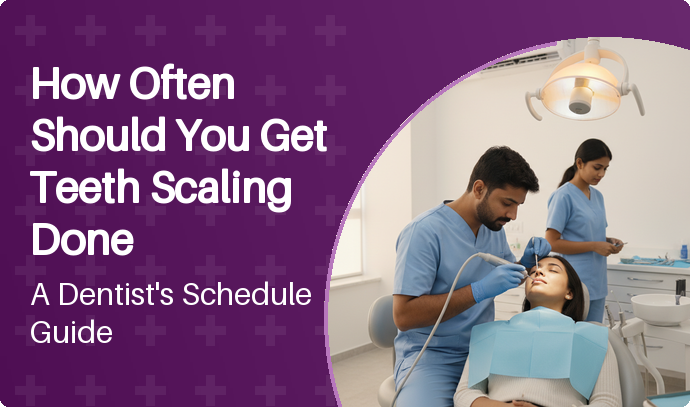
A standard scaling appointment takes 30 to 45 minutes for healthy patients, or 45 to 60 minutes if tartar is heavy or pockets are deep. The dentist or hygienist uses an ultrasonic scaler that vibrates to break tartar loose, followed by hand instruments for fine cleaning below the gumline. Polishing with a gritty paste smooths the tooth surface so plaque adheres less easily.
Most patients feel mild vibration and water spray, with little discomfort. If gums are inflamed, there may be slight sensitivity or bleeding during probing, which settles quickly after cleaning. Local anaesthetic gel can be used for sensitive areas. After scaling, teeth feel smoother and breath often freshens immediately. The dentist then tells you when to return based on what was found.
For patients also considering cosmetic improvements after their gums are healthy, Teeth Whitening is available once tartar and surface stains are removed. Those with wisdom teeth concerns can enquire about Wisdom Teeth Removal in Kondapur during the same visit.
How often you need teeth scaling depends on your gum health, tartar build-up rate, and medical risk factors. Most people do well with six-monthly cleanings, while those with gum disease need three to four month intervals. The only way to set your correct schedule is through examination and personalised advice. Call Galaxy Dental Care on +91 86866 76781 to book an assessment, discuss your risk factors, and receive a written treatment plan with your recommended scaling interval.
FAQs
Is teeth scaling painful?
Teeth scaling is generally comfortable for most patients. You will feel vibration and water spray from the ultrasonic scaler, plus pressure from hand instruments below the gumline. If your gums are inflamed, there may be brief sensitivity or slight bleeding, which settles quickly after cleaning. A numbing gel can be applied to sensitive areas.
How long does a teeth scaling appointment take?
A routine scaling takes 30 to 45 minutes for patients with healthy gums and light tartar. If tartar is heavy or gum pockets are deep, the appointment may extend to 45 or 60 minutes. Your dentist will tell you the expected duration when they examine your mouth.
Can I get teeth scaling done during pregnancy?
Yes, teeth scaling is safe during pregnancy and is often recommended because hormonal changes increase gum inflammation. The second trimester is usually the most comfortable time for dental procedures. Tell your dentist you are pregnant so they can adjust positioning and avoid certain medications if needed.
Will teeth scaling whiten my teeth?
Scaling removes surface stains and tartar, which can make teeth appear slightly brighter, but it does not change the natural colour of your tooth enamel. For actual whitening, a separate bleaching treatment is needed after your gums are healthy and tartar-free.
What is the difference between teeth scaling and root planing?
Teeth scaling removes tartar from tooth surfaces and shallow gum pockets. Root planing is a deeper cleaning that smooths the root surfaces below the gumline in deeper pockets, usually performed when gum disease is present. Root planing may require local anaesthetic and is often done in sections over multiple visits.
Can I scale my own teeth at home?
No, you cannot safely remove hardened tartar at home. Tartar bonds firmly to enamel and requires professional ultrasonic and hand instruments. Attempting DIY scaling with sharp tools risks scratching enamel, damaging gums, or causing infection. Daily brushing and flossing prevent tartar formation, but once hardened, only a dentist or hygienist can remove it.