Angular Cheilitis: What It Is, Symptoms, Causes and Treatments?
by Galaxy Dental CarePublished : 16 July 2026
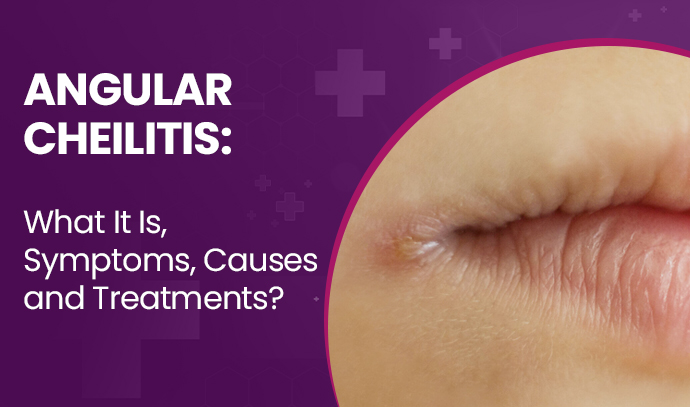
The corner of your mouth is cracked, sore, and won’t heal. It hurts when you open wide. You’re not sure if it’s a cold sore, chapped skin, or something else.
It’s most likely angular cheilitis, a common oral condition where skin at the mouth corners cracks, turns red, and becomes sore due to saliva buildup, fungal or bacterial infection, or nutritional deficiency. Symptoms include cracking, pain on opening, redness, and sometimes white discharge. Causes include Candida yeast, Staph bacteria, low B2, B12, iron or zinc, ill-fitting dentures, and dry mouth. Treatment depends on the cause: antifungal or antibiotic creams, dietary correction, or a dental adjustment. It’s not contagious. Most cases clear in two weeks.
At Galaxy Dental Care, our dental team manages oral health conditions across 9 Hyderabad locations since 2008. Here’s everything you need to know.
What Is Angular Cheilitis?
The short answer: Cracked, red, sore skin at one or both corners of the mouth. Also called angular stomatitis or perlèche.
It starts simply. Saliva pools in the skin fold at the corner of your mouth. The skin stays wet, softens, and splits. That crack becomes a warm, moist spot where yeast or bacteria move in.
One thing people always get wrong: It’s not a cold sore.
Cold sores come from the herpes simplex virus. They’re contagious. Angular cheilitis isn’t caused by a virus and doesn’t spread through contact. Different condition, different cause, different treatment.
Who gets it? Anyone. But it’s more common in:
Older adults who’ve lost teeth (tooth loss creates deeper lip folds where saliva collects)
Young children who suck their thumbs or use pacifiers
What Are the Angular Cheilitis Symptoms?
Angular cheilitis symptoms show up at the corners of the mouth only. Not on the lips. Not inside. The corners. Check if you have any of these:
Cracking or splitting at one or both corners of the mouth
Redness and swelling around the area
Pain when you open your mouth wide, eat, or speak
Bleeding when the cracked skin gets stretched
A crust or scab forming over the crack
Itching or a burning sensation
White or yellowish discharge in more severe cases
When to act: If angular cheilitis symptoms haven’t improved after two weeks, the underlying cause hasn’t been addressed. That’s the signal to see a dentist or doctor.
What Are the Causes of Angular Cheilitis?
It usually starts the same way. Saliva collects in the corner of your mouth for too long. The skin softens, cracks, and becomes a spot where infection can take hold. What happens next depends on you.
Cause
Why It Happens
Who It Affects
Fungal infection (Candida yeast)
Yeast that lives naturally in the mouth overgrows in moist, warm skin folds.
Most common cause overall.
Bacterial infection (Staph or Strep)
Bacteria enter through cracked skin.
Often follows the initial crack.
Nutritional deficiency
Low levels of Vitamin B2, B12, iron, or zinc weaken skin tissue.
Common in people with poor diet or absorption issues.
Ill-fitting dentures
Dentures that don’t fit well cause deeper lip folds where saliva pools.
Elderly patients who wear dentures.
Dry mouth or lip licking
Saliva evaporates quickly, leaving skin dry and prone to cracking.
Anyone who habitually licks their lips.
Weakened immunity
Diabetes, chemotherapy, or HIV lower the body’s ability to fight infection.
Patients with systemic health conditions.
Skin sensitivity or eczema
Sensitive skin reacts more easily to moisture and irritants.
People with a history of eczema or skin allergy.
Worth knowing: Vitamin B2, called riboflavin, is found in dairy, eggs, and leafy greens. Low B2 is one of the most overlooked angular cheilitis causes that keeps the condition returning. A blood test confirms it.
Is Angular Cheilitis Contagious?
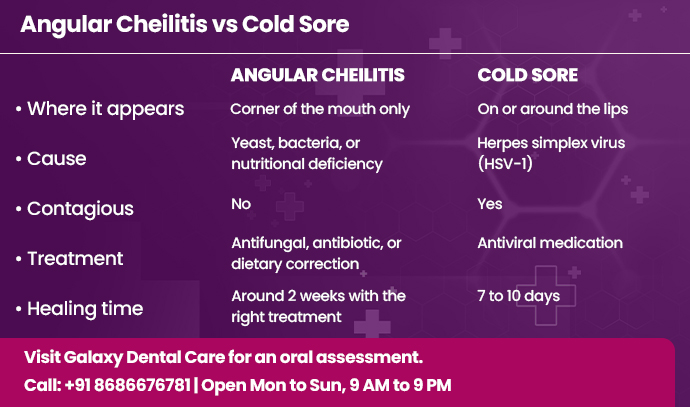
No. You can’t pass it to anyone. Not through kissing, sharing food, or any kind of contact. People confuse it with cold sores because both appear near the mouth. Here’s the difference at a glance:
Angular Cheilitis
Cold Sore
Location
Corner of the mouth
On or around the lips
Cause
Yeast, bacteria, or nutritional deficiency
Herpes simplex virus
Contagious
No
Yes
Treatment
Antifungal, antibiotic, or dietary correction
Antiviral medication
Healing time
2 weeks with correct treatment
7 to 10 days
Galaxy Dental Care, 9 locations across Hyderabad. Call +91 8686676781 if your mouth sore isn’t healing.
What Are the Angular Cheilitis Treatments?
This is the part that trips most people up. Angular cheilitis treatments only work when they match the cause. Antifungal cream does nothing if the cause is bacterial. An antibiotic won’t help if you’re deficient in B12. Getting the cause right comes before any treatment.
For Fungal Infection Antifungal cream, such as clotrimazole, applied to the affected corner. Your dentist or doctor confirms the cause first before prescribing.
For Bacterial Infection Topical antibiotic cream. Oral antibiotics for more severe cases.
For Nutritional Deficiency Dietary changes and the right supplement. A best dentist near me or doctor checks your B2, B12, iron, and zinc levels first.
For Ill-Fitting Dentures A dental adjustment to improve the fit. This stops saliva from pooling in the lip fold. No cream fixes this without fixing the dentures first.
For Mild or Dry Skin Petroleum jelly or plain, unflavoured lip balm applied regularly while the area heals.
For Inflammation A low-strength steroid cream is sometimes used alongside antifungal or antibiotic treatment.
Timeline: Most cases clear in two weeks with the right angular cheilitis treatment. If it keeps coming back, something is still feeding it. A dentist or doctor helps find what that is.
Why Would I See a Dentist for Angular Cheilitis?
Most people try a pharmacy cream first. Fair enough. But if it doesn’t work, or keeps coming back, there’s usually a dental reason behind it. These causes can only be fixed by a dentist:
Ill-Fitting Dentures — one of the top causes in older adults. Only a dentist adjusts or replaces them.
Missing Teeth — causes the lips to fold inward, creating deeper corners where saliva collects.
Oral Thrush — a Candida infection inside the mouth that often comes with angular cheilitis. Both need treating at the same time.
Dry Mouth — from medications or dental conditions, leaves the skin corner more prone to cracking.
A dentist checks the soft tissues of your mouth, not just your teeth. They spot infection, notice nutritional clues, and find what a pharmacy trip can’t.
At Galaxy Dental Care, we start with an oral check before advising anything. Many patients who’ve used antifungal cream for weeks without improvement have a dental issue sitting behind it.
When Should You See a Dentist?
Go in if any of these apply:
The sore hasn’t healed after two weeks of using a cream
It comes back every few weeks or months
The cracking is spreading beyond the corner of the mouth
It’s painful enough to affect eating, drinking, or speaking
You wear dentures and this keeps recurring
You’ve noticed white patches inside your mouth alongside the corner sores
Book a Dental Assessment in Hyderabad
If your angular cheilitis isn’t healing or keeps returning, our dental team can find the cause and guide the right angular cheilitis treatment for your case.
Galaxy Dental Care runs across 9 Hyderabad locations.
In Manikonda? Visit our branch at Narsingi, Puppalaguda Main Road. A go-to option for patients looking for the best dental clinic in Manikonda for oral health issues.
Near Secunderabad? Visit our AS Rao Nagar branch near Radhika Theatre — a trusted stop for those looking for the best dental clinic in AS Rao Nagar.
Across Hyderabad — The best dental clinic in Hyderabad for oral health support is available at Kondapur, Kukatpally, Banjara Hills, Chandanagar, Nallagandla, Kompally, Manikonda, and Vanasthalipuram.
Open Monday to Sunday, 9 AM to 9 PM. Call +91 8686676781 or +91 8686616148.
Frequently Asked Questions
What Does Angular Cheilitis Look Like?
Cracked, red, sore skin at one or both corners of the mouth. It may crust over, bleed when the mouth is opened wide, or develop a white discharge if infected.
Is Angular Cheilitis the Same as a Cold Sore?
No. Cold sores come from the herpes simplex virus and are contagious. Angular cheilitis is caused by yeast, bacteria, or a nutritional deficiency and doesn’t spread through contact.
How Long Does Angular Cheilitis Take to Heal?
Most cases clear in two weeks with the correct treatment. If it’s linked to ill-fitting dentures or a nutritional deficiency, it takes longer until the root cause is fixed.
Can Angular Cheilitis Come Back After Treatment?
Yes, if the root cause wasn’t fully treated. Recurring cases usually point to an ongoing issue: a deficiency, ill-fitting dentures, or weakened immunity.
What Vitamin Deficiency Causes Angular Cheilitis?
Low B2 (riboflavin), B12, iron, and zinc are all linked to it. A blood test confirms which deficiency is present. Your dentist or doctor can advise the right supplement.
Can a Dentist Treat Angular Cheilitis?
Yes. Especially for cases linked to dentures, oral thrush, dry mouth, or tooth loss. A dentist finds the dental cause that a pharmacy cream won’t touch.