How to Clean Dentures Properly: Daily Steps and What to Avoid
by Galaxy Dental CarePublished : 26 September 2026
How to clean dentures properly is a question I hear almost every day from patients who worry about bad breath, stains, or sore gums. The answer is straightforward: brush daily with a soft-bristle brush and mild soap or denture paste, soak in a commercial cleanser, and never use bleach or abrasive powders. At Galaxy Dental Care, our prosthodontists check your denture fit and gum health at every visit, and we show you the exact technique before you leave. With the right routine, dentures can last up to seven years. By the end of this guide, you will know exactly what to do each morning and night, what products to skip, and when a denture needs professional attention rather than another scrub.
Key takeaways
Brush dentures daily with a soft-bristle brush and mild soap or denture paste, not regular toothpaste.
Soak dentures in a commercial cleansing solution to break down plaque that brushing misses.
Never use bleach, powdered household cleansers, or abrasive pastes; they scratch acrylic and weaken the structure.
Rinse dentures after every meal and handle them over a towel or water to prevent breakage if dropped.
See your dentist if dentures cause persistent sore spots, looseness, or cracks that home care cannot fix.
What is the right daily routine for how to clean dentures properly?
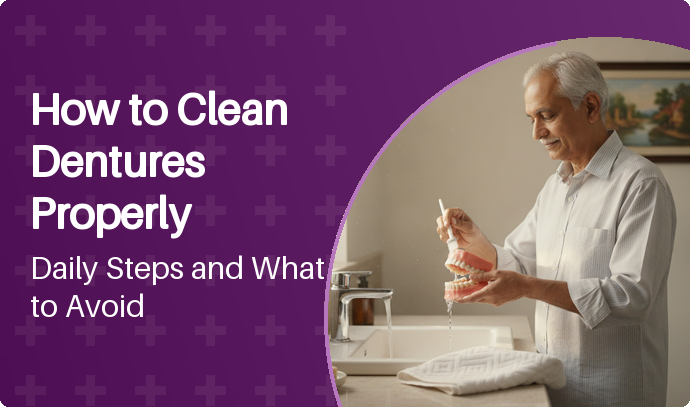
The right daily routine combines brushing and soaking. In the morning and before bed, remove your dentures and rinse them under running water to wash away loose food. Then brush all surfaces, including the underside that sits against your gums, with a soft-bristle toothbrush or denture brush and mild soap or a non-abrasive denture cleanser. Ordinary dental toothpaste is too abrasive for acrylic dentures and creates tiny scratches where bacteria collect. After brushing, soak the dentures in a commercial denture-cleansing solution following the product instructions. This chemical soak breaks down remaining plaque and biofilm that mechanical brushing alone cannot remove. Rinse thoroughly before putting them back in your mouth.
Patients who also wear Invisible Aligners often ask whether the same rules apply. Aligners need their own cleaning protocol, but the principle is similar: gentle daily brushing, no abrasives, and proper storage.
What products should I use and what should I avoid?
Use a soft-bristle brush, mild hand soap, dishwashing liquid, or a denture-specific paste. For soaking, choose a commercial denture cleanser tablet or solution from a pharmacy. Avoid bleach entirely, even diluted, because it whitens the pink acrylic gum base and weakens metal clasps on partial dentures. Avoid powdered household cleansers and regular whitening toothpastes; their abrasive particles scratch denture surfaces. Also avoid hot water, which warps acrylic and ruins the fit.
Product
Use
Risk if misused
Soft-bristle denture brush
Daily brushing of all surfaces
Hard brushes scratch acrylic
Mild soap or denture paste
Cleaning with warm water
Toothpaste abrades over time
Commercial denture soak
Daily soaking per label
Bleach whitens pink acrylic
Warm water rinse
After meals and before soaking
Hot water warps the denture
How do I protect my dentures from damage during cleaning?
Handle dentures over a folded towel or a sink filled with water. Acrylic dentures break if dropped onto a hard basin. Hold them firmly but without squeezing; the pressure points are weakest at the front where teeth meet the base. When brushing, do not bend the denture to reach the back; turn it instead. Store dentures in water or a damp cloth when not in your mouth to prevent drying and warping. Never wrap them in tissue or leave them on a bedside table where they dry out and distort overnight.
If you are considering a more permanent solution, Dental Implants eliminate the need for removable dentures entirely. Our implantologists assess bone support and gum health with in-house CBCT scans before recommending this option.
What are the signs that my dentures need professional attention?
Dentures need a dentist’s evaluation when home care stops solving the problem. Persistent sore spots, ulcers, or white patches under the denture flange signal poor fit or tissue irritation. A loose denture that slips when you eat or speak needs adjustment, not more adhesive. Cracks, chips, or worn chewing surfaces mean the denture is reaching the end of its service life. With proper care and maintenance, dentures can last up to seven years, but the base may need refitting or replacement as your jawbone changes shape.
Sign
What it means
When to call
Sore spot lasting more than 3 days
Pressure point or poor fit
Within 1 week
Denture feels loose
Bone resorption or warped base
As soon as eating is affected
Crack or chip in base
Structural weakness
Immediately; do not glue at home
Bad taste or odor after proper cleaning
Biofilm buildup or infection
Within a few days
Patients with Angular Cheilitis: Causes, Treatment & When to See a Dentist often have denture-related issues as an underlying cause. Poorly fitting dentures allow saliva to pool at the corners of the mouth, creating the conditions for this painful cracking.
How does denture care fit into overall oral health?
Even with full dentures, your mouth needs attention. Remove dentures at night to let gum tissues rest and recover from daily pressure. In the morning, brush your gums, tongue, and any remaining teeth with a soft brush. This stimulates circulation and removes plaque that causes bad breath and gum disease. If you wear a partial denture, floss and brush your natural teeth meticulously; the denture does not protect them from decay.
Regular Teeth Cleaning appointments at Galaxy Dental Care include denture inspection, professional ultrasonic cleaning if needed, and an oral cancer screening of the soft tissues beneath the denture. Our in-house OPG full-mouth X-rays check the bone levels under partial dentures.
Should I consider replacing my dentures with implants?
Implant-supported dentures or fixed bridges are an option when dentures no longer fit well or when you want to avoid the daily removal routine. Dental implants anchor into the jawbone and hold dentures firmly, eliminating slipping and reducing bone loss. However, implants require adequate bone density, healthy gums, and a commitment to meticulous hygiene. At Galaxy Dental Care, implant cases are assessed by implantologists and oral and maxillofacial surgeons who review your CBCT scan, medical history, and gum health before planning. A complete treatment plan is shared before any procedure begins.
For those who continue with removable dentures, our Complete Dentures service includes precise fitting, bite registration, and detailed home-care instruction at delivery.
What common mistakes do people make when cleaning dentures?
The most common mistake is using regular toothpaste because it feels familiar. Whitening toothpastes and smokers’ pastes are especially abrasive. Another error is skipping the soak; brushing alone leaves biofilm in porous acrylic surfaces. Some people use vinegar or lemon juice as “natural” cleaners; these acids etch the surface and create more places for bacteria to hide. Finally, many patients ignore small cracks and use superglue at home. Home repair materials are toxic in the mouth and rarely hold; they also make professional repair harder or impossible.
Children and elderly family members may need supervision. Our Pediatric Dentist team can advise if a young patient has a partial denture after trauma or early tooth loss.
Clean dentures daily with a soft brush and mild soap, soak them in a commercial solution, and avoid bleach and abrasives entirely. Handle them over a towel, store them in water, and see your dentist when sore spots, looseness, or cracks appear. With proper care, dentures can serve you well for up to seven years. For a denture assessment, professional cleaning, or to discuss implant alternatives, call Galaxy Dental Care on +91 86866 76781.
FAQs
Can I use regular toothpaste to clean my dentures?
No. Regular toothpaste is too abrasive for acrylic dentures and creates microscopic scratches where bacteria and stains collect. Use mild soap, dishwashing liquid, or a non-abrasive denture paste instead.
How often should I soak my dentures?
Soak dentures daily in a commercial denture-cleansing solution. This chemical soak breaks down plaque and biofilm that brushing alone cannot remove. Follow the product label for timing and dilution.
Is it safe to sleep with my dentures in?
No. Remove dentures at night to allow your gum tissues to rest and recover from the pressure of daytime wear. Sleeping with dentures increases the risk of gum irritation and oral infections.
Can I use bleach to whiten my dentures?
No. Bleach whitens the pink acrylic gum base permanently, weakens any metal clasps, and is not safe to use on dentures. Use only products designed specifically for denture cleaning.
What should I do if my denture breaks?
Do not use superglue or home repair kits. These materials are toxic in the mouth and usually make professional repair impossible. Call your dentist immediately for proper repair or replacement.
How long do dentures typically last?
With proper care and maintenance, dentures can last up to seven years. Over time, the jawbone changes shape and the denture base may need refitting or replacement to maintain comfort and function.