OPG Dental X-Ray: Understanding the Benefits and Process
by Galaxy Dental CarePublished : 13 July 2026
You went in for a dental check-up. The dentist looked at your teeth, asked a few questions, and then said: “You’ll need an OPG Dental X-Ray before we can begin treatment.” And now you want to know: What is an OPG? Is it safe? Why can’t a regular X-ray do the job?
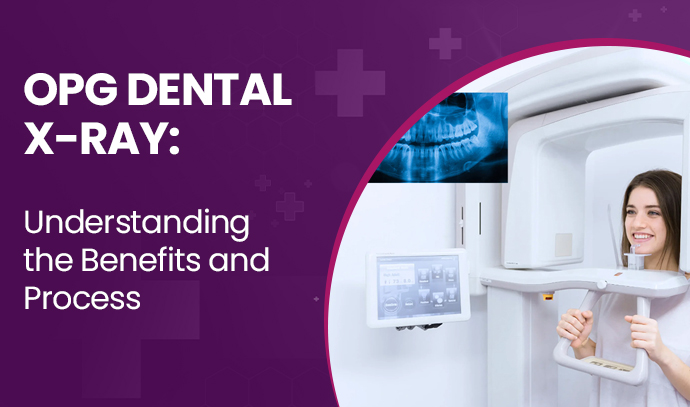
An OPG dental X-ray, also called an Orthopantomogram, is a single wide scan that captures every tooth, both jawbones, and the surrounding bone structure in one image. It’s done in under a minute. And it gives your dentist information that an individual X-ray simply can’t show.
At Galaxy Dental Care, OPG imaging is built into the treatment planning process at all 9 dental clinic in Hyderabad. With 15,000+ implant cases completed since 2003, the team knows what happens when treatment is planned without proper imaging.
With such dental experience this blog explains what an OPG shows, how the scan works, and whether it’s safe for you or not.
What Is An OPG Dental X-Ray?
An OPG is a panoramic (wide-angle) dental X-ray. It takes one flat picture of your entire mouth from the outside.
Think of it this way. A regular dental X-ray is like looking at one room of a house. An OPG is like looking at the full floor plan. Same building, completely different view.
The OPG machine present at the best dental clinic in Kompally doesn’t go inside your mouth. You stand or sit still while the arm of the machine rotates slowly around your head. The whole scan finishes in about 12 to 20 seconds.
OPG vs Regular Dental X-Ray: What’s the Difference?
Feature
OPG (Panoramic X-Ray)
Regular Intraoral X-Ray
Area covered
Full mouth, both jaws
1 to 3 teeth at a time
Machine position
Rotates outside your head
Film placed inside your mouth
Scan time
12 to 20 seconds
A few seconds per shot
Best used for
Implants, braces, wisdom teeth, jaw checks
Cavities, single tooth root checks
Repeat shots needed
Usually one is enough
May need multiple for full coverage
Both types of X-rays are useful. Your dentist near me picks the right one based on what they need to see.
What Does an OPG Dental X-Ray Actually Show?
OPG is one scan, with a lot of information. Here’s are some OPG dental X-Ray benefits, that shows up on an OPG image:
All Your Teeth : Upper and lower, including any that haven’t come through the gum yet.
The Jawbone : How dense it is, whether there’s any bone loss, and how the upper and lower jaws line up.
Jaw Joints, called the TMJ : The TMJ (temporomandibular joint) is the hinge connecting your jaw to your skull; problems here cause clicking, pain, or locking of the jaw.
Wisdom Teeth : Whether they’re impacted (stuck inside the bone) or growing at an angle toward other teeth.
Cysts or Growths : Unusual tissue in the jaw that doesn’t show up during a normal mouth check.
Alveolar Bone : The bone ridge that actually holds your teeth in place; when this bone shrinks, it’s a sign of gum disease.
No regular X-ray covers all of this together. That’s exactly why the OPG exists.
How Is an OPG Dental X-Ray Done? Step by Step
An OPG dental X-Ray process is quick and easy. The full machine rotation takes 12-20 seconds and the whole process is done under 5 steps.
Step 1: Remove Accessories : Take off glasses, earrings, hair pins, neck chains, and any removable dental plates. Metal objects show up on the image and block the view.
Step 2: Position at the Machine : You’ll either stand or sit at the OPG unit. Your chin rests on a small support. You’ll gently bite down on a thin plastic tab called a bite block to keep your head in the right position.
Step 3: Stay Still: The machine arm moves around your head on its own. You don’t move at all. The full rotation takes 12 to 20 seconds.
Step 4: Image is Created : The machine captures multiple images as it rotates. These are combined automatically into one panoramic picture.
Step 5: Dentist Reviews the Image: Your dentist or the radiographer at the best dental clinic in Hyderabad checks the scan for sharpness. If a retake is needed because of movement, it happens right away.
The machine never touches your face, so nothing enters your mouth during the scan.
Is an OPG Dental X-Ray Safe?
Yes, according to guidance from the International Atomic Energy Agency (IAEA), a panoramic dental X-ray exposes a patient to around 0.01 millisieverts (mSv) of radiation. It is roughly what you’d be exposed to from natural background radiation over one to two days just from the air, soil, and environment around you.
Digital OPG machines at any of the best dental hospital in Manikonda produce less radiation than older film-based ones. The image is captured in a single fast pass, and repeat shots are rarely needed.
A few specific situations to be aware of:
Children: OPG is safe for children when there’s a clinical reason. Paediatric dentists at Galaxy Dental Care use it to monitor developing teeth, check jaw growth, and plan early orthodontic care when needed.
Pregnant Patients: Tell your dentist if you’re pregnant. Dental X-rays are generally avoided in the first trimester unless there’s an urgent clinical need.
The scan is non-invasive. There are no needles, no dye, and no contact with your face.
Get Your OPG Dental X-Ray Done at Galaxy Dental Care.
If you are searching for a dental hospital near me, Galaxy Dental Care approach is diagnosis first, treatment second. No plan is made before the dentist understands what’s actually there.
The clinical team includes implantologists, orthodontists, endodontists, periodontists, and oral and maxillofacial surgeons. Each specialist reads OPG findings within the context of their treatment area. What an implantologist checks on the scan is different from what an orthodontist looks for.
Across all 9 Hyderabad branches including the dental hospital in AS Rao Nagar, OPG imaging supports treatment planning for implants, braces, oral surgery, wisdom tooth removal, and gum care.
Galaxy Dental Care has also completed 15,000+ implant procedures. Each one started with proper imaging. To book an appointment you can make a call to: +91 8686676781
Branches are open Monday to Sunday, 9 AM to 9 PM, across Hyderabad.
Frequently Asked Questions
What does OPG stand for in dentistry?
OPG stands for Orthopantomogram. It’s a type of panoramic dental X-ray that captures all your teeth, both jaws, and the surrounding bone in one image. It’s widely used before implants, braces, and oral surgery to help dentists plan treatment safely.
Does an OPG X-ray hurt?
Not at all. The scan is painless and non-invasive. You bite down gently on a small plastic tab and stay still for about 12 to 20 seconds. The machine rotates around your head without touching you.
How long does the whole OPG process take?
The scan itself takes 12 to 20 seconds. With preparation and image review, most patients are done in under 10 minutes. Digital results are ready almost immediately after the scan.
Can my child get an OPG X-ray?
Yes, when it’s clinically needed. The radiation dose is very low roughly equal to one to two days of natural background radiation. Paediatric dentists use OPG to monitor how children’s teeth and jaws are developing, especially before planning braces.
What’s the difference between an OPG and a CBCT scan?
An OPG gives a 2D panoramic view of the mouth — it shows what’s there and how things are positioned. A CBCT (Cone Beam Computed Tomography) scan is a 3D scan that gives detailed measurements of bone volume, density, and nerve location. CBCT is typically used for complex implant planning or surgical cases where exact measurements matter.