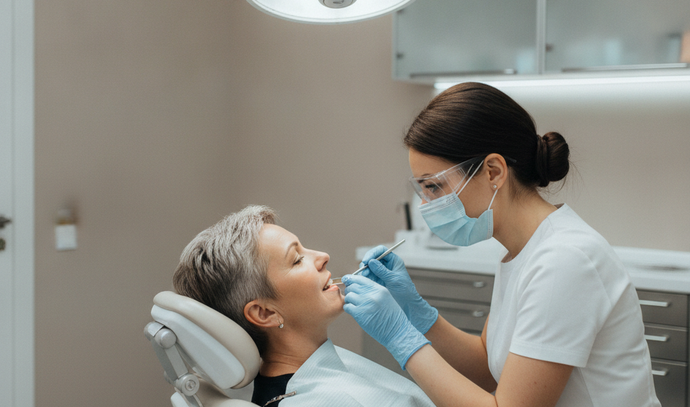
Angular cheilitis shows up as sore, red cracks at the corners of your mouth, and it stings every time you eat, talk, or smile. Most people worry it is something serious or contagious, which keeps them searching for clear answers. The condition is an inflammatory skin issue at the mouth angles, usually from moisture buildup, fungal infection, or nutritional gaps, and it typically improves with proper care in one to three weeks. At Galaxy Dental Care in Kondapur, we examine these lesions during routine oral check-ups to catch the real cause early and guide treatment that actually works. Read on to learn what triggers these cracks, how to treat them safely, and when a dental visit becomes essential.
What causes cracks at the corners of the mouth?
The skin at your mouth corners folds naturally, trapping saliva and creating a damp environment where yeast and bacteria grow. Fungal infection with Candida is the most common trigger, especially in people who wear dentures, have diabetes, or take medications that dry the mouth. Nutritional shortages of iron, zinc, riboflavin, or vitamin B12 weaken the skin and slow healing. Lip licking, ill-fitting dentures, and age-related skin sagging also keep the area moist and irritated.
Other contributing factors include:
- Eczema or contact dermatitis from toothpaste or cosmetics
- Downward folds at the mouth corners from tooth loss or aging
- Immune suppression from conditions or medications
- Allergies that cause frequent lip-licking
Identifying the exact cause matters because treatment differs. A fungal issue needs antifungal care, while irritation from a denture needs adjustment, not cream alone.
Is angular cheilitis the same as herpes or cold sores?
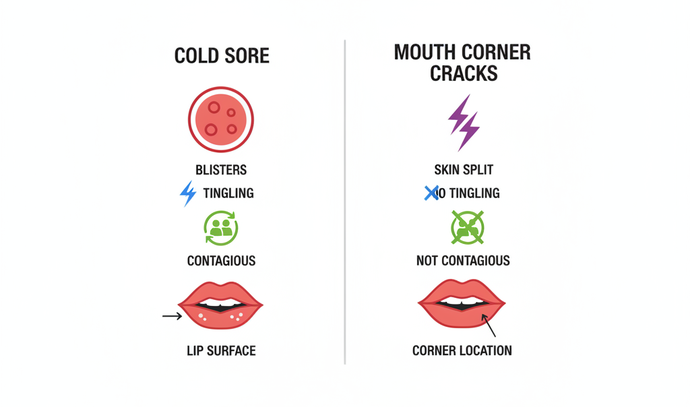
No. Cold sores from herpes simplex virus appear as clusters of fluid-filled blisters that crust over, often on the lip surface itself. The cracks from this condition stay at the mouth angles, look like splits or redness without blisters, and do not tingle before appearing the way herpes lesions do.
Herpes spreads through direct contact and flares repeatedly. The mouth corner condition does not spread person to person, though the underlying infection can worsen if untreated. If you are unsure which you have, a dentist can examine the lesion pattern and guide you to the right care. At Galaxy Dental Care, we distinguish these during routine oral exams to prevent wrong treatment.
How long does healing take and what helps?
Mild cases often improve in one to two weeks once moisture and irritation are controlled. Deeper cracks with infection may need two to three weeks of targeted treatment. The key steps are: keep the corners dry, apply the correct medicated cream, and fix whatever keeps the area wet.
| Treatment step | What to do | Why it works |
| Keep dry | Pat corners gently after eating; avoid lip licking | Removes the moist environment yeast needs |
| Barrier protection | Thin layer of petroleum jelly or zinc oxide | Shields skin from saliva while healing |
| Antifungal cream | Clotrimazole or miconazole as directed | Treats Candida overgrowth at the site |
| Denture adjustment | Visit your dentist for refitting | Stops friction and saliva pooling |
Antibacterial or steroid creams may help if bacteria or inflammation dominate, but use these only after professional guidance. Wrong cream can worsen fungal growth.
When should you see a dentist or doctor?
Book an appointment if cracks last more than two weeks, keep returning, or come with white patches inside the mouth, which suggest widespread fungal infection. Persistent cases may signal an underlying issue like diabetes, anemia, or immune problems that needs medical testing.
At Galaxy Dental Care, we check mouth corner lesions during regular exams and refer for blood tests when nutrition or systemic causes seem likely. We also adjust dentures and discuss habits that trap moisture. If you are considering straighter teeth to improve bite and lip support, Invisalign Aligners in Kondapur can help correct positioning that contributes to corner folding.
Can you prevent cracks from coming back?
Prevention focuses on dryness, nutrition, and oral health maintenance. Drink enough water but avoid pooling at the lips. Eat iron and B-vitamin rich foods like leafy greens, eggs, and legumes. Remove dentures at night and clean them daily. Use a humidifier in dry seasons to reduce lip-licking.
| Prevention habit | How to practice it | Benefit |
| Lip care | Apply plain balm before bed; avoid flavored products | Reduces irritation and licking |
| Denture hygiene | Soak overnight; brush gums and appliance daily | Prevents fungal buildup and poor fit |
| Nutrition check | Include B-vitamins and iron in meals; test if recurrent | Strengthens skin resistance |
| Regular dental visits | Every six months or as advised | Catches fit issues and oral changes early |
For patients in nearby areas, our team also provides Root Canal Treatment in Manikonda and Root Canal Treatment in Vanasthalipuram, maintaining the same focus on oral health that supports overall comfort.
Cracked mouth corners that will not heal need more than home care. Call Galaxy Dental Care at +91 86866 76781 or visit us at Plot no #154, Gachibowli – Miyapur Rd, opposite Harsha Toyota, Kondapur, Hyderabad, Telangana 500084 for an exam and a treatment plan that targets the real cause.
Cracks at the mouth corners usually come from moisture, yeast, or missing nutrients, not serious disease. Keeping the area dry, using the right cream, and fixing denture fit brings relief in most cases. See a dentist if symptoms persist beyond two weeks or keep returning. Galaxy Dental Care in Kondapur examines these lesions during routine visits and guides you to lasting solutions.
FAQs
What antifungal cream works for cracked mouth corners?
Clotrimazole or miconazole cream applied two to three times daily for one to two weeks treats the Candida yeast that commonly causes these cracks. A thin barrier of petroleum jelly over the cream protects from saliva. See a dentist if there is no improvement in ten days.
Is this condition contagious through kissing or sharing cups?
No. The cracked corners themselves do not spread from person to person. The yeast involved is often already present in the mouth naturally. Avoid sharing items mainly to prevent secondary bacterial infection, not because the condition itself spreads.
How long do mouth corner cracks usually last?
Mild cases heal in one to two weeks with dryness and barrier care. Infected or deeper cracks need two to three weeks of antifungal or antibacterial treatment. Recurrent cases lasting over a month warrant dental or medical investigation for underlying causes.
Can this signal something dangerous?
The condition itself is not dangerous, but frequent recurrences may point to diabetes, anemia, immune suppression, or severe nutritional deficiency. White patches inside the mouth alongside corner cracks suggest widespread fungal infection needing professional treatment.
Is this the same as a cold sore?
No. Cold sores are fluid-filled blisters from herpes simplex virus that crust and recur. Mouth corner cracks are split, red skin without blisters, located specifically at the lip angles, and lack the tingling prodrome typical of herpes outbreaks.
Will dentures make this keep coming back?
Poorly fitting dentures can cause it by creating folds that trap saliva and by reducing the vertical support that keeps lips aligned. Denture adjustment or replacement, plus nightly removal and thorough cleaning, significantly reduces recurrence risk.