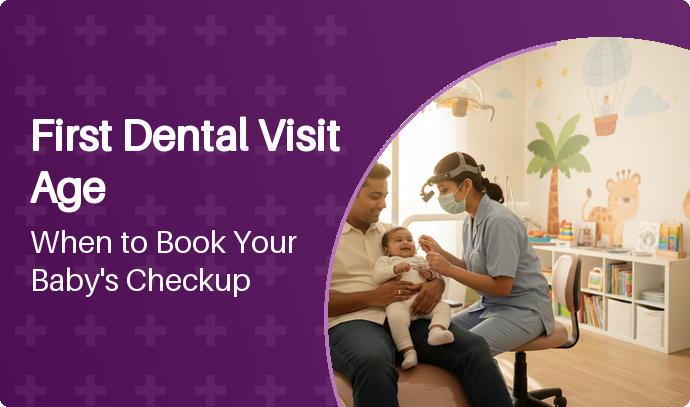
First Dental Visit Age: When to Book Your Baby’s Checkup
by Galaxy Dental CarePublished : 13 October 2026
First dental visit age is a worry for many new parents, and the answer is earlier than most expect. The American Academy of Pediatric Dentistry recommends your child sees a dentist by their first birthday or within six months of their first tooth coming through, whichever happens first. Galaxy Dental Care follows this guidance with paediatric dental chair units designed for small children and a team that includes pedodontists who check early tooth development, gum health, and feeding habits. At this first visit, the dentist examines your child’s mouth, shows you how to clean emerging teeth, and discusses diet and fluoride. By the end of this article, you will know exactly when to book, what the dentist checks, and how to prepare your child so the visit goes smoothly.
Key takeaways
Book your child’s first dental visit by their first birthday or within six months of the first tooth erupting.
Early visits let the dentist spot developmental issues before they become painful problems.
The first appointment focuses on parent education: cleaning technique, diet, and fluoride guidance.
Children who visit early are less likely to need emergency treatment later.
Galaxy Dental Care offers paediatric dental chairs and a pedodontist team for these early assessments.
What is the recommended first dental visit age for a child?
The recommended first dental visit age is by your child’s first birthday or within six months of their first tooth erupting, whichever comes first. This guideline comes from the American Academy of Pediatric Dentistry, the American Dental Association, and the American Academy of Pediatrics. Many parents wait until a child is three or older, but research shows children often make their first visit too late, typically around age seven. Early visits establish what dentists call a “dental home,” a regular practice your child knows and trusts. At Galaxy Dental Care, pedodontists use Pediatric Dentist expertise to make these first assessments comfortable for both child and parent.
Why does the first dental visit age matter so much?
Early dental visits matter because baby teeth set the path for adult teeth and overall oral health. A dentist can spot early signs of tooth decay, check how the jaw is developing, and identify habits like thumb-sucking that may affect tooth position. Cavities in baby teeth can lead to pain, infection, and problems with eating or speaking. The first visit also gives parents direct guidance on cleaning gums and teeth, choosing the right toothpaste amount, and understanding which foods and drinks raise cavity risk. Children who start dental visits early tend to have fewer emergencies and less anxiety about dental care as they grow. Galaxy Dental Care’s Pediatric Dentist team focuses on prevention from the very first appointment.
What happens at a child’s first dental appointment?
A child’s first dental appointment is brief and gentle, usually lasting a short time. The dentist examines your child’s gums, jaw, and any erupted teeth. They check for early decay, assess bite development, and look for tongue or lip ties that might affect feeding. The parent holds the baby or sits with the toddler, and the dentist demonstrates how to clean the mouth with a soft cloth or small brush. You will discuss feeding habits, bottle use, pacifiers, and whether your water supply contains fluoride. The dentist may apply a small amount of fluoride varnish to protect emerging teeth. No invasive procedures happen at this visit unless an urgent problem is found. Galaxy Dental Care uses paediatric dental chair units sized for small children, and every treatment plan is explained before any procedure begins.
How to prepare your child for their first dental visit
Schedule the appointment when your child is usually alert and content, often mid-morning.
Bring a comfort item like a favourite toy or blanket.
Stay calm yourself; children sense parental anxiety.
Use simple, positive words: “The dentist will count your teeth and give you a big smile.”
Avoid bribes or threats, which build fear rather than trust.
What is checked before any treatment begins?
Before any treatment, the dentist reviews your child’s medical history, birth details, current medicines, and any allergies. They ask about feeding patterns, including nighttime bottle or breastfeeding habits that can pool milk against teeth. The dentist performs a visual exam of the soft tissues, counts erupted teeth, and checks for white spots or brown areas that signal early decay. At Galaxy Dental Care, diagnosis is supported by in-house OPG full-mouth dental X-rays and CBCT 3D scanning when needed for older children with complex development. Strict hygiene protocols are followed at every step. A complete treatment plan is shared with parents before any procedure begins, and open discussion is encouraged. For ongoing protection, parents can learn about Preventive Dentistry options that suit their child’s stage.
What the dentist checks
Why it matters
What parents should mention
Number and position of erupted teeth
Tracks normal development and spacing
If teeth came in early, late, or out of order
White or brown spots on enamel
Early sign of decay before a cavity forms
Bottle use at night or frequent sugary snacks
Lip, tongue, and cheek attachments
Ties can restrict movement and affect feeding
Difficulty breastfeeding or speech concerns
Jaw alignment and bite
Early orthodontic issues may be visible
Family history of crowded or misaligned teeth
How often should a child see the dentist after the first visit?
After the first dental visit, regular checkups are recommended based on your child’s oral health needs. Most children benefit from visits every six months, though some with higher cavity risk may need more frequent monitoring. These follow-ups allow the dentist to track tooth eruption, apply protective fluoride, clean hardened plaque, and reinforce good home habits. Consistent visits build familiarity, so dental care becomes routine rather than frightening. Galaxy Dental Care is open Monday to Sunday, 9 AM to 9 PM, with scheduled appointments and private rooms to keep visits calm and predictable. A Pediatric Dentist in AS Rao Nagar follows the same early assessment protocols as all Galaxy Dental Care branches.
Sign
Normal or expected
Call the dentist if
Teething fussiness
Drooling, gum rubbing, mild irritability for days
Fever above 38°C, rash, or symptoms last more than three days
Bleeding gums when brushing
Light pink on brush with new teeth eruption
Bleeding is heavy, swollen, or persists beyond one week
White spots on teeth
Not normal; early decay sign needing prompt check
Spots appear, spread, or teeth become sensitive
Delayed tooth eruption
First tooth usually between four and ten months
No teeth by twelve months or gaps longer than six months between teeth
What if my child is already past the recommended first dental visit age?
If your child is already past the recommended first dental visit age, book an appointment now rather than waiting longer. It is never too late to establish a dental home and assess current oral health. The dentist will evaluate what has developed so far, address any decay or habits, and create a plan to get back on track. Older children may need more support to feel comfortable, and the dental team will adapt the approach to your child’s temperament and past experiences. Galaxy Dental Care’s multispeciality team includes pedodontists who work alongside orthodontists, periodontists, and oral surgeons when complex needs arise. For families considering advanced options, Laser Dentistry is available for certain gum and soft-tissue procedures if needed.
What are the risks of delaying the first dental visit?
Delaying the first dental visit raises the risk of untreated tooth decay, which is the most common chronic disease in young children. Cavities in baby teeth can spread quickly because enamel is thin. Untreated decay leads to pain, infection, difficulty eating, and early tooth loss. Lost baby teeth can cause spacing problems for adult teeth, sometimes requiring later orthodontic work. Early visits also miss the chance to catch developmental issues like enamel defects or jaw growth concerns. Parents lose the opportunity to learn proper cleaning technique and dietary guidance at the stage when habits form most easily. Galaxy Dental Care provides Pediatric Dentist in Kompally services with the same early-intervention focus, ensuring accessible care across branches.
Common parent concerns about early dental visits
“My child has only one tooth.” One tooth is enough to check development and start prevention.
“They won’t sit still.” First visits are brief and flexible; the dentist adapts to your child’s mood.
“Baby teeth fall out anyway.” Baby teeth hold space for adult teeth and affect speech and nutrition.
“It seems too expensive.” Early prevention costs far less than treating decay or infection later.
The first dental visit age is by your child’s first birthday or within six months of their first tooth, whichever comes first. Early visits prevent decay, guide healthy habits, and build trust with dental care. Galaxy Dental Care’s pedodontist team, paediatric dental chairs, and parent-focused approach make these assessments straightforward. Call Galaxy Dental Care on +91 86866 76781 to book your child’s first appointment and establish their dental home.
FAQs
Can I take my baby to a regular dentist instead of a pediatric dentist?
A general dentist can see children, but a pediatric dentist has additional training in child development, behaviour management, and treating young patients. For very young children or those with anxiety, a pediatric dentist's specialised equipment and techniques often lead to a better experience.
What should I do if my child cries during the first dental visit?
Crying is normal and expected. The dental team is trained to work with upset children, and parents are usually present to comfort them. A brief, positive visit is still valuable even if your child is not perfectly cooperative.
Does dental insurance cover a child's first dental visit?
Many plans cover preventive visits for children, but coverage varies. Galaxy Dental Care has accepted dental insurance provider tie-ups and can discuss what your plan includes before the appointment.
How do I clean my baby's teeth before the first dental visit?
Wipe gums with a soft, damp cloth after feeding. Once teeth appear, use a tiny smear of fluoride toothpaste on a soft brush twice daily. Your dentist will demonstrate the exact technique at the first visit.
What foods should I avoid to protect my baby's teeth?
Avoid putting your baby to bed with a bottle of milk or juice, as the sugars pool against teeth overnight. Limit sticky snacks and sweetened drinks between meals, and offer water when your child is thirsty.
Is fluoride safe for babies and young children?
Fluoride is safe in the correct amount and strengthens developing enamel. Use a rice-grain-sized smear of toothpaste for children under three. Your dentist will advise if additional fluoride is needed based on your local water supply and your child's cavity risk.