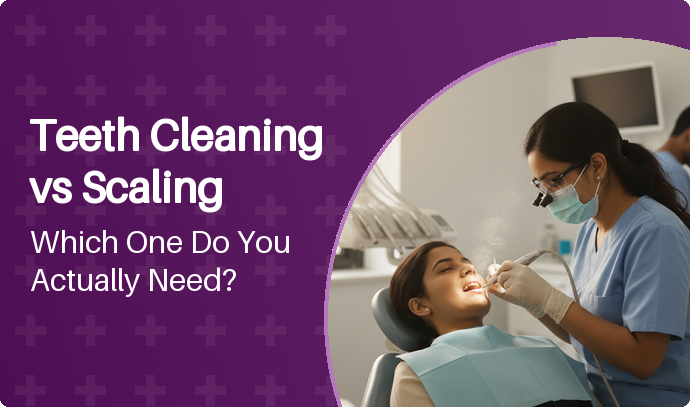
Teeth Cleaning vs Scaling: Which One Do You Actually Need?
by Galaxy Dental CarePublished : 04 October 2026
The teeth cleaning and teeth scaling difference confuses most patients because both involve removing tartar from your teeth. Teeth cleaning is preventive maintenance for healthy gums, while teeth scaling is corrective treatment for gum disease that has already begun. At Galaxy Dental Care, our periodontists check your gum pocket depth and review your OPG full-mouth X-ray before deciding which you need. Every patient sees the diagnosis and gets a full treatment plan before any procedure begins. By the end of this article, you will know which appointment to request and what signs mean you should not delay scaling.
Key takeaways
Teeth cleaning removes surface plaque and tartar above the gumline to prevent disease.
Teeth scaling removes hardened deposits below the gumline to treat existing gum disease.
Gum bleeding, pocket depth over 3 mm, and persistent bad breath signal you need scaling, not routine cleaning.
Scaling may be followed by root planing to smooth tooth roots and help gums reattach.
Both procedures are safe when done by qualified dentists using proper technique.
What is teeth cleaning and what does it actually do?
Teeth cleaning is a preventive procedure that removes soft plaque and hard tartar from the visible surfaces of your teeth and just above the gumline. A dentist or hygienist uses an ultrasonic scaler and polishing tools to clean areas your brush and floss cannot reach. The goal is to stop gum disease before it starts and to keep your breath fresh and your enamel stain-free. At Galaxy Dental Care, Teeth Cleaning is part of our Preventive Dentistry programme, with strict hygiene protocols at every step.
Most people with healthy gums need this every six months. The appointment takes 30 to 45 minutes. You can eat and drink normally afterward. There is no recovery time because the gums are not disturbed below the surface.
What is teeth scaling and when is it necessary?
Teeth scaling is a corrective procedure that removes hardened tartar and bacterial deposits from below the gumline, inside the spaces between your tooth and gum tissue called periodontal pockets. Scaling becomes necessary when plaque has hardened into calculus and bacteria have caused inflammation that routine cleaning cannot reverse. At Galaxy Dental Care, Teeth Scaling is performed by periodontists who measure pocket depth with a calibrated probe and confirm bone levels on your in-house CBCT 3D scan before beginning.
Scaling is often paired with root planing, which smooths the root surfaces so gums can reattach and bacteria find fewer places to hide. The procedure may take one to two hours and may require local anaesthetic. Depending on how many areas are affected, it may be done in one visit or split into quadrants.
How do I know whether I need teeth cleaning or teeth scaling?
The decision depends on what your dentist finds during examination, not on how your teeth look in the mirror. Healthy gums sit snug against teeth with pocket depths of 1 to 3 millimetres. When pockets reach 4 mm or more, or when gums bleed during gentle probing, tartar has likely formed below the gumline and cleaning alone will not suffice. At Galaxy Dental Care, every branch has a coordinated team of 3 to 5 dentists across specialities, so your gum health is assessed by a periodontist, not guessed.
Sign or finding
Teeth cleaning
Teeth scaling
Gum pocket depth
1 to 3 mm
4 mm or more
Bleeding gums
Rare or none
Consistent, even when brushing gently
Tartar location
Above gumline, visible
Below gumline, hidden
Bad breath
Mild, occasional
Persistent, not improved by brushing
Primary goal
Prevent gum disease
Treat existing gum disease
Is scaling bad for teeth or enamel?
Scaling is not bad for teeth when performed correctly by a trained dentist using appropriate ultrasonic or hand instruments. The procedure targets tartar, not enamel. Some patients notice temporary sensitivity to cold or sweet foods for a few days because the root surface, previously covered by tartar, is now exposed. This sensitivity usually fades within one to two weeks. At Galaxy Dental Care, our periodontists check your medical history and current medicines before scaling to identify any factors that might affect healing, such as blood thinners or diabetes.
Delaying scaling when you need it is far riskier than the procedure itself. Untreated tartar below the gumline leads to periodontitis, which can cause tooth loss and has been linked to broader health conditions.
What happens during and after each procedure?
During teeth cleaning, the dentist uses an ultrasonic scaler that vibrates tartar loose, then polishes your teeth with a gritty paste to smooth the surface and remove stains. You leave with clean, smooth teeth and instructions to maintain daily brushing and flossing.
During teeth scaling, the dentist or periodontist may numb your gums with local anaesthetic. They use finer instruments to reach below the gumline, sometimes including a laser for gum and soft-tissue procedures to reduce bacteria and aid healing. Afterward, you may be asked to avoid very hot or cold foods for 24 hours and to use a prescribed mouth rinse. A follow-up appointment in 4 to 6 weeks checks whether pockets have shrunk and gums have reattached.
What to expect
Teeth cleaning
Teeth scaling
Duration
30 to 45 minutes
1 to 2 hours, sometimes split across visits
Anaesthetic
Usually not needed
Often used for comfort
Recovery
None; eat and drink normally
Mild soreness for 1 to 3 days; sensitivity up to 2 weeks
Follow-up
Return in 6 months
Review in 4 to 6 weeks, then maintenance every 3 months
Can teeth cleaning replace scaling, or do I need both?
Teeth cleaning cannot replace scaling once tartar has formed below the gumline. The two procedures serve different stages of gum health. Think of cleaning as regular servicing and scaling as the repair you need when a warning light appears. Patients who have completed scaling move to a maintenance schedule that alternates between cleaning and deeper monitoring visits to prevent relapse. At Galaxy Dental Care, your periodontist creates a personalised schedule based on your pocket depths, bone levels from your OPG or CBCT scan, and risk factors like smoking or diabetes.
If you are considering Braces & Aligners or Invisible Aligners, healthy gums are essential first. Active gum disease must be controlled with scaling before orthodontic treatment begins. Similarly, patients seeking Smile Designing or Teeth Whitening will have their gum health assessed as part of the planning process.
The teeth cleaning and teeth scaling difference comes down to prevention versus correction. Cleaning keeps healthy gums healthy; scaling treats gum disease that has already taken hold. The only way to know which you need is a proper examination with pocket depth measurement and X-ray review. If your gums bleed when you brush, or your dentist has mentioned deep pockets, do not postpone scaling. Call Galaxy Dental Care on +91 86866 76781 to book an assessment. We are open Monday to Sunday, 9 AM to 9 PM, with a 24/7 emergency phone line for urgent concerns.
FAQs
Is teeth scaling painful?
Teeth scaling is usually done with local anaesthetic, so you should feel pressure but not sharp pain. Afterward, mild soreness and temperature sensitivity are common for one to three days. If discomfort lasts beyond a week, contact your dentist.
How often should I get teeth cleaning versus scaling?
Teeth cleaning is typically scheduled every six months for people with healthy gums. Teeth scaling is done only when diagnosed gum disease is present, then followed by maintenance visits every three months to monitor pocket depth and prevent relapse.
Can I do teeth scaling at home?
No. Tartar below the gumline cannot be removed with home tools, and attempting it can damage gums or enamel. Professional scaling uses calibrated instruments and often requires anaesthetic and sterile technique.
Will scaling make my teeth loose?
Scaling does not loosen teeth. In advanced gum disease, teeth may already feel loose because tartar was the only thing holding them in place. Removing tartar allows proper assessment and treatment, which is necessary to save the tooth.
Does dental insurance cover teeth scaling?
Many dental insurance plans cover both preventive cleaning and therapeutic scaling, though coverage for scaling may require documentation of diagnosed gum disease. Galaxy Dental Care has accepted dental insurance provider tie-ups and can confirm your specific coverage before treatment begins.
What foods should I avoid after teeth scaling?
For the first 24 hours, avoid very hot, very cold, spicy, or hard foods that could irritate tender gums. Stick to soft, lukewarm foods and drink plenty of water. Your dentist may also recommend avoiding alcohol-based mouthwash temporarily.