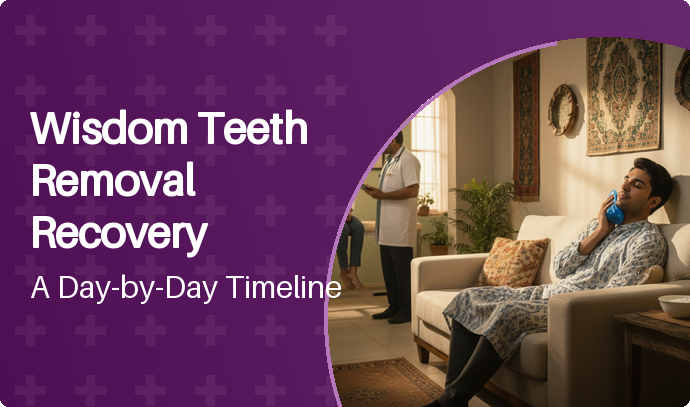
Wisdom Teeth Removal Recovery: A Day-by-Day Timeline
by Galaxy Dental CarePublished : 17 October 2026
Wisdom teeth removal recovery is what most people worry about more than the surgery itself. You want to know exactly when the swelling will peak, when you can eat normally again, and what warning signs mean trouble. The short answer: swelling and pain are usually worst on days two and three, most people resume normal activities within a few days, and full healing takes up to two weeks. At Galaxy Dental Care, our oral surgeons and team of 55+ dentists across 9 branches handle wisdom tooth extractions with in-house OPG and CBCT 3D scans to plan your case precisely. By the end of this guide, you will know what each recovery day looks like and exactly when to pick up the phone and call us.
Key takeaways
Pain and swelling peak on days two and three after wisdom teeth removal.
A blood clot protects the socket for the first 24 hours; disturbing it causes dry socket.
Switch from ice to warm compresses after 48 hours to reduce jaw stiffness.
Full healing takes up to two weeks, though most resume normal life within days.
Call your dentist if bleeding soaks through gauze after four hours or fever exceeds 38°C.
What happens in the first 24 hours after wisdom teeth removal?
The first 24 hours after wisdom teeth removal are about protecting the blood clot that forms in the socket. This clot is your body’s natural dressing; it stops bleeding and begins healing. You will leave the clinic biting firmly on gauze for 30 to 60 minutes. Some oozing is normal. Numbness from the local anaesthetic wears off over two to four hours, so take your prescribed pain medication before that happens.
Do not rinse, spit, drink through a straw, smoke, or drink alcohol during this period. These actions create suction that can dislodge the clot and lead to dry socket, a painful condition where bone and nerve become exposed. Rest with your head elevated, apply ice packs to your cheek for 15 minutes on and 15 minutes off, and eat only soft cool foods like yoghurt or mashed banana.
At Galaxy Dental Care, every Wisdom Teeth Removal case is assessed with an OPG full-mouth X-ray or CBCT 3D scan to check root position and nerve proximity before surgery. This planning reduces the risk of complications from the start.
Why do days two and three hurt the most?
Days two and three after wisdom teeth removal are usually the most uncomfortable because swelling and jaw stiffness, called trismus, peak during this period. The body’s inflammatory response is in full effect, and the anaesthetic has completely worn off. Pain typically radiates to the ear or temple on the affected side.
Switch from ice to warm compresses on day two. Warmth increases blood flow and helps relax stiff jaw muscles. Begin gentle warm salt water rinses after 24 hours to keep the area clean, but do not swish vigorously. Continue soft foods and avoid anything crunchy, chewy, or seedy that could lodge in the socket.
If you had all four wisdom teeth removed, which happens in roughly half of cases, your recovery may feel more intense. Your surgeon will have discussed this during your consultation based on your scan results and medical history.
When can you return to normal eating and activity?
Most people can resume daily activities within 48 to 72 hours after wisdom teeth removal, but this depends on how complex your extraction was and how your body heals. Strenuous exercise, heavy lifting, and anything that raises your heart rate should wait until your surgeon clears you, as increased blood pressure can trigger bleeding or swelling.
Gradually reintroduce solid foods starting around day three or four. Begin with soft pasta, scrambled eggs, or well-cooked vegetables. Avoid nuts, chips, seeds, and spicy foods until the sockets have closed over, usually by day seven to ten. Drinking through a straw remains off-limits for at least one week.
Regular Teeth Cleaning and professional checks help maintain the gum health that supports healing after any extraction. We recommend scheduling your next routine clean once recovery is complete.
What are normal healing signs versus warning signs?
Knowing what is normal during wisdom teeth removal recovery helps you spot problems early. Mild oozing, bad taste, and bruising on the cheek or jaw are common and not cause for alarm. Severe or worsening pain after day three, foul odour, or visible bone in the socket suggest dry socket and need prompt dental review.
Sign
Normal or Expected
Call Your Dentist If…
Bleeding
Light oozing for 24 hours
Gauze soaks through after 4 hours of firm pressure
Swelling
Peaks day 2-3, then fades
Increases after day 4 or spreads to the eye or neck
Pain
Controlled with prescribed medication
Worsens after day 3 or medication stops working
Fever
Slight temperature rise under 38°C
Temperature reaches 38°C or higher
Jaw opening
Stiff for 3-5 days
Cannot open mouth at all after one week
Taste or odour
Mild bad taste as clot breaks down
Foul smell with severe pain, especially after day 3
Antibiotics are only prescribed if infection is present or you have specific risk factors. Taking antibiotics “just in case” is not standard practice and can lead to resistance.
How long does full wisdom teeth removal recovery take?
Full wisdom teeth removal recovery takes up to two weeks for the gum tissue to close over the socket and several more weeks for the bone underneath to fill in completely. The surface heals faster than what you cannot see, so even when you feel fine, the socket is still vulnerable to food trapping and irritation.
Continue salt water rinses after meals until the holes have fully closed. If food becomes trapped, rinse gently rather than probing with fingers or tools. For patients with ongoing gum concerns, Teeth Scaling may be recommended once healing is complete to reduce bacteria around the back teeth.
Smoking delays healing significantly and raises dry socket risk. If you smoke, the ideal plan is to stop at least 72 hours before surgery and not resume for one week after. We discuss this openly during your pre-operative assessment because it directly affects your outcome.
What should you ask before scheduling wisdom teeth removal?
Before any wisdom teeth removal, your dentist or oral surgeon should explain what your OPG or CBCT scan shows about root shape, nerve position, and bone density. Ask whether your case needs a simple extraction or surgical removal, what anaesthetic options are available, and what your specific recovery timeline will likely look like.
At Galaxy Dental Care, implantologists and oral and maxillofacial surgeons assess every surgical case together. We check bone support, gum health, and medical history including diabetes, blood thinners, and smoking before planning. A complete treatment plan is shared before any procedure begins, and our 24/7 emergency phone line is available for post-treatment concerns.
If you are also considering alignment changes after extraction, our team can discuss whether Invisalign Aligners or other orthodontic options fit your longer-term goals. Some patients have Wisdom Teeth Removal in Kondapur and follow-up care at their nearest branch for convenience.
Recovery Stage
What Is Happening
What You Should Do
Day 1 (0-24 hours)
Blood clot forms; numbness wears off
Bite gauze, apply ice, rest, take pain meds, no rinsing or straws
Days 2-3
Swelling and jaw stiffness peak
Switch to warm compresses, start gentle salt water rinses, soft foods only
Resume normal diet cautiously, monitor for trapped food, book follow-up if needed
Wisdom teeth removal recovery follows a clear pattern: protect the clot for 24 hours, expect peak discomfort on days two and three, and allow up to two weeks for full surface healing. Watch for bleeding that won’t stop, fever over 38°C, or worsening pain after day three. To schedule your assessment or discuss any concerns, call Galaxy Dental Care on +91 86866 76781. Our team is available Monday to Sunday, 9 AM to 9 PM, with a 24/7 emergency line for urgent post-treatment questions.
FAQs
How soon can I go back to work after wisdom teeth removal?
Most people return to desk work within two to three days after wisdom teeth removal. If your job involves physical labour, heavy lifting, or talking constantly, plan for four to five days off. Your surgeon will advise based on how complex your extraction was.
Can I brush my teeth the day after wisdom teeth removal?
Yes, you can brush your teeth from day two, but avoid the extraction sites directly. Do not spit forcefully; let toothpaste dribble out instead. Rinse gently with warm salt water after brushing to keep the area clean without disturbing the clot.
What does dry socket feel like and when does it start?
Dry socket causes severe throbbing pain that usually begins two to four days after extraction, often radiating to the ear. The socket may look empty or show visible bone, and pain medication provides little relief. See your dentist immediately for dressing and pain management.
Do I need someone to stay with me after wisdom teeth removal?
If you had sedation or general anaesthetic, you need a responsible adult to take you home and stay with you for the first 24 hours. If you had local anaesthetic only, you can travel alone but should still rest and avoid driving until numbness wears off completely.
Why did my dentist recommend removing my wisdom teeth if they weren't hurting?
Wisdom teeth are often removed before they cause pain if X-rays show crowding, decay risk, cyst formation, or damage to neighbouring teeth. Early removal in your late teens or early twenties usually means easier surgery and faster recovery because roots are less developed and bone is more flexible.
Is wisdom teeth removal covered by dental insurance?
Many dental insurance plans cover part or all of wisdom teeth removal, especially when medically necessary. Galaxy Dental Care has accepted dental insurance provider tie-ups. Bring your policy details to your consultation so we can confirm your coverage before planning treatment.