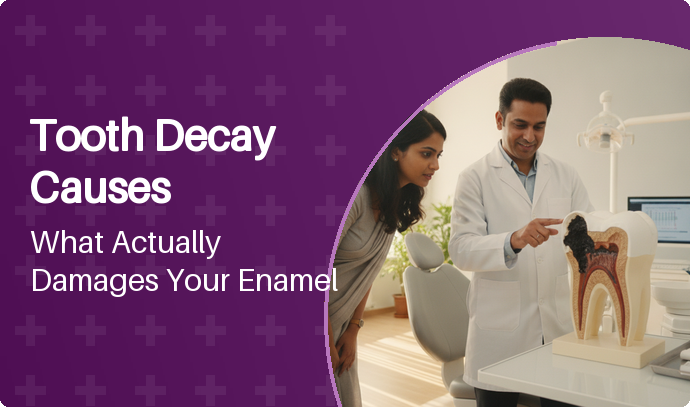
Tooth Decay Causes: What Actually Damages Your Enamel
by Galaxy Dental CarePublished : 25 September 2026
Tooth decay causes start with bacteria in your mouth that feed on sugars and starches from food and drinks. These bacteria produce acids that attack your tooth enamel, the hard outer surface that protects each tooth. Over time, this acid attack creates tiny holes called cavities. If left untreated, decay can reach deeper layers, causing pain, infection, and even tooth loss. At Galaxy Dental Care, our team of 55+ dentists across 9 branches checks for early decay using in-house OPG full-mouth X-rays during routine examinations. We explain what we find, show you the treatment options, and give you a full plan before any procedure. By the end of this article, you will know exactly which habits raise your risk and what steps to take to protect your teeth.
Key takeaways
Bacteria in your mouth convert sugars into acids that erode tooth enamel over time.
Frequent snacking and sugary drinks give bacteria more fuel to produce harmful acids.
Dry mouth, poor brushing, and certain medicines increase decay risk significantly.
Early decay often has no symptoms, so regular check-ups with X-rays catch it before cavities form.
Fluoride, proper brushing, and limiting sugar exposure are the most effective preventive steps.
What are the main tooth decay causes?
The main tooth decay causes are bacteria in your mouth, sugars and starches from your diet, and the acids these bacteria produce. When you eat or drink, bacteria such as Streptococcus mutans feed on carbohydrates left on your teeth. They convert these into acids that dissolve the minerals in your enamel. This process is called demineralization. Saliva normally helps neutralize acids and remineralize enamel, but frequent acid attacks overwhelm this natural repair system. Over months or years, the enamel weakens and cavities form. At Galaxy Dental Care, we assess your decay risk by reviewing your diet, medical history, and current medicines, then examine your teeth with an OPG full-mouth X-ray to spot early damage that a visual check might miss.
Certain conditions make decay more likely. Dry mouth from medicines, medical conditions, or aging reduces saliva’s protective effect. Deep grooves in teeth trap food and bacteria. Gum recession exposes softer root surfaces that decay faster than enamel. Understanding your specific risk factors helps us tailor Preventive Dentistry to your situation rather than using a one-size-fits-all approach.
How does sugar actually cause tooth decay?
Sugar does not directly damage teeth, but it feeds bacteria that produce acid as a waste product. Every time you consume sugary foods or drinks, bacteria metabolize the sugar and release acids onto your tooth surfaces. This acid lowers the pH in your mouth below 5.5, the critical level at which enamel begins to dissolve. The more frequently you expose your teeth to sugar, the longer your mouth stays in this acidic state. Sipping sugary beverages over hours is more harmful than eating the same amount of sugar quickly because the acid attack is prolonged. Sticky foods like candy or dried fruit cling to teeth longer, giving bacteria more time to feed.
Starches like bread, crackers, and chips also break down into sugars in your mouth and feed bacteria similarly. Many processed snacks contain added sugars that accelerate decay. At Galaxy Dental Care, we advise patients on practical ways to reduce sugar exposure without eliminating enjoyable foods entirely, such as timing treats with meals and rinsing with water afterward.
Which habits and health conditions increase decay risk?
Several habits and health conditions raise your risk of tooth decay beyond diet alone. Inadequate brushing and flossing allow plaque, a sticky film of bacteria, to build up on teeth surfaces. Plaque that stays in place hardens into tartar, which harbors more bacteria and is harder to remove. Smoking and tobacco use reduce blood flow to gums and impair healing. Some medical conditions like diabetes weaken the body’s ability to fight infection, including in the gums and teeth.
Certain medicines for allergies, depression, and high blood pressure cause dry mouth as a side effect. Without adequate saliva, acids stay on teeth longer and remineralization slows. Infants who sleep with bottles of milk or juice are at risk for early childhood caries because their teeth are bathed in sugars overnight. We discuss these factors during your consultation at Galaxy Dental Care and may recommend Teeth Cleaning more frequently if your risk is elevated.
Risk factor
How it raises decay risk
Frequent snacking or sipping
Keeps mouth acidic for longer periods
Dry mouth from medicines or conditions
Reduces saliva that neutralizes acids
Poor brushing technique or irregular flossing
Allows plaque to accumulate and harden
Deep tooth grooves or receding gums
Creates hard-to-clean areas where bacteria thrive
What happens if tooth decay is not treated?
Untreated tooth decay progresses through distinct stages, each more serious than the last. Early decay appears as white spots on enamel where minerals have been lost; at this stage, it can sometimes be reversed with fluoride and better habits. Once the enamel breaks down, a cavity forms and bacteria enter the dentin, the softer layer beneath enamel. Dentin decays faster because it is less mineralized, and the cavity enlarges quickly. If decay reaches the pulp, which contains nerves and blood vessels, it causes infection and severe pain.
An abscess may form at the root tip, leading to swelling, fever, and potential spread of infection to other areas. In advanced cases, the tooth cannot be saved and must be removed. At Galaxy Dental Care, our oral surgeons and endodontists work together to treat decay at every stage, from Dental Fillings for small cavities to Root Canal Treatment when infection reaches the pulp. For teeth that cannot be saved, we discuss replacement options including Dental Implants.
Stage of decay
What you might notice
When to call the dentist
Early enamel demineralization
White spots on teeth, no pain
At your next scheduled check-up
Cavity in enamel or dentin
Sensitivity to sweet, hot, or cold
Within 1-2 weeks if symptoms persist
Pulp infection
Severe toothache, pain when biting
Within 24-48 hours; sooner if swelling or fever
Abscess formation
Swelling in gum or face, bad taste, fever
Same day; this is urgent
How can you prevent tooth decay effectively?
Preventing tooth decay focuses on reducing acid attacks and strengthening enamel. Brush twice daily with fluoride toothpaste for two minutes, reaching all surfaces. Fluoride helps remineralize enamel and makes it more resistant to acid. Floss once daily to remove plaque between teeth where brushing cannot reach. Limit how often you eat or drink sugary items, and avoid sipping sweetened beverages over long periods. Chewing sugar-free gum after meals stimulates saliva flow, which helps neutralize acids.
Regular professional care is essential. At Galaxy Dental Care, we perform thorough examinations including Teeth Scaling to remove tartar, and we use in-house OPG and CBCT scans when needed to detect decay between teeth or below the gumline. We also offer Pediatric Dentist services to establish good habits early and apply protective treatments like fluoride varnish for children at higher risk. Our Preventive Dentistry team creates individualized plans based on your specific risk profile.
Prevention method
How it works
How often
Fluoride toothpaste brushing
Strengthens enamel and aids remineralization
Twice daily
Professional teeth scaling
Removes hardened plaque bacteria cannot be brushed away
Every 6 months, or as advised
Dietary sugar reduction
Limits fuel for acid-producing bacteria
Consistent daily habit
Dental sealants for deep grooves
Creates barrier in hard-to-clean pits and fissures
Applied once, checked at visits
Tooth decay causes are clear: bacteria plus sugar produce acids that erode enamel over time. Your risk depends on diet, habits, saliva flow, and how well you clean your teeth. The good news is that early decay can be stopped and even reversed with the right care. Regular check-ups catch problems before they become painful or costly. To assess your personal decay risk and build a prevention plan, call Galaxy Dental Care at +91 86866 76781 and book a consultation.
FAQs
Can tooth decay heal on its own without a filling?
Early tooth decay that has only caused mineral loss in enamel can sometimes be reversed with fluoride treatments and improved oral hygiene. Once a physical cavity has formed in the enamel, the damage is permanent and needs a dental filling to restore the tooth structure.
How often should I get checked for tooth decay?
Most adults and children should have a dental examination every six months. People with higher decay risk, such as those with dry mouth, frequent cavities, or certain medical conditions, may need check-ups every three to four months as advised by their dentist.
Does tooth decay always cause pain?
No, early tooth decay often causes no pain at all. Sensitivity or pain typically appears only after decay has progressed through enamel into dentin or reached the nerve. This is why regular examinations with X-rays are important, they detect decay before symptoms develop.
Are children at risk for tooth decay even with baby teeth?
Yes, children are at significant risk for tooth decay, and baby teeth can decay just like permanent teeth. Untreated decay in baby teeth can cause pain, infection, and problems with spacing for adult teeth. Early dental visits and parental guidance on diet and brushing are essential.
What is the difference between tooth decay and a cavity?
Tooth decay is the progressive disease process caused by acid-producing bacteria. A cavity is the physical hole or structural damage that results from advanced decay. You can have early decay without yet having a cavity, but every cavity indicates that decay has occurred.
Can medicines I take affect my risk of tooth decay?
Yes, many common medicines reduce saliva flow and cause dry mouth, which significantly increases decay risk. These include some antihistamines, antidepressants, blood pressure medicines, and muscle relaxants. Tell your dentist about all medicines you take so they can adjust your preventive care accordingly.