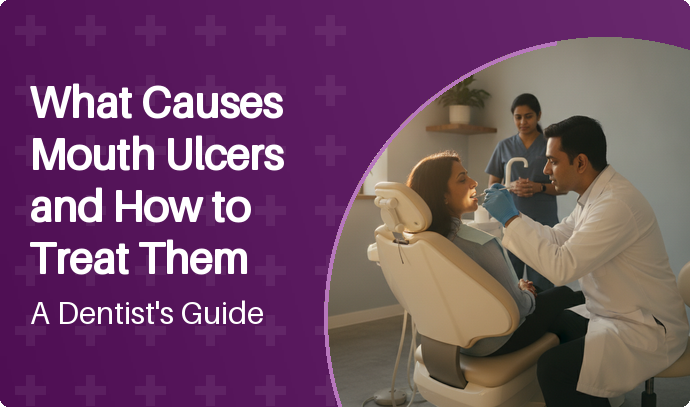
What Causes Mouth Ulcers and How to Treat Them: A Dentist’s Guide
by Galaxy Dental CarePublished : 02 October 2026
What causes mouth ulcers and how to treat them is a question we hear almost daily at Galaxy Dental Care. Most mouth ulcers are small, painful sores inside the mouth caused by minor injuries, stress, hormonal changes, certain medications, or vitamin deficiencies. They usually heal on their own within one to two weeks. At Galaxy Dental Care, our multispeciality team examines the cause, checks for underlying conditions, and offers targeted relief. By the end of this article, you will know exactly what triggers your ulcers, how to treat them at home, and when to book a dental appointment.
Key takeaways
Most mouth ulcers heal without treatment within one to two weeks.
Common triggers include minor injury, stress, hormonal changes, and certain medicines.
Treatment focuses on soothing pain, avoiding irritants, and addressing underlying causes.
See a dentist if an ulcer lasts longer than two weeks or keeps returning.
What are mouth ulcers and what do they look like?
Mouth ulcers are painful sores that form on the gums, lips, tongue, inner cheeks, or roof of the mouth. They are usually round or oval with a white or yellow center and a red edge. Most are small, but they can make eating, drinking, and talking uncomfortable. Mouth ulcers are rarely contagious and are different from cold sores, which appear on the lips and are caused by a virus.
At Galaxy Dental Care, we distinguish between simple ulcers that heal on their own and recurring ulcers that may signal an underlying issue. Our dentists examine the size, location, and pattern of your ulcers during consultation. If you also have cracked corners of the mouth, you may want to read about Angular Cheilitis: What It Is, Symptoms, Causes and Treatments? for related information.
What causes mouth ulcers and how to treat them when triggers are everyday things?
What causes mouth ulcers and how to treat them depends first on identifying the trigger. The most common cause is physical damage to the soft lining inside the mouth. This includes accidentally biting your cheek or tongue, brushing too hard, sharp edges from broken teeth, or irritation from braces and poorly fitting dentures. Stress and anxiety, hormonal changes, and certain medications like nicorandil and some anti-inflammatory medicines can also bring on ulcers. In some cases, vitamin deficiencies play a role.
When the cause is minor injury, treatment is simple: avoid further irritation and let the tissue heal. Rinse gently with warm salt water, switch to a soft-bristled toothbrush, and avoid sharp or crunchy foods. If a tooth, filling, or denture is rubbing against the tissue, our team can smooth or adjust it. For patients needing denture adjustments or replacement, Complete Dentures at Galaxy Dental Care are fitted with careful attention to comfort.
How can you treat mouth ulcers at home and when do you need a dentist?
Most mouth ulcers heal on their own within one to two weeks. Home care includes gently cleaning your mouth, applying soothing medicines directly on the ulcer, and avoiding hot or spicy foods that sting. Over-the-counter antiseptic gels or salt-water rinses can reduce discomfort. Some patients benefit from medicines rubbed directly on the sore, such as antihistamines, antacids, or corticosteroids, to soothe inflammation.
You should see a dentist if an ulcer lasts longer than two weeks, grows larger, becomes extremely painful, or keeps coming back. Persistent ulcers may need investigation for underlying causes like nutritional deficiencies or immune conditions. At Galaxy Dental Care, every patient receives a full diagnosis before treatment begins. We also offer Laser Dentistry for precise, gentle treatment of soft-tissue concerns when needed.
What medical conditions and medicines can cause recurring mouth ulcers?
Recurring mouth ulcers sometimes point to factors beyond simple injury. Hormonal shifts, particularly in women, can trigger outbreaks. Certain medications, including nicorandil and some anti-inflammatory drugs, are known to cause ulcers as a side effect. Vitamin deficiencies, especially low levels of iron, folate, or B12, may also be involved. In these cases, treating the underlying cause is essential for long-term relief.
At Galaxy Dental Care, our oral pathologists and general dentists review your medical history, current medicines, and diet during consultation. We may recommend blood tests to check for deficiencies. Addressing the root cause, rather than just the sore, prevents repeat episodes. For comprehensive oral health support, our Preventive Dentistry services help identify risk factors early.
When should you worry about a mouth ulcer and what does a dentist check?
See a dentist promptly if a mouth ulcer does not heal within two weeks, bleeds, feels hard, or appears with other symptoms like weight loss or fever. These signs are uncommon but important to rule out. During your visit, the dentist examines the ulcer’s size, shape, and location, checks your gum and tooth health, and reviews your medical history and medications. In some cases, a small tissue sample may be needed for diagnosis.
Galaxy Dental Care has in-house OPG full-mouth X-rays and CBCT 3D scans at every branch, so we can assess bone and soft tissue without sending you elsewhere. Our coordinated team of 3 to 5 dentists across specialities ensures nothing is missed. If you need targeted care, Mouth Ulcer Treatment in Kondapur follows the same thorough protocol we use across all nine branches. You can also access Mouth Ulcer Treatment in Hyderabad with the same standards.
Sign or Symptom
What It Usually Means
When to Call the Dentist
Small round sore, white or yellow center, red edge
Common mouth ulcer from minor injury or stress
If not healed in 2 weeks or if pain is severe
Ulcer after starting a new medicine
Possible side effect of medication
Immediately, to review with your doctor and dentist
Ulcers that keep returning
May indicate vitamin deficiency or underlying condition
Schedule a dental consultation for blood tests and exam
Large, hard, or bleeding ulcer
Needs professional assessment to rule out serious causes
Within a few days, sooner if worsening
Home Care Step
How to Do It
What to Avoid
Salt water rinse
Dissolve half a teaspoon of salt in warm water; swish gently
Do not use hot water or rinse aggressively
Apply soothing gel
Use pharmacy antiseptic or prescribed gel directly on the sore
Do not use aspirin directly on the ulcer
Adjust diet
Choose soft, cool foods; stay well hydrated
Hot, spicy, acidic, or crunchy foods until healed
Improve oral hygiene
Brush gently with soft bristles; keep mouth clean
Hard brushing or alcohol-based mouthwashes that sting
Most mouth ulcers are harmless and heal within one to two weeks with gentle care. The key is knowing your triggers, treating symptoms early, and seeking help when ulcers persist or recur. At Galaxy Dental Care, our multispeciality team diagnoses the cause and guides you to lasting relief. Call us on +91 86866 76781 to book an assessment.
FAQs
Can stress really cause mouth ulcers?
Yes, stress and anxiety are recognized triggers for mouth ulcers in many people. Stress weakens local immunity and can lead to accidental cheek biting or poor sleep, which may worsen ulcers. Managing stress and maintaining gentle oral care help reduce outbreaks.
Are mouth ulcers ever a sign of something serious?
Rarely. Most mouth ulcers are benign and self-limiting. However, an ulcer that does not heal within two weeks, bleeds, feels hard, or appears with weight loss or fever should be checked by a dentist to rule out other conditions.
Can my toothpaste or mouthwash make mouth ulcers worse?
Yes. Toothpastes containing sodium lauryl sulfate and alcohol-based mouthwashes can irritate sensitive mouth lining and delay healing. Switching to a mild, SLS-free toothpaste and avoiding harsh rinses often helps.
Do I need to stop eating certain foods if I have a mouth ulcer?
Yes. Avoid hot, spicy, acidic, or crunchy foods that can sting or further damage the sore surface. Soft, cool foods and plenty of water support faster healing.
Is there a difference between a mouth ulcer and a cold sore?
Yes. Mouth ulcers form inside the mouth on soft tissues like the cheek or tongue and are not contagious. Cold sores appear on the lips, are caused by the herpes simplex virus, and are contagious.
Can Galaxy Dental Care treat recurring mouth ulcers?
Yes. Our dentists examine the pattern, review your medical history and medications, and check for nutritional deficiencies or underlying conditions. We then create a targeted plan to reduce recurrence and provide relief.