Which Is Right for You?
Invisalign Aligners vs Braces
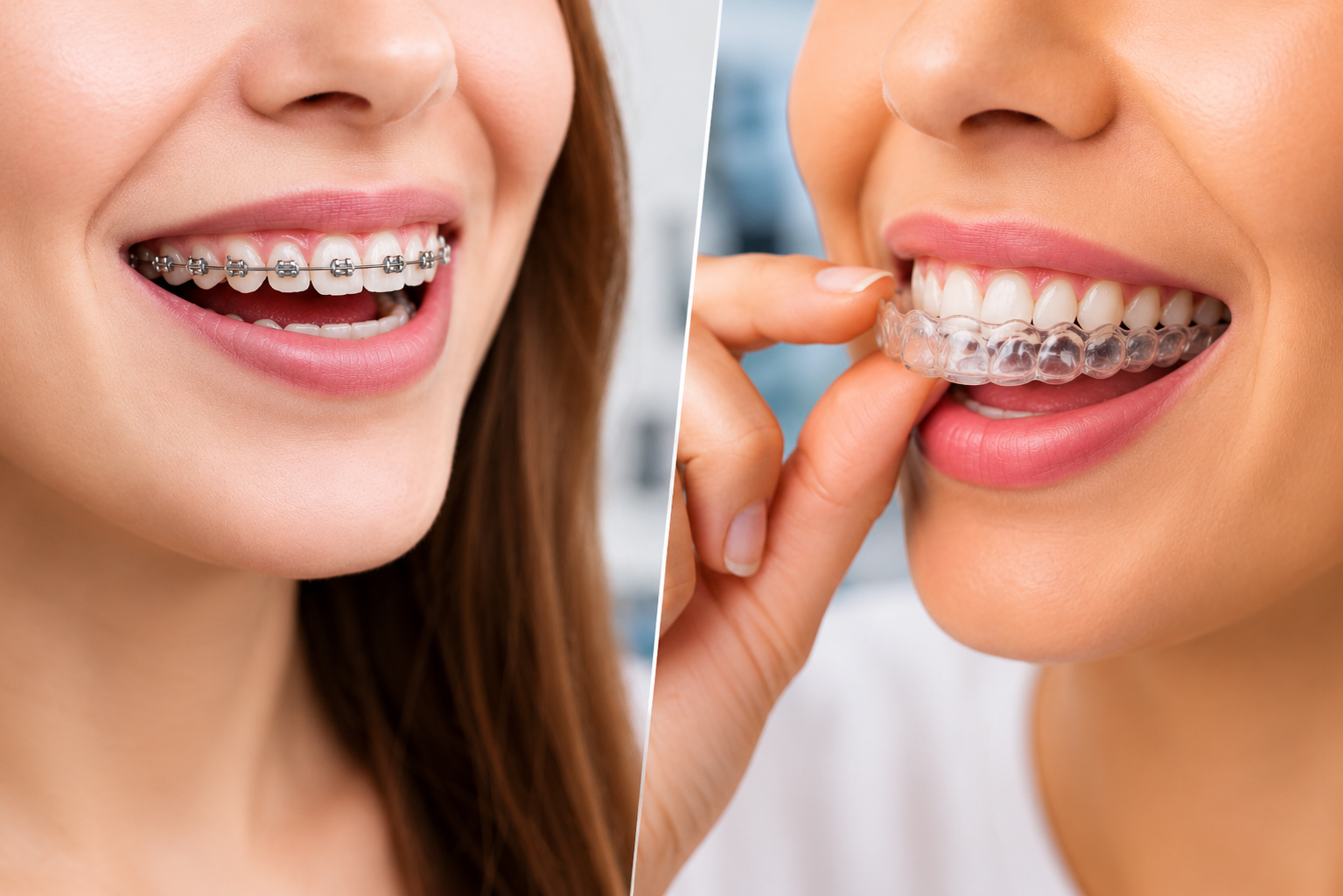
Both options straighten teeth but differ in visibility, removability, discipline required, and case complexity they can handle.
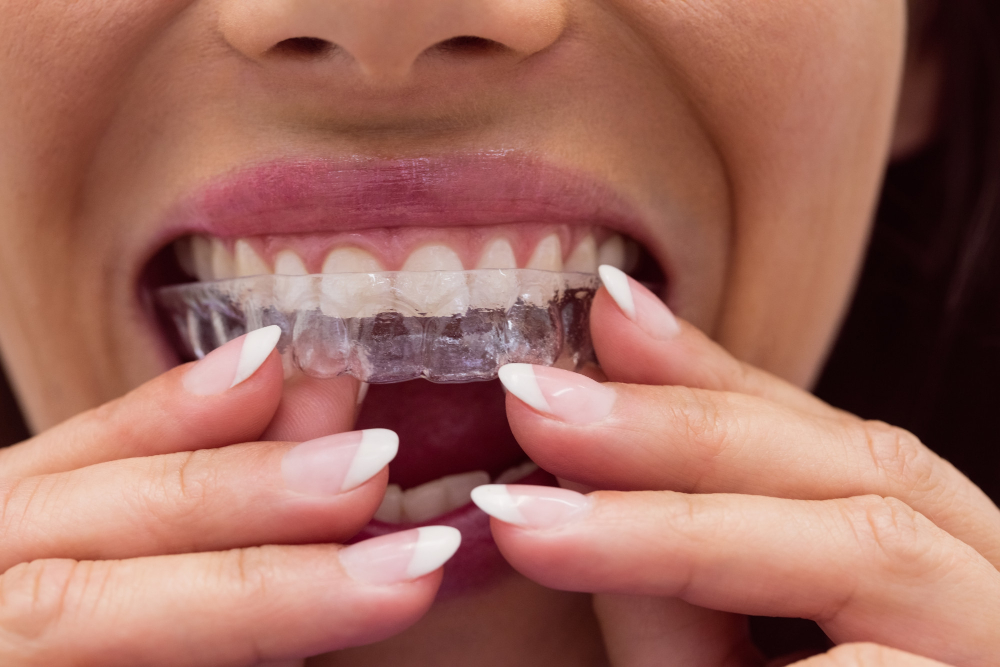
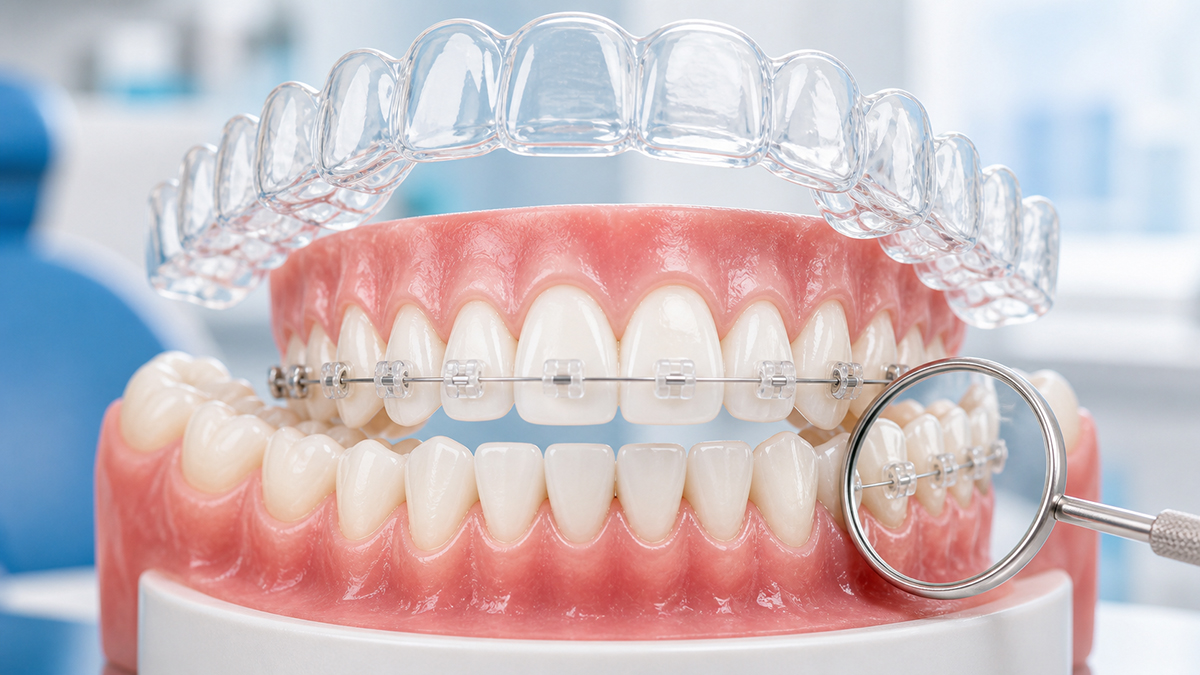
Invisalign aligners suit patients with mild to moderate crowding, spacing, or bite issues who can commit to 20 to 22 hours of daily wear. The clear trays are nearly invisible in conversation and photographs. You eat normally without food restrictions since trays come out for meals. Brushing and flossing stay unchanged. The limitation is patient compliance; trays left out too long delay results or fail to achieve planned movement. Complex rotations, severe deep bites, or teeth needing vertical movement may respond slower or require additional techniques.
Fixed braces handle complex cases including severe crowding, significant bite discrepancies, and teeth needing precise root positioning. Brackets and wires apply continuous force without depending on patient discipline for wear time. They work for patients who might forget or lose removable trays. The trade-off is visible hardware, dietary restrictions to protect brackets, and more involved cleaning around wires. Adjustments happen at the clinic every few weeks.
The orthodontist determines which system fits your tooth positions, bone levels, and personal routine after clinical examination and full diagnostic records.