

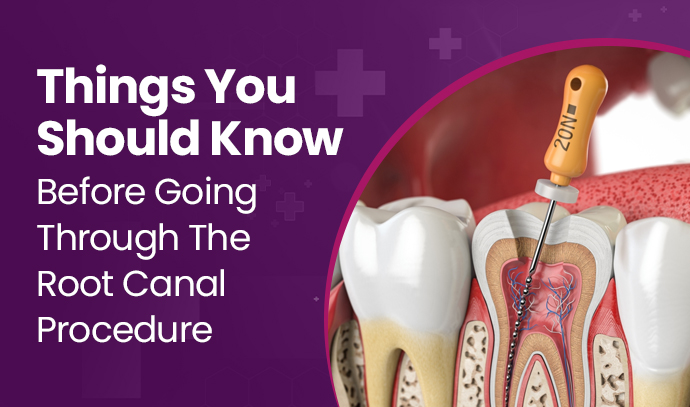
Is tooth pain keeping you awake? Has a dentist advised a root canal, and now you feel nervous about what will happen? Most people ask the same questions: Will the root canal procedure hurt? How long will it take? What should you do before you come in? What will you feel after it is done? Who offers the best root canal near me?
Here is the clear answer. Before you go through a root canal procedure, you should know how the dentist controls pain, what steps the dentist follows, how long the visit usually takes, and what normal root canal recovery time looks like. When you know these points in advance, you walk in calmer and avoid last minute surprises.
In this blog, our expert dentists at Galaxy Dental Care answer the most common worries patients have before a root canal. Read through this blog to get clarity and confidence, and book an appointment for painless root canal treatment in Hyderabad with our experienced team when you are ready.
What Are The Most Important Things To Know Before A Root Canal Procedure?
You feel less stressed when you know what the dentist will do and what you will feel. These are the most important things to know before the root canal procedure.
- The dentist numbs the tooth, so you should not feel sharp pain.
- The numbness usually starts in about 10 minutes.
- The dentist places a rubber dam to keep the tooth clean and dry.
- The dentist usually completes the treatment in 45 to 90 minutes.
- The dentist often finishes many cases in one sitting.
- You usually feel pressure or mild vibration, not pain.
- You may feel mild soreness after the numbness wears off.
- The dentist often advises a crown later to prevent the tooth from cracking.
Tell the dentist about diabetes, blood pressure, allergies, medicines, or strong anxiety before starting. This helps the dentist plan your comfort and safety.
How Can You Tell If You Really Need A Root Canal Procedure?
The dentist recommends RCT when infection reaches the nerve inside the tooth and the tooth cannot heal on its own. The dentist confirms this with an exam and an X-ray.
These signs often point to the need for RCT.
- You feel pain that keeps coming back, especially at night.
- You feel hot or cold sensitivity that lasts longer than a few seconds.
- You feel pain when you bite down.
- You notice swelling or tenderness near the tooth.
- You see a darker tooth after injury or deep decay.
Treating the tooth early usually keeps the plan simpler and protects the tooth better.
What Should You Do Before Coming In For A Root Canal Procedure?
You prepare best when you keep your body comfortable and your mind calm. These steps support a smoother visit and help the dentist treat the tooth without delays.
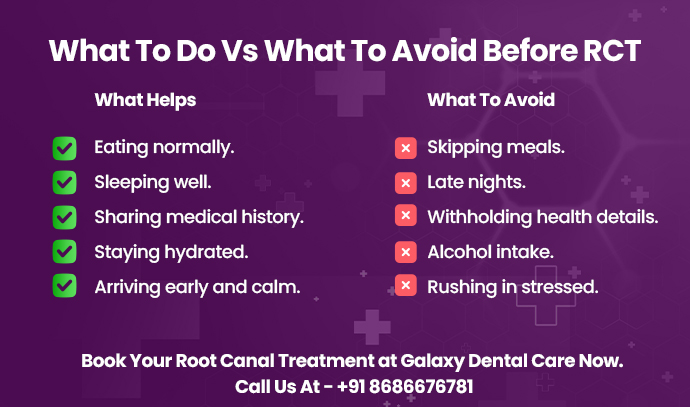
Do these simple things before your appointment.
- Get a good night’s sleep.
- Eat a normal meal unless the dentist plans sedation.
- Drink water and stay hydrated.
- Avoid alcohol before the visit.
- Avoid tobacco on the day of treatment if possible.
- Carry a list of your medicines.
- Share medical conditions and allergies with the clinic.
- Wear comfortable clothing and avoid tight neckwear.
- Arrive a little early so you do not rush.
- Arrange transport if you feel very anxious or expect sedation.
What Should You Tell The Dentist Before The Root Canal Procedure Starts?
You help the dentist plan safer care when you share your health details upfront. This avoids surprises during treatment.
Tell the dentist if any of these apply.
- You have diabetes, blood pressure issues, or heart conditions.
- You take blood thinners or long term medicines.
- You have allergies to medicines or local anaesthesia.
- You recently had fever, infection, or illness.
- You are pregnant or recently had a medical procedure.
- You feel strong dental anxiety or fear injections.
- You notice pain that increases when you bite or lie down.
If you feel very anxious, ask about comfort options before starting. This helps the dentist keep the procedure calm and controlled.
How Long Does The Root Canal Procedure Take And Will It Be Completed In One Sitting?
The dentist completes many cases in one sitting. The visit usually takes about 45 to 90 minutes. The dentist plans the time based on the tooth and infection level.
These situations can make it take longer or need another visit.
- The tooth has multiple canals or curved canals.
- The infection runs deep or has lasted long.
- The tooth needs re-treatment.
- The dentist needs extra cleaning to control infection.
The dentist explains the likely time and visit count before starting, so you know what to expect.
What Should You Eat Or Avoid Before A Root Canal Procedure?
Eat a normal meal before you come in, unless the dentist plans sedation and gives different instructions.
Do this before the visit.
- Eat a normal meal.
- Drink water and stay hydrated.
- Choose soft foods if the tooth feels very sensitive.
Avoid this before the visit.
- Avoid alcohol.
- Avoid tobacco.
- Avoid very hot foods if heat triggers pain.
- Avoid chewing on the painful side.
These steps support preparing for root canal treatment in a safe way.
What Are Common Myths You Should Not Worry About Before A Root Canal Procedure?
Old stories create fear. Modern dentistry changes the experience.
Ignore these common RCT myths.
- A root canal procedure always hurts. The dentist numbs the tooth first.
- Extraction is always better. The dentist often saves the natural tooth for better function.
- RCT always needs many visits. The dentist finishes many cases in one sitting.
- Pain lasts for weeks. You may feel mild soreness, but severe pain is not expected.
- The tooth becomes weak forever. The dentist protects it with a crown when needed.
Choose a dental clinic that explains the plan clearly before starting. If you are searching for root canal treatment in Hyderabad, best root canal treatment in Hyderabad, or painless root canal treatment in Hyderabad, Galaxy Dental Care offers the best dental treatments.
Book Your Appointment For Root Canal Treatment In Hyderabad At Galaxy Dental Care Now!
When tooth pain is involved, choosing the right clinic is about feeling confident and understood, not rushed. You should feel comfortable asking questions, knowing how pain will be managed, and understanding what happens before, during, and after the procedure.
At Galaxy Dental Care, root canal treatment is planned with clarity and care. Dentists take time to explain why RCT is needed, how the procedure will be done, and what recovery usually looks like. The focus stays on saving the natural tooth, maintaining strict hygiene, and ensuring patient comfort at every step.
If you are looking for root canal treatment in Hyderabad, painless root canal treatment in Hyderabad, or the best root canal treatment near you, booking an appointment at our dental clinic helps you get clear answers first and treatment only when you are ready.
Call us now at +91 8686676781 to schedule your consultation for the best root canal treatment near me in Hyderabad.
Frequently Asked Questions
Is A Root Canal Procedure Painful With Modern Treatment Methods?
A root canal procedure is usually not painful because the dentist uses local anaesthesia to numb the tooth before starting. Most patients feel pressure or vibration, not sharp pain. Modern techniques focus on comfort and controlled treatment.
How Long Does It Take To Fully Recover After A Root Canal?
Root canal recovery time is usually short. Most people return to normal activities within a day, with mild soreness settling in a few days. Proper aftercare helps recovery stay smooth.
Can I Return To Work Or Normal Activities After A Root Canal Procedure?
Yes, many patients return to work the same day or the next day. It is best to wait until numbness wears off and avoid heavy chewing for a short period. If sedation is used, rest for the remainder of the day.
When Should The Crown Be Placed After A Root Canal Treatment?
A crown is usually placed within a few weeks after the root canal procedure. This protects the treated tooth from cracking and restores strength, especially for back teeth. Delaying the crown increases the risk of fracture.
What Happens If I Delay Or Avoid Root Canal Treatment?
Delaying root canal treatment allows infection to spread deeper into the tooth and surrounding bone. Pain may increase, swelling can develop, and treatment may become more complex. Early treatment helps save the tooth and reduces complications.
