Category: Dental Check-ups

  • How Dental Fillings Differ From Crowns: Size, Cost & Durability

    How Dental Fillings Differ From Crowns: Size, Cost & Durability

    How do dental fillings differ from crowns is a question we hear at Galaxy Dental Care almost every day. Fillings repair small, localized damage by replacing decayed tooth structure with composite material, while crowns are custom caps that cover the entire visible portion of a tooth to restore strength after major damage or root canal treatment. Fillings typically last 5 to 10 years and cost less upfront. Crowns last longer overall but require more tooth preparation and laboratory work. At Galaxy Dental Care, our team of 55 plus dentists across nine branches checks each tooth with an OPG X-ray or CBCT scan before recommending either option, and we explain every choice before any procedure begins. By the end of this article, you will know exactly which treatment matches the condition of your tooth and what to ask at your consultation.

    Key takeaways

    • Fillings repair small cavities and fractures, while crowns restore teeth with extensive damage or after root canal therapy.
    • Fillings typically last 5 to 10 years, whereas crowns generally last longer due to their full-coverage design.
    • Crowns require custom laboratory fabrication and more chair time, making them more expensive than fillings.
    • A dentist must check the size of damage, tooth location, and remaining healthy structure before deciding between the two.

    What is a dental filling and when is it used?

    A Dental Fillings is a direct restoration that repairs a tooth after decay or minor fracture has been removed. The dentist cleans the damaged area and places a composite material that hardens to restore shape and function while preserving most of your natural tooth. Fillings are used when the damage is small to moderate, the remaining tooth structure is strong, and the biting forces on that tooth are normal.

    At Galaxy Dental Care, every filling case starts with an OPG full-mouth X-ray to confirm how deep the decay reaches. Our in-house imaging at every branch means you do not leave for scans elsewhere. The actual filling visit usually takes one appointment and involves less material and chair time than a crown.

    What is a dental crown and when is it necessary?

    A Dental Crowns is a tooth-shaped cap that covers the entire visible portion of a tooth above the gumline. Crowns are necessary when a tooth has extensive decay, has been weakened by a large existing filling, has cracked, or has had Root Canal Treatment and needs protection from fracture.

    Because a crown encases the whole tooth, it redistributes biting forces and prevents the remaining tooth structure from splitting. Custom fabrication in a dental laboratory is required, which adds steps and cost compared to a filling. At Galaxy Dental Care, implantologists and oral surgeons assess bone support and gum health when planning any crown that sits on an implant or supports a bridge.

    How do the costs and durability of fillings and crowns compare?

    The cost difference between a filling and a crown comes down to materials, laboratory work, and time. Fillings use less material and no lab fee, so they cost less upfront. Crowns require custom fabrication and laboratory design, which raises the initial cost but often provides greater durability over time.

    Factor Dental Filling Dental Crown
    Upfront cost Lower Higher
    Chair time Usually one visit Two or more visits
    Typical lifespan 5 to 10 years Longer overall
    Insurance coverage Often partial Often partial

    Both treatments can be partially covered by dental insurance. Galaxy Dental Care has accepted dental insurance provider tie-ups and discusses payment options before any procedure begins.

    How does a dentist decide between a filling and a crown?

    The decision depends on how much healthy tooth structure remains, where the tooth sits in your mouth, and what forces it must withstand. A filling is possible when at least half to two-thirds of the natural tooth wall is intact. A crown is recommended when the remaining tooth is too thin to support a filling under chewing pressure.

    Our coordinated team of three to five dentists across specialities at each branch evaluates this with an OPG full-mouth X-ray or CBCT 3D scan for bone and nerve position. We also review your medical history, current medicines, and conditions like diabetes that affect healing. Only after this assessment do we present a complete treatment plan.

    Tooth condition Recommended treatment Why
    Small cavity, strong walls Filling Preserves tooth, lower cost, quicker
    Large cavity, thin walls Crown Prevents fracture under bite force
    After root canal therapy Crown Protects brittle tooth from splitting
    Cracked tooth, cusp missing Crown Encases and stabilizes remaining structure

    Patients considering Full Mouth Rehabilitation often need a mix of both treatments mapped to each tooth’s condition.

    What should you expect during and after each procedure?

    For a filling, the dentist numbs the area, removes decay, and places the composite material in layers. You can usually eat once the numbness wears off. For a crown, the dentist reshapes the tooth, takes impressions, places a temporary crown, and fits the permanent crown at a second visit after laboratory fabrication.

    After either procedure, mild sensitivity to temperature is normal for a few days. If pain persists beyond one week, or if the temporary crown dislodges, contact Galaxy Dental Care. Our clinics are open Monday to Sunday, 9 AM to 9 PM, with a 24/7 emergency phone line for post-treatment concerns.

    Those exploring Dental Implants may also ask How Long Do Dental Implants Last? Lifespan, Costs & Care in 2026 to compare long-term options. For crown-specific care at individual branches, Dental Crowns in Banjara Hills follows the same planning steps we use across all nine locations.

    Are there risks or reasons one option might fail?

    Fillings can chip, wear, or leak if the cavity was large or if grinding forces are high. Crowns can loosen if the underlying tooth decays at the margin, or if the cement washes out over time. Neither treatment stops new decay from forming at the edge of the restoration.

    Good oral hygiene, regular Teeth Cleaning, and addressing grinding with a night guard protect both. Outcomes depend on individual case and oral health status. A qualified dentist must examine your specific tooth before you decide.

    Comparison diagram showing the differences between dental fillings and dental crowns across key factorsFilling vs Crown at a GlanceSee which restoration matches your tooth's condition and yourpriorities.1Extent of damageFillings repair small cavities, while crowns restoreteeth with extensive decay or after root canaltherapy.2Number of visitsA filling usually needs one appointment, but a crownrequires two visits because of laboratory fabrication.3Upfront costFillings cost less initially, whereas crowns involvecustom lab work and higher fees.4Durability over timeFillings typically last 5 to 10 years, while crownsare designed for longer overall performance.5Tooth preparationFillings preserve most natural tooth, but crownsrequire reshaping to fit the cap securely.Match the restoration to the size of damage and the strengthyour tooth needs.Galaxy dental care+91 86866 76781

    Fillings work for small to moderate damage and cost less upfront. Crowns protect extensively damaged teeth and last longer overall. The right choice depends on how much healthy tooth remains and what forces it faces daily. At Galaxy Dental Care, our 55 plus dentists use in-house OPG and CBCT scans to assess this precisely and give you a complete treatment plan before any procedure. Call +91 86866 76781 to book a consultation and find out which option suits your tooth.

    FAQs

    Can a filling be replaced with a crown later?

    Yes. A tooth that starts with a filling can later receive a crown if the damage grows or the tooth cracks. Many patients move to a crown once the remaining tooth structure becomes too weak to support another filling.

    Is getting a crown more painful than a filling?

    Both procedures use local anaesthetic, so you should not feel pain during treatment. A crown involves more tooth preparation and a second visit, which means slightly longer overall chair time and possible temporary sensitivity.

    How long does each procedure take?

    A filling usually takes one appointment of 30 to 60 minutes. A crown requires two visits: the first to prepare the tooth and place a temporary crown, and the second about two weeks later to fit the permanent crown.

    Will insurance cover both fillings and crowns?

    Dental insurance often covers both treatments partially, though the exact percentage depends on your plan. Galaxy Dental Care has accepted dental insurance provider tie-ups and explains your benefits before any procedure begins.

    Can I get a filling instead of a crown to save money?

    Choosing a filling when a crown is clinically indicated risks fracture, infection, and eventual tooth loss. A dentist must evaluate remaining tooth structure with an X-ray or scan to determine which restoration is safe.

    Do crowns and fillings look natural?

    Yes. Tooth-coloured composite fillings and porcelain or ceramic crowns are matched to your natural tooth shade. The materials used for both aim to blend with surrounding teeth.
  • Teeth Cleaning vs Scaling: Which One Do You Actually Need?

    Teeth Cleaning vs Scaling: Which One Do You Actually Need?

    The teeth cleaning and teeth scaling difference confuses most patients because both involve removing tartar from your teeth. Teeth cleaning is preventive maintenance for healthy gums, while teeth scaling is corrective treatment for gum disease that has already begun. At Galaxy Dental Care, our periodontists check your gum pocket depth and review your OPG full-mouth X-ray before deciding which you need. Every patient sees the diagnosis and gets a full treatment plan before any procedure begins. By the end of this article, you will know which appointment to request and what signs mean you should not delay scaling.

    Key takeaways

    • Teeth cleaning removes surface plaque and tartar above the gumline to prevent disease.
    • Teeth scaling removes hardened deposits below the gumline to treat existing gum disease.
    • Gum bleeding, pocket depth over 3 mm, and persistent bad breath signal you need scaling, not routine cleaning.
    • Scaling may be followed by root planing to smooth tooth roots and help gums reattach.
    • Both procedures are safe when done by qualified dentists using proper technique.

    What is teeth cleaning and what does it actually do?

    Teeth cleaning is a preventive procedure that removes soft plaque and hard tartar from the visible surfaces of your teeth and just above the gumline. A dentist or hygienist uses an ultrasonic scaler and polishing tools to clean areas your brush and floss cannot reach. The goal is to stop gum disease before it starts and to keep your breath fresh and your enamel stain-free. At Galaxy Dental Care, Teeth Cleaning is part of our Preventive Dentistry programme, with strict hygiene protocols at every step.

    Most people with healthy gums need this every six months. The appointment takes 30 to 45 minutes. You can eat and drink normally afterward. There is no recovery time because the gums are not disturbed below the surface.

    What is teeth scaling and when is it necessary?

    Teeth scaling is a corrective procedure that removes hardened tartar and bacterial deposits from below the gumline, inside the spaces between your tooth and gum tissue called periodontal pockets. Scaling becomes necessary when plaque has hardened into calculus and bacteria have caused inflammation that routine cleaning cannot reverse. At Galaxy Dental Care, Teeth Scaling is performed by periodontists who measure pocket depth with a calibrated probe and confirm bone levels on your in-house CBCT 3D scan before beginning.

    Scaling is often paired with root planing, which smooths the root surfaces so gums can reattach and bacteria find fewer places to hide. The procedure may take one to two hours and may require local anaesthetic. Depending on how many areas are affected, it may be done in one visit or split into quadrants.

    How do I know whether I need teeth cleaning or teeth scaling?

    The decision depends on what your dentist finds during examination, not on how your teeth look in the mirror. Healthy gums sit snug against teeth with pocket depths of 1 to 3 millimetres. When pockets reach 4 mm or more, or when gums bleed during gentle probing, tartar has likely formed below the gumline and cleaning alone will not suffice. At Galaxy Dental Care, every branch has a coordinated team of 3 to 5 dentists across specialities, so your gum health is assessed by a periodontist, not guessed.

    Sign or finding Teeth cleaning Teeth scaling
    Gum pocket depth 1 to 3 mm 4 mm or more
    Bleeding gums Rare or none Consistent, even when brushing gently
    Tartar location Above gumline, visible Below gumline, hidden
    Bad breath Mild, occasional Persistent, not improved by brushing
    Primary goal Prevent gum disease Treat existing gum disease

    Is scaling bad for teeth or enamel?

    Scaling is not bad for teeth when performed correctly by a trained dentist using appropriate ultrasonic or hand instruments. The procedure targets tartar, not enamel. Some patients notice temporary sensitivity to cold or sweet foods for a few days because the root surface, previously covered by tartar, is now exposed. This sensitivity usually fades within one to two weeks. At Galaxy Dental Care, our periodontists check your medical history and current medicines before scaling to identify any factors that might affect healing, such as blood thinners or diabetes.

    Delaying scaling when you need it is far riskier than the procedure itself. Untreated tartar below the gumline leads to periodontitis, which can cause tooth loss and has been linked to broader health conditions.

    What happens during and after each procedure?

    During teeth cleaning, the dentist uses an ultrasonic scaler that vibrates tartar loose, then polishes your teeth with a gritty paste to smooth the surface and remove stains. You leave with clean, smooth teeth and instructions to maintain daily brushing and flossing.

    During teeth scaling, the dentist or periodontist may numb your gums with local anaesthetic. They use finer instruments to reach below the gumline, sometimes including a laser for gum and soft-tissue procedures to reduce bacteria and aid healing. Afterward, you may be asked to avoid very hot or cold foods for 24 hours and to use a prescribed mouth rinse. A follow-up appointment in 4 to 6 weeks checks whether pockets have shrunk and gums have reattached.

    What to expect Teeth cleaning Teeth scaling
    Duration 30 to 45 minutes 1 to 2 hours, sometimes split across visits
    Anaesthetic Usually not needed Often used for comfort
    Recovery None; eat and drink normally Mild soreness for 1 to 3 days; sensitivity up to 2 weeks
    Follow-up Return in 6 months Review in 4 to 6 weeks, then maintenance every 3 months

    Can teeth cleaning replace scaling, or do I need both?

    Teeth cleaning cannot replace scaling once tartar has formed below the gumline. The two procedures serve different stages of gum health. Think of cleaning as regular servicing and scaling as the repair you need when a warning light appears. Patients who have completed scaling move to a maintenance schedule that alternates between cleaning and deeper monitoring visits to prevent relapse. At Galaxy Dental Care, your periodontist creates a personalised schedule based on your pocket depths, bone levels from your OPG or CBCT scan, and risk factors like smoking or diabetes.

    If you are considering Braces & Aligners or Invisible Aligners, healthy gums are essential first. Active gum disease must be controlled with scaling before orthodontic treatment begins. Similarly, patients seeking Smile Designing or Teeth Whitening will have their gum health assessed as part of the planning process.

    For those with more advanced gum concerns, Advanced Gum Treatments including Periodontal Flap Surgery in Kondapur may be discussed if scaling and root planing do not achieve sufficient pocket reduction. Our Wisdom Teeth Removal in Kondapur service also includes pre-operative gum assessment to ensure safe healing.

    Diagram comparing teeth cleaning and teeth scaling procedures, showing preventive versus corrective treatment pathsCleaning or Scaling: Your DecisionGuideUse this to understand which procedure matches your gum healthstatus.1Healthy gumsTeeth cleaning every six months removes surface tartarand prevents gum disease from developing.2Bleeding gumsConsistent bleeding when brushing signals inflammationthat may require scaling to remove hidden tartar.3Deep pocketsMeasurements of 4 mm or more mean tartar has formedbelow the gumline where cleaning cannot reach.4After scalingRoot planing smooths roots so gums can reattach,followed by maintenance visits every three months.5Daily careBrushing twice daily and flossing once daily supportswhichever professional treatment you receive.Prevention with cleaning is simpler than correction withscaling, but both are safe and effective.Galaxy dental care+91 86866 76781

    The teeth cleaning and teeth scaling difference comes down to prevention versus correction. Cleaning keeps healthy gums healthy; scaling treats gum disease that has already taken hold. The only way to know which you need is a proper examination with pocket depth measurement and X-ray review. If your gums bleed when you brush, or your dentist has mentioned deep pockets, do not postpone scaling. Call Galaxy Dental Care on +91 86866 76781 to book an assessment. We are open Monday to Sunday, 9 AM to 9 PM, with a 24/7 emergency phone line for urgent concerns.

    FAQs

    Is teeth scaling painful?

    Teeth scaling is usually done with local anaesthetic, so you should feel pressure but not sharp pain. Afterward, mild soreness and temperature sensitivity are common for one to three days. If discomfort lasts beyond a week, contact your dentist.

    How often should I get teeth cleaning versus scaling?

    Teeth cleaning is typically scheduled every six months for people with healthy gums. Teeth scaling is done only when diagnosed gum disease is present, then followed by maintenance visits every three months to monitor pocket depth and prevent relapse.

    Can I do teeth scaling at home?

    No. Tartar below the gumline cannot be removed with home tools, and attempting it can damage gums or enamel. Professional scaling uses calibrated instruments and often requires anaesthetic and sterile technique.

    Will scaling make my teeth loose?

    Scaling does not loosen teeth. In advanced gum disease, teeth may already feel loose because tartar was the only thing holding them in place. Removing tartar allows proper assessment and treatment, which is necessary to save the tooth.

    Does dental insurance cover teeth scaling?

    Many dental insurance plans cover both preventive cleaning and therapeutic scaling, though coverage for scaling may require documentation of diagnosed gum disease. Galaxy Dental Care has accepted dental insurance provider tie-ups and can confirm your specific coverage before treatment begins.

    What foods should I avoid after teeth scaling?

    For the first 24 hours, avoid very hot, very cold, spicy, or hard foods that could irritate tender gums. Stick to soft, lukewarm foods and drink plenty of water. Your dentist may also recommend avoiding alcohol-based mouthwash temporarily.

  • What Causes Mouth Ulcers and How to Treat Them: A Dentist’s Guide

    What Causes Mouth Ulcers and How to Treat Them: A Dentist’s Guide

    What causes mouth ulcers and how to treat them is a question we hear almost daily at Galaxy Dental Care. Most mouth ulcers are small, painful sores inside the mouth caused by minor injuries, stress, hormonal changes, certain medications, or vitamin deficiencies. They usually heal on their own within one to two weeks. At Galaxy Dental Care, our multispeciality team examines the cause, checks for underlying conditions, and offers targeted relief. By the end of this article, you will know exactly what triggers your ulcers, how to treat them at home, and when to book a dental appointment.

    Key takeaways

    • Most mouth ulcers heal without treatment within one to two weeks.
    • Common triggers include minor injury, stress, hormonal changes, and certain medicines.
    • Treatment focuses on soothing pain, avoiding irritants, and addressing underlying causes.
    • See a dentist if an ulcer lasts longer than two weeks or keeps returning.

    What are mouth ulcers and what do they look like?

    Mouth ulcers are painful sores that form on the gums, lips, tongue, inner cheeks, or roof of the mouth. They are usually round or oval with a white or yellow center and a red edge. Most are small, but they can make eating, drinking, and talking uncomfortable. Mouth ulcers are rarely contagious and are different from cold sores, which appear on the lips and are caused by a virus.

    At Galaxy Dental Care, we distinguish between simple ulcers that heal on their own and recurring ulcers that may signal an underlying issue. Our dentists examine the size, location, and pattern of your ulcers during consultation. If you also have cracked corners of the mouth, you may want to read about Angular Cheilitis: What It Is, Symptoms, Causes and Treatments? for related information.

    What causes mouth ulcers and how to treat them when triggers are everyday things?

    What causes mouth ulcers and how to treat them depends first on identifying the trigger. The most common cause is physical damage to the soft lining inside the mouth. This includes accidentally biting your cheek or tongue, brushing too hard, sharp edges from broken teeth, or irritation from braces and poorly fitting dentures. Stress and anxiety, hormonal changes, and certain medications like nicorandil and some anti-inflammatory medicines can also bring on ulcers. In some cases, vitamin deficiencies play a role.

    When the cause is minor injury, treatment is simple: avoid further irritation and let the tissue heal. Rinse gently with warm salt water, switch to a soft-bristled toothbrush, and avoid sharp or crunchy foods. If a tooth, filling, or denture is rubbing against the tissue, our team can smooth or adjust it. For patients needing denture adjustments or replacement, Complete Dentures at Galaxy Dental Care are fitted with careful attention to comfort.

    How can you treat mouth ulcers at home and when do you need a dentist?

    Most mouth ulcers heal on their own within one to two weeks. Home care includes gently cleaning your mouth, applying soothing medicines directly on the ulcer, and avoiding hot or spicy foods that sting. Over-the-counter antiseptic gels or salt-water rinses can reduce discomfort. Some patients benefit from medicines rubbed directly on the sore, such as antihistamines, antacids, or corticosteroids, to soothe inflammation.

    You should see a dentist if an ulcer lasts longer than two weeks, grows larger, becomes extremely painful, or keeps coming back. Persistent ulcers may need investigation for underlying causes like nutritional deficiencies or immune conditions. At Galaxy Dental Care, every patient receives a full diagnosis before treatment begins. We also offer Laser Dentistry for precise, gentle treatment of soft-tissue concerns when needed.

    What medical conditions and medicines can cause recurring mouth ulcers?

    Recurring mouth ulcers sometimes point to factors beyond simple injury. Hormonal shifts, particularly in women, can trigger outbreaks. Certain medications, including nicorandil and some anti-inflammatory drugs, are known to cause ulcers as a side effect. Vitamin deficiencies, especially low levels of iron, folate, or B12, may also be involved. In these cases, treating the underlying cause is essential for long-term relief.

    At Galaxy Dental Care, our oral pathologists and general dentists review your medical history, current medicines, and diet during consultation. We may recommend blood tests to check for deficiencies. Addressing the root cause, rather than just the sore, prevents repeat episodes. For comprehensive oral health support, our Preventive Dentistry services help identify risk factors early.

    When should you worry about a mouth ulcer and what does a dentist check?

    See a dentist promptly if a mouth ulcer does not heal within two weeks, bleeds, feels hard, or appears with other symptoms like weight loss or fever. These signs are uncommon but important to rule out. During your visit, the dentist examines the ulcer’s size, shape, and location, checks your gum and tooth health, and reviews your medical history and medications. In some cases, a small tissue sample may be needed for diagnosis.

    Galaxy Dental Care has in-house OPG full-mouth X-rays and CBCT 3D scans at every branch, so we can assess bone and soft tissue without sending you elsewhere. Our coordinated team of 3 to 5 dentists across specialities ensures nothing is missed. If you need targeted care, Mouth Ulcer Treatment in Kondapur follows the same thorough protocol we use across all nine branches. You can also access Mouth Ulcer Treatment in Hyderabad with the same standards.

    Sign or Symptom What It Usually Means When to Call the Dentist
    Small round sore, white or yellow center, red edge Common mouth ulcer from minor injury or stress If not healed in 2 weeks or if pain is severe
    Ulcer after starting a new medicine Possible side effect of medication Immediately, to review with your doctor and dentist
    Ulcers that keep returning May indicate vitamin deficiency or underlying condition Schedule a dental consultation for blood tests and exam
    Large, hard, or bleeding ulcer Needs professional assessment to rule out serious causes Within a few days, sooner if worsening
    Home Care Step How to Do It What to Avoid
    Salt water rinse Dissolve half a teaspoon of salt in warm water; swish gently Do not use hot water or rinse aggressively
    Apply soothing gel Use pharmacy antiseptic or prescribed gel directly on the sore Do not use aspirin directly on the ulcer
    Adjust diet Choose soft, cool foods; stay well hydrated Hot, spicy, acidic, or crunchy foods until healed
    Improve oral hygiene Brush gently with soft bristles; keep mouth clean Hard brushing or alcohol-based mouthwashes that sting

    Diagram showing the four stages of a mouth ulcer from trigger to healingMouth Ulcer: From Trigger to HealingSee how everyday triggers lead to ulcers and what steps helpthem heal.1TriggerCommon triggers include minor injury, stress, hormonalchanges, certain medicines, or vitamin deficiencies.2Ulcer formsA painful sore appears inside the mouth, usually roundwith a white or yellow center and red edge.3TreatmentSoothe with salt-water rinses, pharmacy gels, softfoods, and gentle oral hygiene while avoidingirritants.4HealingMost ulcers heal on their own within one to two weeksonce the trigger is removed and the tissue isprotected.Identify your trigger, protect the sore, and seek help if itlasts.Galaxy dental care+91 86866 76781

    Most mouth ulcers are harmless and heal within one to two weeks with gentle care. The key is knowing your triggers, treating symptoms early, and seeking help when ulcers persist or recur. At Galaxy Dental Care, our multispeciality team diagnoses the cause and guides you to lasting relief. Call us on +91 86866 76781 to book an assessment.

    FAQs

    Can stress really cause mouth ulcers?

    Yes, stress and anxiety are recognized triggers for mouth ulcers in many people. Stress weakens local immunity and can lead to accidental cheek biting or poor sleep, which may worsen ulcers. Managing stress and maintaining gentle oral care help reduce outbreaks.

    Are mouth ulcers ever a sign of something serious?

    Rarely. Most mouth ulcers are benign and self-limiting. However, an ulcer that does not heal within two weeks, bleeds, feels hard, or appears with weight loss or fever should be checked by a dentist to rule out other conditions.

    Can my toothpaste or mouthwash make mouth ulcers worse?

    Yes. Toothpastes containing sodium lauryl sulfate and alcohol-based mouthwashes can irritate sensitive mouth lining and delay healing. Switching to a mild, SLS-free toothpaste and avoiding harsh rinses often helps.

    Do I need to stop eating certain foods if I have a mouth ulcer?

    Yes. Avoid hot, spicy, acidic, or crunchy foods that can sting or further damage the sore surface. Soft, cool foods and plenty of water support faster healing.

    Is there a difference between a mouth ulcer and a cold sore?

    Yes. Mouth ulcers form inside the mouth on soft tissues like the cheek or tongue and are not contagious. Cold sores appear on the lips, are caused by the herpes simplex virus, and are contagious.

    Can Galaxy Dental Care treat recurring mouth ulcers?

    Yes. Our dentists examine the pattern, review your medical history and medications, and check for nutritional deficiencies or underlying conditions. We then create a targeted plan to reduce recurrence and provide relief.

  • How to Prevent Bad Breath Even After Brushing: A Step-by-Step Guide

    How to Prevent Bad Breath Even After Brushing: A Step-by-Step Guide

    How to prevent bad breath even after brushing is a question many patients ask when minty freshness fades within an hour. The truth is that brushing alone only cleans about 60 percent of tooth surfaces, and it does not reach the tongue, between teeth, or below the gumline where odor-causing bacteria hide. At Galaxy Dental Care, our dentists check for plaque buildup, gum health, and dry mouth during routine exams, then show patients exactly where their cleaning routine is missing. You will leave this article with a clear, daily routine that targets the real sources of lingering bad breath and know when it is time to book a professional check.

    Key takeaways

    • Brushing alone misses the tongue, between teeth, and below the gumline where bacteria cause odor.
    • Tongue scraping and daily flossing remove the debris that brushing leaves behind.
    • Dry mouth, smoking, and sugary foods are common causes of breath odor that return after brushing.
    • A dentist can identify gum disease, tooth decay, or other conditions causing persistent bad breath.

    Why does my breath still smell after I brush?

    Bad breath that returns after brushing usually means bacteria are still active somewhere in your mouth. Your toothbrush bristles cannot reach between teeth, under the gumline, or deep into the tongue’s surface. Bacteria break down leftover food and proteins there, releasing sulfur compounds that cause odor. At Galaxy Dental Care, we use Teeth Cleaning sessions to remove this hidden buildup and show patients where their home care needs improvement.

    Other common causes include dry mouth, which reduces saliva that normally washes away bacteria, and untreated gum disease. Smoking and certain foods like garlic and onions also leave compounds that enter the bloodstream and are released through the lungs, so brushing cannot fully remove them.

    What daily steps actually stop bad breath from coming back?

    A complete routine targets every place odor bacteria live. Here is the order our dentists recommend:

    1. Brush for two minutes with fluoride toothpaste, twice a day, using gentle circles at the gumline.
    2. Scrape or brush your tongue from back to front once daily. The tongue’s surface traps bacteria and dead cells.
    3. Floss between every tooth to remove food and plaque your brush cannot reach.
    4. Rinse with an alcohol-free mouthwash to reduce bacteria without drying your mouth further.
    5. Drink water throughout the day to keep saliva flowing and wash away debris.

    Patients wearing aligners should also follow How To Maintain Dental Hygiene With Aligners? to prevent odor from trapped bacteria.

    Which habits make bad breath worse even with good brushing?

    Some daily choices counteract your cleaning efforts. Smoking dries the mouth and leaves chemical residues that linger. Sugary foods and drinks feed bacteria, which multiply and produce more odor. Skipping meals or breathing through your mouth also reduces saliva flow.

    Alcohol and caffeine dehydrate, worsening dry mouth. And rinsing with water right after brushing washes away the protective fluoride layer before it can strengthen enamel. Our Preventive Dentistry team reviews your habits during checkups to spot these hidden contributors.

    Habit Effect on breath What to do instead
    Smoking Dries mouth, leaves lingering odor Seek support to quit; rinse with water after any tobacco use
    Sugary mints or gum Bacteria feed on sugar, worsening odor Choose sugar-free options with xylitol
    Skipping meals Reduces saliva, lets bacteria grow Eat regular meals; chew sugar-free gum to stimulate saliva
    Rinsing after brushing Washes away fluoride protection Spit excess toothpaste; wait 30 minutes before drinking water

    When should I see a dentist about persistent bad breath?

    See a dentist if bad breath lasts more than two weeks despite following the steps above, or if it comes with bleeding gums, tooth pain, or a bad taste that will not go away. These can signal gum disease, tooth decay, or an infection that home care cannot fix.

    At Galaxy Dental Care, every consultation includes a full-mouth check. We use in-house OPG full-mouth X-rays and CBCT 3D scans when needed to check bone support and rule out hidden problems. Our multispeciality team includes periodontists for gum concerns and prosthodontists for issues with crowns or dentures. You can also explore our Bad Breath Treatment options or visit Bad Breath Treatment in Vanasthalipuram for coordinated care.

    Symptom What it may mean When to call
    Bleeding gums when brushing or flossing Early gum disease (gingivitis) Within a few days; gingivitis is reversible with cleaning
    Bad breath with gum recession or loose teeth Advanced gum disease (periodontitis) Within 24-48 hours; periodontitis needs professional treatment
    Tooth pain with bad taste or smell Tooth decay or abscess Same day or within 24 hours
    Dry mouth with thick saliva or difficulty swallowing Medication side effect or systemic condition Book a consultation to review medicines and saliva substitutes

    Can professional cleaning help when home care is not enough?

    Yes. Even with perfect home care, hardened plaque (tartar) builds up below the gumline and harbors odor-causing bacteria. Professional Teeth Scaling removes this buildup and smooths root surfaces so bacteria cannot attach as easily.

    For patients with gum disease, our periodontists may recommend deeper cleaning or Advanced Gum Treatments. If you are also considering cosmetic improvements, our guide on How to Get a Celebrity Smile: Treatments, Tips & Smile Makeover Options? explains how healthy gums support any smile enhancement.

    Diagram of five daily steps to prevent bad breath after brushing5 Daily Steps to Stop Lingering BadBreathFollow this routine to clean where brushing alone cannotreach.1Brush properlyUse fluoride toothpaste for two minutes, twice a day,with gentle circles at the gumline.2Scrape your tongueRemove bacteria and dead cells from the tongue'ssurface once daily with a scraper.3Floss between teethClear food and plaque from spaces your brush cannotreach every single day.4Rinse mouthwashChoose an alcohol-free formula to reduce bacteriawithout drying your mouth.5Stay hydratedDrink water throughout the day to keep saliva flowingand wash away debris.Consistency matters more than any single product.Galaxy dental care+91 86866 76781

    Stopping bad breath after brushing means cleaning where your brush does not go: the tongue, between teeth, and below the gumline. Daily tongue scraping, flossing, and proper rinsing make the biggest difference. If odor persists beyond two weeks, a dental check can rule out gum disease or decay. Call Galaxy Dental Care on +91 86866 76781 to book an assessment and get a personalized plan.

    FAQs

    Why does my breath smell bad even after I brush my teeth?

    Your brush misses the tongue, between teeth, and below the gumline where bacteria break down proteins and release sulfur compounds. Brushing only cleans about 60 percent of tooth surfaces, so odor lingers until those hidden areas are cleaned too.

    Is tongue scraping better than brushing my tongue?

    Tongue scrapers remove the thin layer of bacteria and dead cells more effectively than a toothbrush for most people. A scraper applies even pressure across the tongue’s surface, while brush bristles tend to push debris around.

    Can mouthwash replace flossing for bad breath?

    No. Mouthwash reduces bacteria temporarily but cannot remove trapped food and plaque between teeth. Flossing is the only daily method that physically clears the spaces where brushing cannot reach.

    Does drinking more water really help with bad breath?

    Yes. Dry mouth lets bacteria multiply because saliva is not there to wash them away. Drinking water throughout the day keeps saliva flowing and helps rinse away food particles and bacteria between brushings.

    Could my bad breath be a sign of something serious?

    Persistent bad breath can signal gum disease, tooth decay, or infections that need treatment. It can also relate to dry mouth from medications or conditions like diabetes. A dentist can identify the cause with an exam and appropriate scans.

  • How Does Laser Dentistry Work: A Step-by-Step Patient Guide

    How Does Laser Dentistry Work: A Step-by-Step Patient Guide

    How does laser dentistry work is the question most patients ask when they hear they can avoid the drill or the scalpel. Laser dentistry uses a focused beam of light energy to treat both hard tissues like teeth and bone and soft tissues like gums and the inner lining of the mouth. The light heats water inside the target tissue, causing precise cuts or vaporisation with less damage to surrounding areas. At Galaxy Dental Care, we use laser dentistry for gum and soft-tissue procedures alongside our other services, with every case assessed by qualified specialists who check your gum health and medical history before recommending it. By the end of this article, you will know exactly what happens during a laser dental procedure and whether it suits your situation.

    Key takeaways

    • Dental lasers deliver concentrated light energy that heats water in tissue to cut or vaporise it precisely.
    • Soft-tissue lasers seal blood vessels as they cut, so bleeding is reduced and healing is often faster.
    • Hard-tissue lasers can remove decay and prepare tooth surfaces without the vibration of a traditional drill.
    • Not every dental problem needs a laser; your dentist checks your case before recommending it.
    • Laser dentistry has been FDA-approved since the 1990s and is widely used for gum, whitening and select hard-tissue work.

    What happens during a laser dentistry appointment?

    A laser dentistry appointment follows the same safety checks as any other procedure at Galaxy Dental Care, with the added step of selecting the right laser wavelength for your tissue type. Your dentist first examines your mouth, reviews your medical history and current medicines, and confirms the treatment plan. Protective eyewear is given to you and the dental team. The dentist then directs the laser beam at the target area, using short pulses or continuous light depending on the job. For soft-tissue work like gum reshaping or removing overgrown tissue, the laser seals small blood vessels as it cuts, so you see less bleeding than with a scalpel. For hard-tissue work like removing decay, the laser vaporises the infected material while leaving healthy tooth structure intact. The appointment length is usually comparable to conventional methods, though many patients report less discomfort afterward.

    At Galaxy Dental Care, Laser Dentistry is performed by dentists trained in laser protocols, with in-house OPG full-mouth X-rays and CBCT 3D scans available to plan cases precisely. If you are considering Teeth Whitening, our laser-assisted whitening activates the gel to break down stain molecules faster than non-laser methods.

    How does laser dentistry work on soft tissue versus hard tissue?

    Laser dentistry works differently on soft tissue and hard tissue because each tissue absorbs light energy at different wavelengths. Soft tissue like gums contains high water content, so lasers such as the carbon dioxide (CO2) laser and diode laser are readily absorbed, cutting cleanly and sealing capillaries to reduce bleeding. Hard tissue like enamel and dentin contains minerals that require different wavelengths, such as those produced by erbium-doped yttrium aluminum garnet (Er:YAG) lasers, which can remove decay and prepare cavities without generating the heat and vibration of a conventional drill. The dentist chooses the laser type based on the specific procedure and your individual tissue characteristics.

    Patients who need Advanced Gum Treatments often benefit from soft-tissue laser work because the laser can decontaminate periodontal pockets and reshape gum lines with minimal trauma. For children, a Pediatric Dentist may use laser options for certain soft-tissue procedures to reduce anxiety and speed recovery.

    Feature Soft-Tissue Laser Hard-Tissue Laser
    Primary tissues treated Gums, inner cheek, tongue, frenulum Enamel, dentin, bone
    Common laser types CO2 laser, diode laser Er:YAG laser
    Key patient benefit Less bleeding, reduced need for sutures Reduced vibration and sound compared to drill
    Typical uses at Galaxy Dental Care Gum reshaping, lesion removal, periodontal therapy Decay removal, cavity preparation, select whitening

    Is laser dentistry safe and what are the real risks?

    Laser dentistry is safe when performed by trained clinicians using FDA-approved equipment and proper eye protection for everyone in the room. The main risks are tissue damage from incorrect settings, eye injury without protective goggles, and incomplete treatment if the laser is used inappropriately for a complex case. Some procedures still require traditional tools alongside or instead of the laser. Outcomes depend on individual case and oral health status. Your dentist at Galaxy Dental Care will tell you if laser treatment is suitable or if a conventional approach is safer for your specific condition.

    Before any laser procedure, we check your gum health, bone support via OPG or CBCT where needed, and review conditions like diabetes or blood-thinning medication that could affect healing. This is the same thorough assessment we apply to Dental Implants and other treatments. For families, Pediatric Dentist in Nallagandla follows the same planning steps to determine if laser options are appropriate for children.

    What conditions can laser dentistry treat at Galaxy Dental Care?

    Laser dentistry at Galaxy Dental Care treats a defined set of gum and soft-tissue conditions, with select applications for hard tissue and whitening. Approved uses include gum reshaping for aesthetic or functional reasons, removal of overgrown or damaged soft tissue, treatment of periodontal pockets, teeth whitening activation, and biopsy of oral lesions. The laser is not a universal replacement for all dental tools; some cases still need conventional surgery, drilling, or referral to an oral surgeon. Your complete treatment plan is shared with you before any procedure begins, including whether laser or conventional methods are recommended.

    Patients seeking Smeth Designing may have gum contouring performed with laser precision. Those with recurring mouth corner issues can read about Angular Cheilitis: Causes, Treatment & When to See a Dentist to understand when laser or other interventions apply. Maintaining results after any treatment also ties back to Preventive Dentistry habits at home and in the clinic.

    Condition or goal Laser role When to consider alternatives
    Gum overgrowth or gummy smile Precision reshaping with minimal bleeding Severe bone involvement needs surgical evaluation
    Periodontal (gum) disease Decontamination of pockets, removal of diseased tissue Advanced bone loss may require flap surgery
    Tooth decay Hard-tissue laser removes select decay Deep decay near pulp may need conventional approach
    Teeth whitening Activates whitening gel for faster results Intrinsic stains may need veneers or other options
    Oral lesions or biopsy Clean excision with good visibility Suspicious lesions sent for pathological analysis regardless

    How do I know if laser dentistry is right for me?

    You know laser dentistry is right for you after a consultation where your dentist examines your mouth, reviews your medical history, and explains which procedures would use laser and which would not. Good candidates generally have healthy gums or manageable gum disease, no conditions that severely impair healing, and a treatment goal that matches what lasers do well, such as gum contouring or select decay removal. Patients with pacemakers, certain skin conditions, or who are taking photosensitising medications may need modified protocols or non-laser alternatives. The decision is always individual and based on clinical findings rather than marketing claims.

    At Galaxy Dental Care, every patient is shown their diagnosis and given a full treatment plan before any procedure begins. Our multispeciality team includes periodontists and oral surgeons who assess complex cases together. We are open Monday to Sunday, 9 AM to 9 PM, with a 24/7 emergency phone line for post-treatment concerns. To find out if laser treatment fits your needs, call us at +91 86866 76781 for an assessment.

    Diagram showing how laser energy interacts with dental tissue in three stepsLaser Dentistry Step by StepSee how light energy replaces the scalpel or drill for gentlertreatment.1Light beam targets tissueThe dentist selects a laser wavelength matched to yourgum, tooth or lesion type.2Water absorbs energyTissue water heats rapidly, causing precise cutting orvaporisation of only the target area.3Surface seals as it cutsBlood vessels and nerve endings close on contact, sobleeding and post-procedure soreness are reduced.4Healing begins quicklyLess trauma to surrounding tissue means many patientsrecover faster than with conventional surgery.Laser dentistry trades mechanical cutting for precise lightenergy.Galaxy dental care+91 86866 76781

    Laser dentistry uses concentrated light to treat gums, soft tissue and select hard-tissue problems with less bleeding and often faster recovery than conventional methods. It is not needed for every procedure, but it is a valuable option when matched to the right patient and condition. At Galaxy Dental Care, trained dentists assess your case, explain your options clearly, and perform laser procedures with proper safety protocols. Call +91 86866 76781 to book a consultation and learn whether laser treatment suits your situation.

    FAQs

    Does laser dentistry hurt less than traditional methods?

    Many patients report less discomfort during and after laser dentistry because the laser seals nerve endings and blood vessels as it works, reducing both pain and bleeding. However, pain perception varies by individual and procedure type, so your dentist will discuss anaesthesia options for your specific case.

    How long does healing take after laser gum treatment?

    Soft-tissue laser procedures often heal within one to two weeks, which is typically faster than scalpel surgery because the laser causes less trauma to surrounding tissue. Your dentist will give you specific aftercare instructions, including when to resume normal eating and brushing.

    Is laser dentistry more expensive than conventional treatment?

    Laser dentistry may cost more per procedure due to equipment and training costs, but the exact difference depends on the treatment needed and your individual case. Galaxy Dental Care provides a complete treatment plan with costs before any procedure begins, and accepted dental insurance provider tie-ups are available.

    Can children have laser dental procedures?

    Yes, select laser procedures are suitable for children, particularly for soft-tissue issues like tongue-tie release or gum overgrowth, because the reduced noise and vibration can lower anxiety. A pediatric dentist will assess whether your child is a candidate based on their specific condition and cooperation level.

    Are there any conditions where laser dentistry should not be used?

    Laser dentistry may not be suitable for patients with certain pacemakers, uncontrolled diabetes, active infections, or those taking photosensitising medications, as these conditions can affect safety or healing. Your dentist reviews your full medical history and current medicines before recommending any laser procedure.

  • How to Clean Dentures Properly: Daily Steps and What to Avoid

    How to Clean Dentures Properly: Daily Steps and What to Avoid

    How to clean dentures properly is a question I hear almost every day from patients who worry about bad breath, stains, or sore gums. The answer is straightforward: brush daily with a soft-bristle brush and mild soap or denture paste, soak in a commercial cleanser, and never use bleach or abrasive powders. At Galaxy Dental Care, our prosthodontists check your denture fit and gum health at every visit, and we show you the exact technique before you leave. With the right routine, dentures can last up to seven years. By the end of this guide, you will know exactly what to do each morning and night, what products to skip, and when a denture needs professional attention rather than another scrub.

    Key takeaways

    • Brush dentures daily with a soft-bristle brush and mild soap or denture paste, not regular toothpaste.
    • Soak dentures in a commercial cleansing solution to break down plaque that brushing misses.
    • Never use bleach, powdered household cleansers, or abrasive pastes; they scratch acrylic and weaken the structure.
    • Rinse dentures after every meal and handle them over a towel or water to prevent breakage if dropped.
    • See your dentist if dentures cause persistent sore spots, looseness, or cracks that home care cannot fix.

    What is the right daily routine for how to clean dentures properly?

    The right daily routine combines brushing and soaking. In the morning and before bed, remove your dentures and rinse them under running water to wash away loose food. Then brush all surfaces, including the underside that sits against your gums, with a soft-bristle toothbrush or denture brush and mild soap or a non-abrasive denture cleanser. Ordinary dental toothpaste is too abrasive for acrylic dentures and creates tiny scratches where bacteria collect. After brushing, soak the dentures in a commercial denture-cleansing solution following the product instructions. This chemical soak breaks down remaining plaque and biofilm that mechanical brushing alone cannot remove. Rinse thoroughly before putting them back in your mouth.

    Patients who also wear Invisible Aligners often ask whether the same rules apply. Aligners need their own cleaning protocol, but the principle is similar: gentle daily brushing, no abrasives, and proper storage.

    What products should I use and what should I avoid?

    Use a soft-bristle brush, mild hand soap, dishwashing liquid, or a denture-specific paste. For soaking, choose a commercial denture cleanser tablet or solution from a pharmacy. Avoid bleach entirely, even diluted, because it whitens the pink acrylic gum base and weakens metal clasps on partial dentures. Avoid powdered household cleansers and regular whitening toothpastes; their abrasive particles scratch denture surfaces. Also avoid hot water, which warps acrylic and ruins the fit.

    Product Use Risk if misused
    Soft-bristle denture brush Daily brushing of all surfaces Hard brushes scratch acrylic
    Mild soap or denture paste Cleaning with warm water Toothpaste abrades over time
    Commercial denture soak Daily soaking per label Bleach whitens pink acrylic
    Warm water rinse After meals and before soaking Hot water warps the denture

    How do I protect my dentures from damage during cleaning?

    Handle dentures over a folded towel or a sink filled with water. Acrylic dentures break if dropped onto a hard basin. Hold them firmly but without squeezing; the pressure points are weakest at the front where teeth meet the base. When brushing, do not bend the denture to reach the back; turn it instead. Store dentures in water or a damp cloth when not in your mouth to prevent drying and warping. Never wrap them in tissue or leave them on a bedside table where they dry out and distort overnight.

    If you are considering a more permanent solution, Dental Implants eliminate the need for removable dentures entirely. Our implantologists assess bone support and gum health with in-house CBCT scans before recommending this option.

    What are the signs that my dentures need professional attention?

    Dentures need a dentist’s evaluation when home care stops solving the problem. Persistent sore spots, ulcers, or white patches under the denture flange signal poor fit or tissue irritation. A loose denture that slips when you eat or speak needs adjustment, not more adhesive. Cracks, chips, or worn chewing surfaces mean the denture is reaching the end of its service life. With proper care and maintenance, dentures can last up to seven years, but the base may need refitting or replacement as your jawbone changes shape.

    Sign What it means When to call
    Sore spot lasting more than 3 days Pressure point or poor fit Within 1 week
    Denture feels loose Bone resorption or warped base As soon as eating is affected
    Crack or chip in base Structural weakness Immediately; do not glue at home
    Bad taste or odor after proper cleaning Biofilm buildup or infection Within a few days

    Patients with Angular Cheilitis: Causes, Treatment & When to See a Dentist often have denture-related issues as an underlying cause. Poorly fitting dentures allow saliva to pool at the corners of the mouth, creating the conditions for this painful cracking.

    How does denture care fit into overall oral health?

    Even with full dentures, your mouth needs attention. Remove dentures at night to let gum tissues rest and recover from daily pressure. In the morning, brush your gums, tongue, and any remaining teeth with a soft brush. This stimulates circulation and removes plaque that causes bad breath and gum disease. If you wear a partial denture, floss and brush your natural teeth meticulously; the denture does not protect them from decay.

    Regular Teeth Cleaning appointments at Galaxy Dental Care include denture inspection, professional ultrasonic cleaning if needed, and an oral cancer screening of the soft tissues beneath the denture. Our in-house OPG full-mouth X-rays check the bone levels under partial dentures.

    Should I consider replacing my dentures with implants?

    Implant-supported dentures or fixed bridges are an option when dentures no longer fit well or when you want to avoid the daily removal routine. Dental implants anchor into the jawbone and hold dentures firmly, eliminating slipping and reducing bone loss. However, implants require adequate bone density, healthy gums, and a commitment to meticulous hygiene. At Galaxy Dental Care, implant cases are assessed by implantologists and oral and maxillofacial surgeons who review your CBCT scan, medical history, and gum health before planning. A complete treatment plan is shared before any procedure begins.

    For those who continue with removable dentures, our Complete Dentures service includes precise fitting, bite registration, and detailed home-care instruction at delivery.

    What common mistakes do people make when cleaning dentures?

    The most common mistake is using regular toothpaste because it feels familiar. Whitening toothpastes and smokers’ pastes are especially abrasive. Another error is skipping the soak; brushing alone leaves biofilm in porous acrylic surfaces. Some people use vinegar or lemon juice as “natural” cleaners; these acids etch the surface and create more places for bacteria to hide. Finally, many patients ignore small cracks and use superglue at home. Home repair materials are toxic in the mouth and rarely hold; they also make professional repair harder or impossible.

    Children and elderly family members may need supervision. Our Pediatric Dentist team can advise if a young patient has a partial denture after trauma or early tooth loss.

    Four-step diagram for denture cleaning: rinse, brush, soak, rinse againDaily Denture Cleaning StepsFollow this sequence every morning and night to protect yourdentures and your gums.1Rinse after eatingRemove and run under water to wash away loose foodparticles before they dry and stick.2Brush all surfacesUse a soft-bristle brush with mild soap or denturepaste, not regular toothpaste.3Soak in cleanserPlace in commercial denture solution to break downplaque brushing misses.4Rinse before wearingWash thoroughly with water to remove any cleanserresidue from the surface.5Store in water overnightKeep dentures moist in a container of water to preventwarping and cracking.Gentle daily brushing plus soaking protects both denturesand gum health.Galaxy dental care+91 86866 76781

    Clean dentures daily with a soft brush and mild soap, soak them in a commercial solution, and avoid bleach and abrasives entirely. Handle them over a towel, store them in water, and see your dentist when sore spots, looseness, or cracks appear. With proper care, dentures can serve you well for up to seven years. For a denture assessment, professional cleaning, or to discuss implant alternatives, call Galaxy Dental Care on +91 86866 76781.

    FAQs

    Can I use regular toothpaste to clean my dentures?

    No. Regular toothpaste is too abrasive for acrylic dentures and creates microscopic scratches where bacteria and stains collect. Use mild soap, dishwashing liquid, or a non-abrasive denture paste instead.

    How often should I soak my dentures?

    Soak dentures daily in a commercial denture-cleansing solution. This chemical soak breaks down plaque and biofilm that brushing alone cannot remove. Follow the product label for timing and dilution.

    Is it safe to sleep with my dentures in?

    No. Remove dentures at night to allow your gum tissues to rest and recover from the pressure of daytime wear. Sleeping with dentures increases the risk of gum irritation and oral infections.

    Can I use bleach to whiten my dentures?

    No. Bleach whitens the pink acrylic gum base permanently, weakens any metal clasps, and is not safe to use on dentures. Use only products designed specifically for denture cleaning.

    What should I do if my denture breaks?

    Do not use superglue or home repair kits. These materials are toxic in the mouth and usually make professional repair impossible. Call your dentist immediately for proper repair or replacement.

    How long do dentures typically last?

    With proper care and maintenance, dentures can last up to seven years. Over time, the jawbone changes shape and the denture base may need refitting or replacement to maintain comfort and function.

  • Tooth Decay Causes: What Actually Damages Your Enamel

    Tooth Decay Causes: What Actually Damages Your Enamel

    Tooth decay causes start with bacteria in your mouth that feed on sugars and starches from food and drinks. These bacteria produce acids that attack your tooth enamel, the hard outer surface that protects each tooth. Over time, this acid attack creates tiny holes called cavities. If left untreated, decay can reach deeper layers, causing pain, infection, and even tooth loss. At Galaxy Dental Care, our team of 55+ dentists across 9 branches checks for early decay using in-house OPG full-mouth X-rays during routine examinations. We explain what we find, show you the treatment options, and give you a full plan before any procedure. By the end of this article, you will know exactly which habits raise your risk and what steps to take to protect your teeth.

    Key takeaways

    • Bacteria in your mouth convert sugars into acids that erode tooth enamel over time.
    • Frequent snacking and sugary drinks give bacteria more fuel to produce harmful acids.
    • Dry mouth, poor brushing, and certain medicines increase decay risk significantly.
    • Early decay often has no symptoms, so regular check-ups with X-rays catch it before cavities form.
    • Fluoride, proper brushing, and limiting sugar exposure are the most effective preventive steps.

    What are the main tooth decay causes?

    The main tooth decay causes are bacteria in your mouth, sugars and starches from your diet, and the acids these bacteria produce. When you eat or drink, bacteria such as Streptococcus mutans feed on carbohydrates left on your teeth. They convert these into acids that dissolve the minerals in your enamel. This process is called demineralization. Saliva normally helps neutralize acids and remineralize enamel, but frequent acid attacks overwhelm this natural repair system. Over months or years, the enamel weakens and cavities form. At Galaxy Dental Care, we assess your decay risk by reviewing your diet, medical history, and current medicines, then examine your teeth with an OPG full-mouth X-ray to spot early damage that a visual check might miss.

    Certain conditions make decay more likely. Dry mouth from medicines, medical conditions, or aging reduces saliva’s protective effect. Deep grooves in teeth trap food and bacteria. Gum recession exposes softer root surfaces that decay faster than enamel. Understanding your specific risk factors helps us tailor Preventive Dentistry to your situation rather than using a one-size-fits-all approach.

    How does sugar actually cause tooth decay?

    Sugar does not directly damage teeth, but it feeds bacteria that produce acid as a waste product. Every time you consume sugary foods or drinks, bacteria metabolize the sugar and release acids onto your tooth surfaces. This acid lowers the pH in your mouth below 5.5, the critical level at which enamel begins to dissolve. The more frequently you expose your teeth to sugar, the longer your mouth stays in this acidic state. Sipping sugary beverages over hours is more harmful than eating the same amount of sugar quickly because the acid attack is prolonged. Sticky foods like candy or dried fruit cling to teeth longer, giving bacteria more time to feed.

    Starches like bread, crackers, and chips also break down into sugars in your mouth and feed bacteria similarly. Many processed snacks contain added sugars that accelerate decay. At Galaxy Dental Care, we advise patients on practical ways to reduce sugar exposure without eliminating enjoyable foods entirely, such as timing treats with meals and rinsing with water afterward.

    Which habits and health conditions increase decay risk?

    Several habits and health conditions raise your risk of tooth decay beyond diet alone. Inadequate brushing and flossing allow plaque, a sticky film of bacteria, to build up on teeth surfaces. Plaque that stays in place hardens into tartar, which harbors more bacteria and is harder to remove. Smoking and tobacco use reduce blood flow to gums and impair healing. Some medical conditions like diabetes weaken the body’s ability to fight infection, including in the gums and teeth.

    Certain medicines for allergies, depression, and high blood pressure cause dry mouth as a side effect. Without adequate saliva, acids stay on teeth longer and remineralization slows. Infants who sleep with bottles of milk or juice are at risk for early childhood caries because their teeth are bathed in sugars overnight. We discuss these factors during your consultation at Galaxy Dental Care and may recommend Teeth Cleaning more frequently if your risk is elevated.

    Risk factor How it raises decay risk
    Frequent snacking or sipping Keeps mouth acidic for longer periods
    Dry mouth from medicines or conditions Reduces saliva that neutralizes acids
    Poor brushing technique or irregular flossing Allows plaque to accumulate and harden
    Deep tooth grooves or receding gums Creates hard-to-clean areas where bacteria thrive

    What happens if tooth decay is not treated?

    Untreated tooth decay progresses through distinct stages, each more serious than the last. Early decay appears as white spots on enamel where minerals have been lost; at this stage, it can sometimes be reversed with fluoride and better habits. Once the enamel breaks down, a cavity forms and bacteria enter the dentin, the softer layer beneath enamel. Dentin decays faster because it is less mineralized, and the cavity enlarges quickly. If decay reaches the pulp, which contains nerves and blood vessels, it causes infection and severe pain.

    An abscess may form at the root tip, leading to swelling, fever, and potential spread of infection to other areas. In advanced cases, the tooth cannot be saved and must be removed. At Galaxy Dental Care, our oral surgeons and endodontists work together to treat decay at every stage, from Dental Fillings for small cavities to Root Canal Treatment when infection reaches the pulp. For teeth that cannot be saved, we discuss replacement options including Dental Implants.

    Stage of decay What you might notice When to call the dentist
    Early enamel demineralization White spots on teeth, no pain At your next scheduled check-up
    Cavity in enamel or dentin Sensitivity to sweet, hot, or cold Within 1-2 weeks if symptoms persist
    Pulp infection Severe toothache, pain when biting Within 24-48 hours; sooner if swelling or fever
    Abscess formation Swelling in gum or face, bad taste, fever Same day; this is urgent

    How can you prevent tooth decay effectively?

    Preventing tooth decay focuses on reducing acid attacks and strengthening enamel. Brush twice daily with fluoride toothpaste for two minutes, reaching all surfaces. Fluoride helps remineralize enamel and makes it more resistant to acid. Floss once daily to remove plaque between teeth where brushing cannot reach. Limit how often you eat or drink sugary items, and avoid sipping sweetened beverages over long periods. Chewing sugar-free gum after meals stimulates saliva flow, which helps neutralize acids.

    Regular professional care is essential. At Galaxy Dental Care, we perform thorough examinations including Teeth Scaling to remove tartar, and we use in-house OPG and CBCT scans when needed to detect decay between teeth or below the gumline. We also offer Pediatric Dentist services to establish good habits early and apply protective treatments like fluoride varnish for children at higher risk. Our Preventive Dentistry team creates individualized plans based on your specific risk profile.

    Prevention method How it works How often
    Fluoride toothpaste brushing Strengthens enamel and aids remineralization Twice daily
    Professional teeth scaling Removes hardened plaque bacteria cannot be brushed away Every 6 months, or as advised
    Dietary sugar reduction Limits fuel for acid-producing bacteria Consistent daily habit
    Dental sealants for deep grooves Creates barrier in hard-to-clean pits and fissures Applied once, checked at visits

    Diagram showing four stages of tooth decay progression from healthy enamel to pulp infection.How Tooth Decay ProgressesSee the stages from first acid attack to serious infection soyou know when to seek care.1Acid Attack BeginsBacteria feed on sugars and release acids that startdissolving minerals in your enamel.2White Spot FormsEarly decay appears as a chalky white area whereenamel has lost minerals but not yet broken.3Cavity DevelopsThe enamel surface breaks, creating a hole that letsbacteria reach the softer dentin layer beneath.4Pulp Becomes InfectedDecay reaches the inner nerve tissue, causing severepain and requiring immediate dental treatment.5Abscess May FormInfection spreads beyond the tooth root, riskingswelling and damage to surrounding bone and tissue.Catching decay early, before a cavity forms, saves yourtooth and avoids complex treatment.Galaxy dental care+91 86866 76781

    Tooth decay causes are clear: bacteria plus sugar produce acids that erode enamel over time. Your risk depends on diet, habits, saliva flow, and how well you clean your teeth. The good news is that early decay can be stopped and even reversed with the right care. Regular check-ups catch problems before they become painful or costly. To assess your personal decay risk and build a prevention plan, call Galaxy Dental Care at +91 86866 76781 and book a consultation.

    FAQs

    Can tooth decay heal on its own without a filling?

    Early tooth decay that has only caused mineral loss in enamel can sometimes be reversed with fluoride treatments and improved oral hygiene. Once a physical cavity has formed in the enamel, the damage is permanent and needs a dental filling to restore the tooth structure.

    How often should I get checked for tooth decay?

    Most adults and children should have a dental examination every six months. People with higher decay risk, such as those with dry mouth, frequent cavities, or certain medical conditions, may need check-ups every three to four months as advised by their dentist.

    Does tooth decay always cause pain?

    No, early tooth decay often causes no pain at all. Sensitivity or pain typically appears only after decay has progressed through enamel into dentin or reached the nerve. This is why regular examinations with X-rays are important, they detect decay before symptoms develop.

    Are children at risk for tooth decay even with baby teeth?

    Yes, children are at significant risk for tooth decay, and baby teeth can decay just like permanent teeth. Untreated decay in baby teeth can cause pain, infection, and problems with spacing for adult teeth. Early dental visits and parental guidance on diet and brushing are essential.

    What is the difference between tooth decay and a cavity?

    Tooth decay is the progressive disease process caused by acid-producing bacteria. A cavity is the physical hole or structural damage that results from advanced decay. You can have early decay without yet having a cavity, but every cavity indicates that decay has occurred.

    Can medicines I take affect my risk of tooth decay?

    Yes, many common medicines reduce saliva flow and cause dry mouth, which significantly increases decay risk. These include some antihistamines, antidepressants, blood pressure medicines, and muscle relaxants. Tell your dentist about all medicines you take so they can adjust your preventive care accordingly.

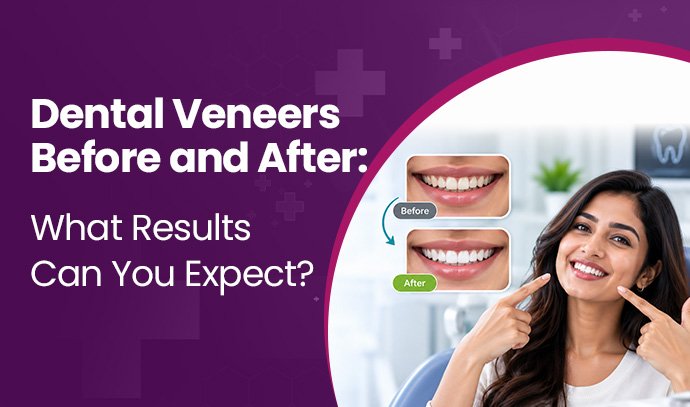
  • Dental Veneers Before and After: What Results Can You Expect?

    Dental Veneers Before and After: What Results Can You Expect?

    You’ve scrolled through veneer before-and-after photos. Some look incredible and completely natural. Others look obviously done: rows of flat, uniformly white teeth that look more like a filter than a smile. You want to know which one you’d end up with.

    The answer isn’t just about the material. It’s about planning. You may have seen veneers that look natural, these are matched with light-reflecting properties of real enamel. So, a shade that suits your skin tone is chosen. 

    At Galaxy Dental Care, dental veneer treatment in Hyderabad is planned and placed by prosthodontists. These are dental specialists in smile restoration. They use digital smile design that shows your expected result before any tooth preparation begins. With 100,000+ patients treated across 9 branches since 2008 and 2 FAMDENT awards for clinical standards, the team treats every veneer case as an individual design project.

    Dental Veneers Before: What You Need to Know First?

    Before any veneer is placed, three things need to happen: a proper clinical assessment, an honest conversation about what veneers can and can’t fix, and a digital preview of the result. Skipping any of these is where unrealistic outcomes start.

    Who veneers suits and who they don’t?

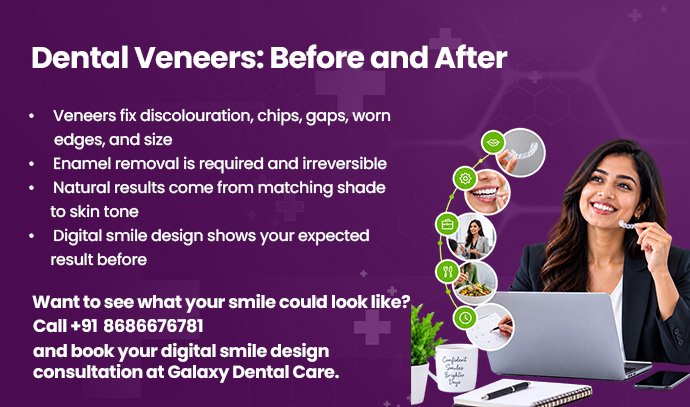
    • Dental veneers in Hyderabad work well for teeth that are discoloured in ways that whitening can’t reach, chipped or worn at the edges, slightly uneven in shape or size, or have small gaps. 
    • They also rebuild teeth that have shortened over years of grinding.
    • They aren’t the right tool for teeth with active decay, significant structural damage, or teeth supporting severe alignment problems. 
    • Gum disease also needs to be treated and stable before veneers can go on. A good prosthodontist checks all of this before any recommendation is made.

    Placing a veneer requires removing a thin layer of enamel from the tooth front, typically 0.3mm to 0.7mm. This lets the veneer sit flush rather than bulging. This is worth understanding before you commit: it’s an irreversible step.

    What digital smile design shows you?

    At Galaxy Dental Care, every veneer case begins with a digital simulation. You see the proposed shape, length, and shade of your veneers on screen before a single tooth is touched. You can ask for adjustments: slightly shorter, a shade warmer, a different edge shape.

    Dental Veneers After: What Actually Changes?

    The change after veneers is rarely one dramatic thing. It’s several smaller changes that together shift how your smile reads: to others and to yourself.

    Colour and Brightness

    Veneers cover existing discolouration that whitening doesn’t reach: deep staining from tetracycline, fluorosis, or old root canal treatment. The shade is chosen at the planning stage. 

    Going as white as possible is rarely the right call. Porcelain veneers cost reflect light the way natural enamel does. Slightly translucent. This is what keeps a result looking like teeth rather than tiles.

    Shape and Proportion

    Teeth that are worn down, chipped, or naturally short get rebuilt to proper proportions. Veneers can lengthen, widen, or reshape individual teeth. The veneer is designed for the face it belongs to.

    Gaps and Uneven Edges 

    Small gaps between front teeth close with veneers. Rough or uneven edges become smooth. Slight size differences between teeth on either side of the smile even out. These are the changes patients notice most in daily life.

    dental veneers before and after

    What Results Can You Expect?

    The most common question is dental veneers before and after, means will the result look natural or obviously done. The answer depends almost entirely on the planning, not the material. Natural results share three qualities. 

    • The shade has warmth and slight variation between teeth rather than being uniformly bright white. 
    • The shape has slight differences between individual teeth rather than being identical.
    • The surface reflects light with some translucency at the edges rather than appearing flat or opaque.

    Results that look done usually come from three things: a shade too white for the skin tone, every veneer made identical in length and shape, and material that doesn’t reflect light the way real enamel does.

    The Hollywood smile, the very white and very uniform result seen in some celebrity images, is a specific aesthetic choice. Some patients want it. Many don’t. At Galaxy Dental Care, the prosthodontist discusses this directly at the planning stage. 

    Meet the Prosthodontist Team at Galaxy Dental Care for Your Digital Smile Design

    Most patients who feel self-conscious about their smile have been managing it quietly for years. Covering their mouth when they laugh. Holding their lips a certain way in photos. Turning away from a camera they didn’t see coming.

    Dental veneers in Hyderabad at Galaxy Dental Care are planned by prosthodontists. These are the specialists whose entire training focuses on smile restoration. The process starts with a digital smile design consultation where the outcome is visible before any treatment begins. You see the proposed result on screen, ask for adjustments, and decide whether to proceed with full information.

    Find dental veneers near me in Hyderabad at the branch most convenient for you: Kondapur, Kukatpally, Banjara Hills, Chandanagar, Nallagandla, AS Rao Nagar, Kompally, Manikonda, or Vanasthalipuram.

    Call +91 8686676781 to book your consultation.

    Frequently Asked Questions

    How long do dental veneers last?

    Porcelain veneers last 10 to 15 years with good care. Composite veneers last 3 to 7 years and are less expensive but need replacement sooner. 

    Will veneers make my teeth look too white or fake?

    Only if the shade is chosen without considering your skin tone and the natural light-reflecting properties of enamel. At Galaxy Dental Care, the prosthodontist selects the shade in consultation with you using digital smile design. The goal is a result that looks like your teeth, only better.

    Do veneers damage your natural teeth?

    Placing porcelain veneers requires removing a thin layer of enamel, typically 0.3mm to 0.7mm and the procedure is done under local anaesthesia. For patients with very mild concerns, composite bonding without enamel removal is the best alternative.

    Can I get veneers on just one or two teeth?

    Yes. Veneers can be placed on a single tooth and matched precisely to adjacent teeth. A single chipped or discoloured front tooth is a common reason patients seek one veneer rather than a full set.

  • Bleeding Gums Reason: Why Gums Bleed and What It Means

    Bleeding Gums Reason: Why Gums Bleed and What It Means

    Bleeding gums reason is the question on your mind when you spit out pink toothpaste or notice blood on your floss. Most people feel a jolt of worry, wondering if this signals something serious or if they brushed too hard. The most common cause is plaque buildup along the gumline, which irritates soft tissue and triggers inflammation called gingivitis. Other triggers include injury from rough brushing, vitamin deficiencies, certain medications, and underlying health conditions. At Galaxy dental care, we see patients daily who delayed care because they hoped the problem would resolve itself, only to find the bleeding worsened. Understanding what is actually causing your gums to bleed is the first step toward treating it properly. This article walks through each cause, how to tell them apart, and when professional help becomes essential.

    Key takeaways

    • Plaque buildup and gingivitis cause most bleeding gums, not brushing too hard.
    • Vitamin C deficiency and some medications can make gums bleed without obvious plaque.
    • Persistent bleeding beyond two weeks needs a dentist’s evaluation to rule out periodontal disease.
    • Daily flossing and proper brushing technique reduce recurrence when paired with professional cleaning.

    What is the most common bleeding gums reason?

    Poor oral hygiene leading to plaque accumulation is the most frequent bleeding gums reason. Plaque is a sticky film of bacteria that forms on teeth daily. When not removed by brushing and flossing, it settles along the gumline and irritates the soft tissue beneath. This irritation triggers inflammation, making gums swollen, tender, and likely to bleed during brushing or flossing. This early stage of gum disease is called gingivitis.

    Research indicates that periodontal disease affects over 1 billion people worldwide, with bleeding or swollen gums as hallmark signs. The good news: gingivitis is reversible with improved home care and professional intervention. At Galaxy dental care, we begin with a thorough examination to assess gum health, followed by Teeth Cleaning to remove hardened deposits that brushing cannot address. For more advanced cases, Teeth Scaling may be recommended to clean below the gumline.

    Can vitamin deficiency cause bleeding gums?

    Yes, vitamin C deficiency is a recognized bleeding gums reason that operates independently of plaque. Vitamin C is essential for collagen production, the protein that keeps gum tissue strong and resilient. When levels drop, capillaries become fragile and gums bleed more easily, sometimes appearing swollen or spongy even with good oral hygiene.

    Other deficiencies can contribute too. Vitamin K plays a role in blood clotting, and low levels may prolong bleeding from minor gum irritation. Iron deficiency anemia sometimes presents with pale, inflamed gums that bleed readily. If you maintain consistent brushing and flossing yet still notice bleeding, dietary factors deserve attention alongside a dental check. Blood tests ordered by your physician can confirm whether a deficiency is involved, and your dentist can coordinate care to address both oral symptoms and nutritional gaps.

    How do medications and health conditions lead to bleeding gums?

    Certain medications and systemic diseases represent a bleeding gums reason that many patients overlook. Blood thinners such as warfarin and aspirin reduce clotting ability, so minor gum irritation produces more noticeable bleeding. Some anticonvulsants, calcium channel blockers for blood pressure, and immunosuppressants cause gum overgrowth that traps plaque and bleeds easily.

    Systemic conditions also matter. Diabetes reduces the body’s ability to fight infection, making gums more susceptible to inflammation and bleeding. Hormonal changes during pregnancy increase blood flow to gum tissue, causing pregnancy gingivitis even with previously healthy gums. Less commonly, bleeding disorders or blood cancers may present with gum bleeding as an early symptom, which is why persistent unexplained bleeding warrants thorough evaluation rather than self-treatment.

    Cause Category Typical Presentation First Step to Take
    Plaque and gingivitis Bleeding with brushing, swollen gums, bad breath Schedule professional cleaning and improve daily hygiene
    Vitamin deficiency Bleeding despite good hygiene, fatigue, easy bruising Dental exam plus physician-ordered blood tests
    Medication side effect New bleeding after starting a prescription, gum overgrowth Review medications with dentist and prescribing doctor
    Systemic disease Persistent bleeding with other health symptoms Comprehensive medical and dental co-evaluation

    When should bleeding gums prompt a dental visit?

    Bleeding that persists beyond two weeks despite improved brushing and flossing is a clear signal to book an appointment. Other warning signs include gums that are consistently swollen, receding, or tender to touch; persistent bad breath; and teeth that feel loose or shift position. These symptoms suggest progression from reversible gingivitis to periodontitis, where the supporting bone and tissue around teeth become damaged.

    At Galaxy dental care, we evaluate gum health through visual examination, periodontal probing to measure pocket depths, and digital X-rays to assess bone levels when indicated. Early intervention through Advanced Gum Treatments can halt disease progression and preserve natural teeth. For patients needing broader restoration, Full Mouth Rehabilitation addresses comprehensive oral health concerns. Do not wait for pain to appear, as periodontal disease often progresses silently until significant damage has occurred.

    Symptom Pattern Likely Stage Recommended Action
    Occasional bleeding with brushing only Early gingivitis Professional cleaning, technique review
    Bleeding with flossing, mild swelling Established gingivitis Scaling, enhanced home care regimen
    Spontaneous bleeding, receding gums Early periodontitis Deep cleaning, possible referral for specialist care
    Loose teeth, persistent pain Advanced periodontitis Comprehensive periodontal therapy, possible surgical intervention

    What daily habits help prevent bleeding gums?

    Prevention centers on consistent plaque removal and technique awareness. Brush twice daily for two minutes using a soft-bristled brush positioned at a 45-degree angle toward the gumline. Gentle pressure is sufficient, aggressive scrubbing damages tissue and can itself become a bleeding gums reason. Floss once daily to clean between teeth where brushes cannot reach, curving the floss around each tooth in a C-shape and sliding gently beneath the gumline.

    Additional protective measures include using an antimicrobial mouthwash as directed, replacing toothbrushes every three months, and managing dry mouth which reduces saliva’s natural protective effects. Regular professional care completes the picture, as tartar cannot be removed at home. At Galaxy dental care, we emphasize Preventive Dentistry to catch problems before they require complex intervention. For families, our Pediatric Dentist helps children establish habits that prevent gum issues from developing early.

    Diagram showing common causes of bleeding gums including plaque, vitamin deficiency, and medication effectsMain Causes of Bleeding GumsIdentify what might be causing your symptoms so you can seekthe right care.1Plaque and GingivitisBacterial buildup along the gumline triggersinflammation that makes gums swell and bleed duringcleaning.2Vitamin DeficiencyLow vitamin C weakens gum tissue and blood vessels,causing bleeding even with good brushing habits.3Medication EffectsBlood thinners and certain prescriptions reduceclotting or cause gum overgrowth that traps bacteria.4Brushing TechniqueHard bristles and aggressive pressure damage delicategum tissue and create bleeding sites.5Hormonal ChangesPregnancy and other shifts increase blood flow togums, making them more prone to bleeding.Most bleeding gums improve with professional cleaning andgentler daily care.Galaxy dental care+91 86866 76781

    Bleeding gums most often signal plaque-related inflammation that responds to better hygiene and professional care, though vitamin deficiency, medications, and systemic disease also play a role. Persistent bleeding deserves timely evaluation to prevent progression to bone-damaging periodontitis. Take the next step by calling Galaxy dental care at +91 86866 76781 to schedule a gum health assessment and personalized treatment plan.

    FAQs

    How do I stop my gums from bleeding immediately?

    Rinse gently with warm salt water to reduce bacteria and soothe tissue. Apply firm pressure with clean gauze for 10 to 15 minutes if bleeding is active. Avoid irritating the area further with harsh brushing or spicy foods until the bleeding subsides.

    What vitamin deficiency causes bleeding gums?

    Vitamin C deficiency is the most common nutritional cause, as it weakens collagen in gum tissue and makes capillaries fragile. Vitamin K deficiency can also contribute by impairing blood clotting. Blood tests confirm whether either is involved.

    Can bleeding gums heal on their own?

    Mild bleeding from temporary irritation may resolve with gentler brushing and flossing. Bleeding caused by plaque buildup or disease will not heal without professional cleaning and sustained improved hygiene.

    How long should I wait before seeing a dentist for bleeding gums?

    Schedule an appointment if bleeding persists beyond two weeks despite careful home care, or sooner if you notice swelling, recession, bad breath, or loose teeth.

    Are bleeding gums always a sign of gum disease?

    No. While plaque-induced gingivitis is the most common cause, brushing too hard, ill-fitting dental appliances, pregnancy hormones, blood thinners, and nutritional deficiencies can also cause bleeding.

    What is the difference between gingivitis and periodontitis?

    Gingivitis is inflammation limited to gum tissue and is reversible with treatment. Periodontitis involves destruction of the bone and ligaments supporting teeth, can cause tooth loss, and requires more intensive management.

  • Mouth Ulcer Under Tongue: Causes, Relief & When to See a Dentist

    Mouth Ulcer Under Tongue: Causes, Relief & When to See a Dentist

    Mouth ulcer under tongue strikes without warning and turns every meal into a struggle. That sharp sting when you talk, swallow, or even rest your tongue against your teeth is exhausting, and the hidden spot makes it hard to check or treat. Most of these sores are harmless canker sores that heal on their own within 1 to 2 weeks. You can ease the pain with soft foods, salt-water rinses, and numbing gel from a pharmacy. At Galaxy Dental Care in Kondapur, we examine persistent or unusually painful ulcers to rule out anything serious and guide you toward lasting relief. Read on to learn what triggers these sores, how to calm them at home, and the warning signs that mean you should book a dental visit.

    Key takeaways

    • Most mouth ulcers under the tongue heal without treatment in 1 to 2 weeks.
    • Stress, hormonal shifts, minor injuries, and certain foods commonly trigger these sores.
    • A sore that does not heal may need professional examination to exclude other conditions.
    • Soft foods, salt-water rinses, and numbing gel help manage discomfort while healing occurs.
    • Smoking cessation and avoiding acidic or spicy foods can reduce recurrence.

    What does a mouth ulcer under the tongue look and feel like?

    A mouth ulcer under the tongue usually appears as a round or oval white or yellowish sore with a red rim. It sits on the soft tissue beneath the tongue or on the floor of the mouth, where saliva pools and movement is constant. The pain is sharp, especially when you eat salty, spicy, or acidic foods, or when your tongue rubs against teeth or dental work. Some people feel a tingling or burning sensation a day before the ulcer becomes visible. These sores are not contagious, so you cannot spread them through sharing food or kissing. If you live in Hyderabad and need someone to examine a sore that worries you, our team offers Mouth Ulcer Treatment in Hyderabad with same-day appointments when urgency matters.

    What causes mouth ulcers to form under the tongue?

    The exact cause of most mouth ulcers is not known, but several factors make them more likely. Stress and anxiety are common triggers. Hormonal changes, such as those during monthly periods, can bring on ulcers in some women. Minor physical injuries also play a role, including accidental biting, sharp tooth edges, or friction from braces and dentures. Certain foods are linked to outbreaks in susceptible people, including chocolate, spicy foods, coffee, peanuts, almonds, strawberries, cheese, tomatoes, and wheat flour. Toothpaste containing sodium lauryl sulphate may contribute in some cases. Interestingly, stopping smoking can temporarily trigger ulcers as your mouth adjusts. For a deeper look at triggers you can actually control, see our guide on What Causes Mouth Ulcers? 7 Triggers You Can Actually Fix.

    Trigger category Specific examples What you can do
    Physical irritation Sharp tooth edges, braces, accidental biting Ask a dentist to smooth rough surfaces or adjust appliances
    Dietary factors Chocolate, spicy foods, coffee, strawberries, tomatoes, nuts Track your diet and reduce foods that precede outbreaks
    Hormonal changes Monthly menstrual cycle Note timing and use gentle care during vulnerable weeks
    Stress and anxiety Work pressure, poor sleep, major life changes Prioritise rest and stress-reduction techniques

    How can you relieve pain from a mouth ulcer under tongue at home?

    Most sores need only simple care while they run their course. Rinse your mouth with warm salt water several times daily to keep the area clean and reduce irritation. Choose soft, bland foods such as yoghurt, mashed vegetables, and rice to avoid further trauma. Avoid acidic, spicy, or crunchy items that sting the open sore. A pharmacy numbing gel applied directly to the ulcer can dull pain for meals and conversations. Maintain gentle oral hygiene with a soft brush, taking care not to scrape the sore. Do not attempt to pop or cauterise the ulcer at home. Smoking and acidic foods can aggravate mouth ulcers, so reducing both helps. If home measures fail and the sore interferes with daily life, professional options are available. Residents near KPHB Colony can access Mouth Ulcer Treatment in Kukatpally KPHB Colony for targeted relief.

    When should you see a dentist for a mouth ulcer under tongue?

    Book a dental appointment if your ulcer lasts beyond the normal healing window, grows larger, or keeps returning in the same spot. Other warning signs include hard or raised edges, bleeding, numbness, unexplained weight loss, or lumps in the neck. While most mouth ulcers are harmless, a sore that will not heal could signal a condition that needs closer examination. In most serious cases of oral conditions, ulcers appear on or under the tongue, so location alone is not reassuring if duration or appearance is unusual. A dentist can examine the site, review your history, and decide whether a biopsy or referral is warranted. Early professional review protects your health and your peace of mind. For those in central Hyderabad, Mouth Ulcer Treatment in Banjara Hills provides thorough assessment and clear next steps.

    Sign What it may indicate Recommended action
    Ulcer persists beyond 2 weeks Delayed healing needing professional review Schedule a dental examination promptly
    Hard, raised, or irregular edges Possible tissue changes requiring closer look See a dentist within a few days
    Frequent recurrence in same location Local irritation or underlying trigger Ask about adjusting dental appliances or diet review
    Associated fever or feeling unwell Infection or systemic issue Seek medical or dental evaluation quickly

    How does a dentist treat persistent mouth ulcers under the tongue?

    A dentist begins with a visual examination and history, asking about duration, recurrence, diet, stress levels, and any medications you take. They may gently palpate the area and check surrounding teeth and appliances for sources of irritation. If the sore is typical, they may prescribe a stronger topical corticosteroid paste, an antimicrobial mouth rinse, or recommend a change in toothpaste to one without sodium lauryl sulphate. For recurrent cases, they might suggest blood tests to check for nutritional deficiencies such as iron, folate, or vitamin B12. When a sore looks atypical, a small tissue sample may be sent for laboratory analysis. The goal is always to relieve your pain and identify any underlying cause. At Galaxy Dental Care, we follow strict sterilisation and hygiene standards during every examination. Patients in western Hyderabad can find Mouth Ulcer Treatment in Chandanagar with our experienced team.

    Can you prevent mouth ulcers under the tongue from coming back?

    Prevention focuses on reducing known triggers. Switch to toothpaste without sodium lauryl sulphate if you notice a pattern. Manage stress through adequate sleep, exercise, and relaxation techniques. Keep a food diary to spot personal dietary triggers, then limit those items. Protect your mouth from injury by asking your dentist to smooth sharp tooth surfaces or adjust ill-fitting dentures and braces. Maintain balanced nutrition to support immune function and tissue repair. If hormonal timing predicts your outbreaks, be extra gentle with oral care during those weeks. Not every ulcer can be prevented, but these steps reduce frequency and severity for many people. For ongoing support and preventive advice, Mouth Ulcer Treatment in Kondapur at Galaxy Dental Care includes personalised counselling on trigger management.

    What to Check Beneath Your TongueUse this guide to describe your sore accurately to a dentist.1Sore locationThe ulcer sits on soft tissue beneath the tongue or onthe mouth floor where saliva collects.2Colour and shapeLook for a round or oval white centre with a red rimaround the edges.3Pain patternSharp stinging worsens with salty, spicy, or acidicfoods and tongue movement.4Healing timelineMost sores improve noticeably within several days andclose within 1 to 2 weeks.5Warning signsHard edges, bleeding, or persistence beyond 2 weeksneed professional examination.Describe what you see and how long it has lasted.Galaxy dental care+91 86866 76781

    Most sores beneath the tongue heal within 1 to 2 weeks with gentle home care. Track your triggers, protect the sore from irritation, and seek help if healing stalls. Galaxy Dental Care at Plot no 154, Gachibowli Miyapur Road, opposite Harsha Toyota, Kondapur, Hyderabad, offers examination and relief plans for stubborn or recurrent ulcers. Call +91 86866 76781 to book your appointment.

    FAQs

    How long does a mouth ulcer under the tongue take to heal?

    Most mouth ulcers heal without treatment after 1 to 2 weeks. The timeline varies with individual oral health and how well you avoid irritating the sore.

    Are mouth ulcers under the tongue contagious?

    No, typical mouth ulcers are not contagious. You cannot spread them through sharing utensils, food, or close contact.

    What foods should I avoid with a mouth ulcer under my tongue?

    Avoid acidic, spicy, salty, and crunchy foods that sting the open sore. Soft, bland options like yoghurt and rice are easier to manage.

    Can stress cause mouth ulcers under the tongue?

    Stress and anxiety are recognised triggers that make mouth ulcers more likely, though they are rarely the sole cause.

    When is a mouth ulcer under the tongue serious?

    See a dentist if the ulcer lasts beyond 2 weeks, grows larger, has hard edges, or is accompanied by weight loss or neck lumps.

    Does smoking affect mouth ulcers under the tongue?

    Smoking and acidic foods can aggravate mouth ulcers. Stopping smoking may temporarily trigger sores, but long-term reduction helps prevent recurrence.