Category: Dental Check-ups

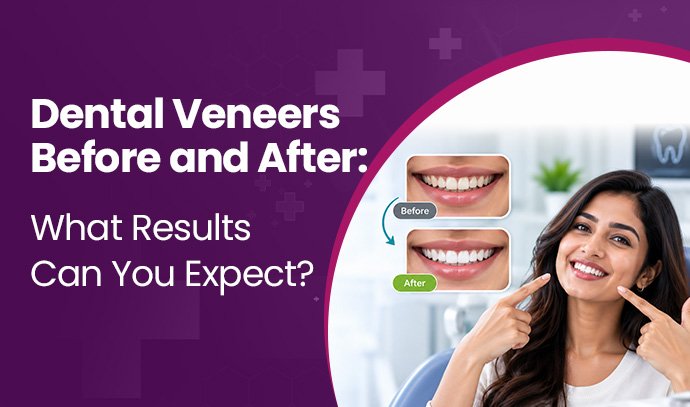
  • Dental Veneers Before and After: What Results Can You Expect?

    Dental Veneers Before and After: What Results Can You Expect?

    You’ve scrolled through veneer before-and-after photos. Some look incredible and completely natural. Others look obviously done: rows of flat, uniformly white teeth that look more like a filter than a smile. You want to know which one you’d end up with.

    The answer isn’t just about the material. It’s about planning. You may have seen veneers that look natural, these are matched with light-reflecting properties of real enamel. So, a shade that suits your skin tone is chosen. 

    At Galaxy Dental Care, dental veneer treatment in Hyderabad is planned and placed by prosthodontists. These are dental specialists in smile restoration. They use digital smile design that shows your expected result before any tooth preparation begins. With 100,000+ patients treated across 9 branches since 2008 and 2 FAMDENT awards for clinical standards, the team treats every veneer case as an individual design project.

    Dental Veneers Before: What You Need to Know First?

    Before any veneer is placed, three things need to happen: a proper clinical assessment, an honest conversation about what veneers can and can’t fix, and a digital preview of the result. Skipping any of these is where unrealistic outcomes start.

    Who veneers suits and who they don’t?

    • Dental veneers in Hyderabad work well for teeth that are discoloured in ways that whitening can’t reach, chipped or worn at the edges, slightly uneven in shape or size, or have small gaps. 
    • They also rebuild teeth that have shortened over years of grinding.
    • They aren’t the right tool for teeth with active decay, significant structural damage, or teeth supporting severe alignment problems. 
    • Gum disease also needs to be treated and stable before veneers can go on. A good prosthodontist checks all of this before any recommendation is made.

    Placing a veneer requires removing a thin layer of enamel from the tooth front, typically 0.3mm to 0.7mm. This lets the veneer sit flush rather than bulging. This is worth understanding before you commit: it’s an irreversible step.

    What digital smile design shows you?

    At Galaxy Dental Care, every veneer case begins with a digital simulation. You see the proposed shape, length, and shade of your veneers on screen before a single tooth is touched. You can ask for adjustments: slightly shorter, a shade warmer, a different edge shape.

    Dental Veneers After: What Actually Changes?

    The change after veneers is rarely one dramatic thing. It’s several smaller changes that together shift how your smile reads: to others and to yourself.

    Colour and Brightness

    Veneers cover existing discolouration that whitening doesn’t reach: deep staining from tetracycline, fluorosis, or old root canal treatment. The shade is chosen at the planning stage. 

    Going as white as possible is rarely the right call. Porcelain veneers cost reflect light the way natural enamel does. Slightly translucent. This is what keeps a result looking like teeth rather than tiles.

    Shape and Proportion

    Teeth that are worn down, chipped, or naturally short get rebuilt to proper proportions. Veneers can lengthen, widen, or reshape individual teeth. The veneer is designed for the face it belongs to.

    Gaps and Uneven Edges 

    Small gaps between front teeth close with veneers. Rough or uneven edges become smooth. Slight size differences between teeth on either side of the smile even out. These are the changes patients notice most in daily life.
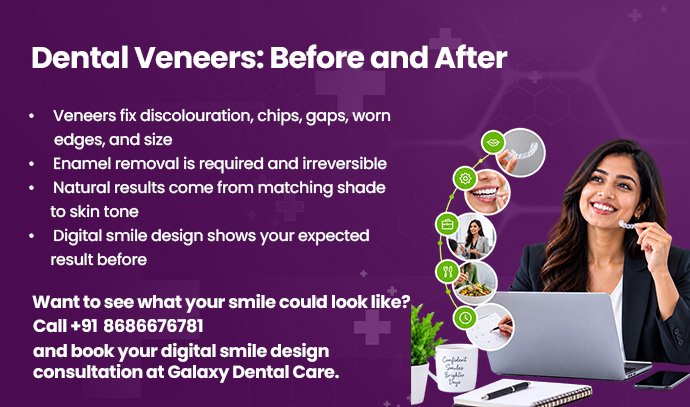
    dental veneers before and after

    What Results Can You Expect?

    The most common question is dental veneers before and after, means will the result look natural or obviously done. The answer depends almost entirely on the planning, not the material. Natural results share three qualities. 

    • The shade has warmth and slight variation between teeth rather than being uniformly bright white. 
    • The shape has slight differences between individual teeth rather than being identical.
    • The surface reflects light with some translucency at the edges rather than appearing flat or opaque.

    Results that look done usually come from three things: a shade too white for the skin tone, every veneer made identical in length and shape, and material that doesn’t reflect light the way real enamel does.

    The Hollywood smile, the very white and very uniform result seen in some celebrity images, is a specific aesthetic choice. Some patients want it. Many don’t. At Galaxy Dental Care, the prosthodontist discusses this directly at the planning stage. 

    Meet the Prosthodontist Team at Galaxy Dental Care for Your Digital Smile Design

    Most patients who feel self-conscious about their smile have been managing it quietly for years. Covering their mouth when they laugh. Holding their lips a certain way in photos. Turning away from a camera they didn’t see coming.

    Dental veneers in Hyderabad at Galaxy Dental Care are planned by prosthodontists. These are the specialists whose entire training focuses on smile restoration. The process starts with a digital smile design consultation where the outcome is visible before any treatment begins. You see the proposed result on screen, ask for adjustments, and decide whether to proceed with full information.

    Find dental veneers near me in Hyderabad at the branch most convenient for you: Kondapur, Kukatpally, Banjara Hills, Chandanagar, Nallagandla, AS Rao Nagar, Kompally, Manikonda, or Vanasthalipuram.

    Call +91 8686676781 to book your consultation.

    Frequently Asked Questions

    How long do dental veneers last?

    Porcelain veneers last 10 to 15 years with good care. Composite veneers last 3 to 7 years and are less expensive but need replacement sooner. 

    Will veneers make my teeth look too white or fake?

    Only if the shade is chosen without considering your skin tone and the natural light-reflecting properties of enamel. At Galaxy Dental Care, the prosthodontist selects the shade in consultation with you using digital smile design. The goal is a result that looks like your teeth, only better.

    Do veneers damage your natural teeth?

    Placing porcelain veneers requires removing a thin layer of enamel, typically 0.3mm to 0.7mm and the procedure is done under local anaesthesia. For patients with very mild concerns, composite bonding without enamel removal is the best alternative.

    Can I get veneers on just one or two teeth?

    Yes. Veneers can be placed on a single tooth and matched precisely to adjacent teeth. A single chipped or discoloured front tooth is a common reason patients seek one veneer rather than a full set.
  • Bleeding Gums Reason: Why Gums Bleed and What It Means

    Bleeding Gums Reason: Why Gums Bleed and What It Means

    Bleeding gums reason is the question on your mind when you spit out pink toothpaste or notice blood on your floss. Most people feel a jolt of worry, wondering if this signals something serious or if they brushed too hard. The most common cause is plaque buildup along the gumline, which irritates soft tissue and triggers inflammation called gingivitis. Other triggers include injury from rough brushing, vitamin deficiencies, certain medications, and underlying health conditions. At Galaxy dental care, we see patients daily who delayed care because they hoped the problem would resolve itself, only to find the bleeding worsened. Understanding what is actually causing your gums to bleed is the first step toward treating it properly. This article walks through each cause, how to tell them apart, and when professional help becomes essential.

    Key takeaways

    • Plaque buildup and gingivitis cause most bleeding gums, not brushing too hard.
    • Vitamin C deficiency and some medications can make gums bleed without obvious plaque.
    • Persistent bleeding beyond two weeks needs a dentist’s evaluation to rule out periodontal disease.
    • Daily flossing and proper brushing technique reduce recurrence when paired with professional cleaning.

    What is the most common bleeding gums reason?

    Poor oral hygiene leading to plaque accumulation is the most frequent bleeding gums reason. Plaque is a sticky film of bacteria that forms on teeth daily. When not removed by brushing and flossing, it settles along the gumline and irritates the soft tissue beneath. This irritation triggers inflammation, making gums swollen, tender, and likely to bleed during brushing or flossing. This early stage of gum disease is called gingivitis.

    Research indicates that periodontal disease affects over 1 billion people worldwide, with bleeding or swollen gums as hallmark signs. The good news: gingivitis is reversible with improved home care and professional intervention. At Galaxy dental care, we begin with a thorough examination to assess gum health, followed by Teeth Cleaning to remove hardened deposits that brushing cannot address. For more advanced cases, Teeth Scaling may be recommended to clean below the gumline.

    Can vitamin deficiency cause bleeding gums?

    Yes, vitamin C deficiency is a recognized bleeding gums reason that operates independently of plaque. Vitamin C is essential for collagen production, the protein that keeps gum tissue strong and resilient. When levels drop, capillaries become fragile and gums bleed more easily, sometimes appearing swollen or spongy even with good oral hygiene.

    Other deficiencies can contribute too. Vitamin K plays a role in blood clotting, and low levels may prolong bleeding from minor gum irritation. Iron deficiency anemia sometimes presents with pale, inflamed gums that bleed readily. If you maintain consistent brushing and flossing yet still notice bleeding, dietary factors deserve attention alongside a dental check. Blood tests ordered by your physician can confirm whether a deficiency is involved, and your dentist can coordinate care to address both oral symptoms and nutritional gaps.

    How do medications and health conditions lead to bleeding gums?

    Certain medications and systemic diseases represent a bleeding gums reason that many patients overlook. Blood thinners such as warfarin and aspirin reduce clotting ability, so minor gum irritation produces more noticeable bleeding. Some anticonvulsants, calcium channel blockers for blood pressure, and immunosuppressants cause gum overgrowth that traps plaque and bleeds easily.

    Systemic conditions also matter. Diabetes reduces the body’s ability to fight infection, making gums more susceptible to inflammation and bleeding. Hormonal changes during pregnancy increase blood flow to gum tissue, causing pregnancy gingivitis even with previously healthy gums. Less commonly, bleeding disorders or blood cancers may present with gum bleeding as an early symptom, which is why persistent unexplained bleeding warrants thorough evaluation rather than self-treatment.

    Cause Category Typical Presentation First Step to Take
    Plaque and gingivitis Bleeding with brushing, swollen gums, bad breath Schedule professional cleaning and improve daily hygiene
    Vitamin deficiency Bleeding despite good hygiene, fatigue, easy bruising Dental exam plus physician-ordered blood tests
    Medication side effect New bleeding after starting a prescription, gum overgrowth Review medications with dentist and prescribing doctor
    Systemic disease Persistent bleeding with other health symptoms Comprehensive medical and dental co-evaluation

    When should bleeding gums prompt a dental visit?

    Bleeding that persists beyond two weeks despite improved brushing and flossing is a clear signal to book an appointment. Other warning signs include gums that are consistently swollen, receding, or tender to touch; persistent bad breath; and teeth that feel loose or shift position. These symptoms suggest progression from reversible gingivitis to periodontitis, where the supporting bone and tissue around teeth become damaged.

    At Galaxy dental care, we evaluate gum health through visual examination, periodontal probing to measure pocket depths, and digital X-rays to assess bone levels when indicated. Early intervention through Advanced Gum Treatments can halt disease progression and preserve natural teeth. For patients needing broader restoration, Full Mouth Rehabilitation addresses comprehensive oral health concerns. Do not wait for pain to appear, as periodontal disease often progresses silently until significant damage has occurred.

    Symptom Pattern Likely Stage Recommended Action
    Occasional bleeding with brushing only Early gingivitis Professional cleaning, technique review
    Bleeding with flossing, mild swelling Established gingivitis Scaling, enhanced home care regimen
    Spontaneous bleeding, receding gums Early periodontitis Deep cleaning, possible referral for specialist care
    Loose teeth, persistent pain Advanced periodontitis Comprehensive periodontal therapy, possible surgical intervention

    What daily habits help prevent bleeding gums?

    Prevention centers on consistent plaque removal and technique awareness. Brush twice daily for two minutes using a soft-bristled brush positioned at a 45-degree angle toward the gumline. Gentle pressure is sufficient, aggressive scrubbing damages tissue and can itself become a bleeding gums reason. Floss once daily to clean between teeth where brushes cannot reach, curving the floss around each tooth in a C-shape and sliding gently beneath the gumline.

    Additional protective measures include using an antimicrobial mouthwash as directed, replacing toothbrushes every three months, and managing dry mouth which reduces saliva’s natural protective effects. Regular professional care completes the picture, as tartar cannot be removed at home. At Galaxy dental care, we emphasize Preventive Dentistry to catch problems before they require complex intervention. For families, our Pediatric Dentist helps children establish habits that prevent gum issues from developing early.

    Diagram showing common causes of bleeding gums including plaque, vitamin deficiency, and medication effectsMain Causes of Bleeding GumsIdentify what might be causing your symptoms so you can seekthe right care.1Plaque and GingivitisBacterial buildup along the gumline triggersinflammation that makes gums swell and bleed duringcleaning.2Vitamin DeficiencyLow vitamin C weakens gum tissue and blood vessels,causing bleeding even with good brushing habits.3Medication EffectsBlood thinners and certain prescriptions reduceclotting or cause gum overgrowth that traps bacteria.4Brushing TechniqueHard bristles and aggressive pressure damage delicategum tissue and create bleeding sites.5Hormonal ChangesPregnancy and other shifts increase blood flow togums, making them more prone to bleeding.Most bleeding gums improve with professional cleaning andgentler daily care.Galaxy dental care+91 86866 76781

    Bleeding gums most often signal plaque-related inflammation that responds to better hygiene and professional care, though vitamin deficiency, medications, and systemic disease also play a role. Persistent bleeding deserves timely evaluation to prevent progression to bone-damaging periodontitis. Take the next step by calling Galaxy dental care at +91 86866 76781 to schedule a gum health assessment and personalized treatment plan.

    FAQs

    How do I stop my gums from bleeding immediately?

    Rinse gently with warm salt water to reduce bacteria and soothe tissue. Apply firm pressure with clean gauze for 10 to 15 minutes if bleeding is active. Avoid irritating the area further with harsh brushing or spicy foods until the bleeding subsides.

    What vitamin deficiency causes bleeding gums?

    Vitamin C deficiency is the most common nutritional cause, as it weakens collagen in gum tissue and makes capillaries fragile. Vitamin K deficiency can also contribute by impairing blood clotting. Blood tests confirm whether either is involved.

    Can bleeding gums heal on their own?

    Mild bleeding from temporary irritation may resolve with gentler brushing and flossing. Bleeding caused by plaque buildup or disease will not heal without professional cleaning and sustained improved hygiene.

    How long should I wait before seeing a dentist for bleeding gums?

    Schedule an appointment if bleeding persists beyond two weeks despite careful home care, or sooner if you notice swelling, recession, bad breath, or loose teeth.

    Are bleeding gums always a sign of gum disease?

    No. While plaque-induced gingivitis is the most common cause, brushing too hard, ill-fitting dental appliances, pregnancy hormones, blood thinners, and nutritional deficiencies can also cause bleeding.

    What is the difference between gingivitis and periodontitis?

    Gingivitis is inflammation limited to gum tissue and is reversible with treatment. Periodontitis involves destruction of the bone and ligaments supporting teeth, can cause tooth loss, and requires more intensive management.

  • Mouth Ulcer Under Tongue: Causes, Relief & When to See a Dentist

    Mouth Ulcer Under Tongue: Causes, Relief & When to See a Dentist

    Mouth ulcer under tongue strikes without warning and turns every meal into a struggle. That sharp sting when you talk, swallow, or even rest your tongue against your teeth is exhausting, and the hidden spot makes it hard to check or treat. Most of these sores are harmless canker sores that heal on their own within 1 to 2 weeks. You can ease the pain with soft foods, salt-water rinses, and numbing gel from a pharmacy. At Galaxy Dental Care in Kondapur, we examine persistent or unusually painful ulcers to rule out anything serious and guide you toward lasting relief. Read on to learn what triggers these sores, how to calm them at home, and the warning signs that mean you should book a dental visit.

    Key takeaways

    • Most mouth ulcers under the tongue heal without treatment in 1 to 2 weeks.
    • Stress, hormonal shifts, minor injuries, and certain foods commonly trigger these sores.
    • A sore that does not heal may need professional examination to exclude other conditions.
    • Soft foods, salt-water rinses, and numbing gel help manage discomfort while healing occurs.
    • Smoking cessation and avoiding acidic or spicy foods can reduce recurrence.

    What does a mouth ulcer under the tongue look and feel like?

    A mouth ulcer under the tongue usually appears as a round or oval white or yellowish sore with a red rim. It sits on the soft tissue beneath the tongue or on the floor of the mouth, where saliva pools and movement is constant. The pain is sharp, especially when you eat salty, spicy, or acidic foods, or when your tongue rubs against teeth or dental work. Some people feel a tingling or burning sensation a day before the ulcer becomes visible. These sores are not contagious, so you cannot spread them through sharing food or kissing. If you live in Hyderabad and need someone to examine a sore that worries you, our team offers Mouth Ulcer Treatment in Hyderabad with same-day appointments when urgency matters.

    What causes mouth ulcers to form under the tongue?

    The exact cause of most mouth ulcers is not known, but several factors make them more likely. Stress and anxiety are common triggers. Hormonal changes, such as those during monthly periods, can bring on ulcers in some women. Minor physical injuries also play a role, including accidental biting, sharp tooth edges, or friction from braces and dentures. Certain foods are linked to outbreaks in susceptible people, including chocolate, spicy foods, coffee, peanuts, almonds, strawberries, cheese, tomatoes, and wheat flour. Toothpaste containing sodium lauryl sulphate may contribute in some cases. Interestingly, stopping smoking can temporarily trigger ulcers as your mouth adjusts. For a deeper look at triggers you can actually control, see our guide on What Causes Mouth Ulcers? 7 Triggers You Can Actually Fix.

    Trigger category Specific examples What you can do
    Physical irritation Sharp tooth edges, braces, accidental biting Ask a dentist to smooth rough surfaces or adjust appliances
    Dietary factors Chocolate, spicy foods, coffee, strawberries, tomatoes, nuts Track your diet and reduce foods that precede outbreaks
    Hormonal changes Monthly menstrual cycle Note timing and use gentle care during vulnerable weeks
    Stress and anxiety Work pressure, poor sleep, major life changes Prioritise rest and stress-reduction techniques

    How can you relieve pain from a mouth ulcer under tongue at home?

    Most sores need only simple care while they run their course. Rinse your mouth with warm salt water several times daily to keep the area clean and reduce irritation. Choose soft, bland foods such as yoghurt, mashed vegetables, and rice to avoid further trauma. Avoid acidic, spicy, or crunchy items that sting the open sore. A pharmacy numbing gel applied directly to the ulcer can dull pain for meals and conversations. Maintain gentle oral hygiene with a soft brush, taking care not to scrape the sore. Do not attempt to pop or cauterise the ulcer at home. Smoking and acidic foods can aggravate mouth ulcers, so reducing both helps. If home measures fail and the sore interferes with daily life, professional options are available. Residents near KPHB Colony can access Mouth Ulcer Treatment in Kukatpally KPHB Colony for targeted relief.

    When should you see a dentist for a mouth ulcer under tongue?

    Book a dental appointment if your ulcer lasts beyond the normal healing window, grows larger, or keeps returning in the same spot. Other warning signs include hard or raised edges, bleeding, numbness, unexplained weight loss, or lumps in the neck. While most mouth ulcers are harmless, a sore that will not heal could signal a condition that needs closer examination. In most serious cases of oral conditions, ulcers appear on or under the tongue, so location alone is not reassuring if duration or appearance is unusual. A dentist can examine the site, review your history, and decide whether a biopsy or referral is warranted. Early professional review protects your health and your peace of mind. For those in central Hyderabad, Mouth Ulcer Treatment in Banjara Hills provides thorough assessment and clear next steps.

    Sign What it may indicate Recommended action
    Ulcer persists beyond 2 weeks Delayed healing needing professional review Schedule a dental examination promptly
    Hard, raised, or irregular edges Possible tissue changes requiring closer look See a dentist within a few days
    Frequent recurrence in same location Local irritation or underlying trigger Ask about adjusting dental appliances or diet review
    Associated fever or feeling unwell Infection or systemic issue Seek medical or dental evaluation quickly

    How does a dentist treat persistent mouth ulcers under the tongue?

    A dentist begins with a visual examination and history, asking about duration, recurrence, diet, stress levels, and any medications you take. They may gently palpate the area and check surrounding teeth and appliances for sources of irritation. If the sore is typical, they may prescribe a stronger topical corticosteroid paste, an antimicrobial mouth rinse, or recommend a change in toothpaste to one without sodium lauryl sulphate. For recurrent cases, they might suggest blood tests to check for nutritional deficiencies such as iron, folate, or vitamin B12. When a sore looks atypical, a small tissue sample may be sent for laboratory analysis. The goal is always to relieve your pain and identify any underlying cause. At Galaxy Dental Care, we follow strict sterilisation and hygiene standards during every examination. Patients in western Hyderabad can find Mouth Ulcer Treatment in Chandanagar with our experienced team.

    Can you prevent mouth ulcers under the tongue from coming back?

    Prevention focuses on reducing known triggers. Switch to toothpaste without sodium lauryl sulphate if you notice a pattern. Manage stress through adequate sleep, exercise, and relaxation techniques. Keep a food diary to spot personal dietary triggers, then limit those items. Protect your mouth from injury by asking your dentist to smooth sharp tooth surfaces or adjust ill-fitting dentures and braces. Maintain balanced nutrition to support immune function and tissue repair. If hormonal timing predicts your outbreaks, be extra gentle with oral care during those weeks. Not every ulcer can be prevented, but these steps reduce frequency and severity for many people. For ongoing support and preventive advice, Mouth Ulcer Treatment in Kondapur at Galaxy Dental Care includes personalised counselling on trigger management.

    What to Check Beneath Your TongueUse this guide to describe your sore accurately to a dentist.1Sore locationThe ulcer sits on soft tissue beneath the tongue or onthe mouth floor where saliva collects.2Colour and shapeLook for a round or oval white centre with a red rimaround the edges.3Pain patternSharp stinging worsens with salty, spicy, or acidicfoods and tongue movement.4Healing timelineMost sores improve noticeably within several days andclose within 1 to 2 weeks.5Warning signsHard edges, bleeding, or persistence beyond 2 weeksneed professional examination.Describe what you see and how long it has lasted.Galaxy dental care+91 86866 76781

    Most sores beneath the tongue heal within 1 to 2 weeks with gentle home care. Track your triggers, protect the sore from irritation, and seek help if healing stalls. Galaxy Dental Care at Plot no 154, Gachibowli Miyapur Road, opposite Harsha Toyota, Kondapur, Hyderabad, offers examination and relief plans for stubborn or recurrent ulcers. Call +91 86866 76781 to book your appointment.

    FAQs

    How long does a mouth ulcer under the tongue take to heal?

    Most mouth ulcers heal without treatment after 1 to 2 weeks. The timeline varies with individual oral health and how well you avoid irritating the sore.

    Are mouth ulcers under the tongue contagious?

    No, typical mouth ulcers are not contagious. You cannot spread them through sharing utensils, food, or close contact.

    What foods should I avoid with a mouth ulcer under my tongue?

    Avoid acidic, spicy, salty, and crunchy foods that sting the open sore. Soft, bland options like yoghurt and rice are easier to manage.

    Can stress cause mouth ulcers under the tongue?

    Stress and anxiety are recognised triggers that make mouth ulcers more likely, though they are rarely the sole cause.

    When is a mouth ulcer under the tongue serious?

    See a dentist if the ulcer lasts beyond 2 weeks, grows larger, has hard edges, or is accompanied by weight loss or neck lumps.

    Does smoking affect mouth ulcers under the tongue?

    Smoking and acidic foods can aggravate mouth ulcers. Stopping smoking may temporarily trigger sores, but long-term reduction helps prevent recurrence.

  • Dental Treatment Travel Guide for International Patients

    Dental Treatment Travel Guide for International Patients

    Your dentist back home has quoted a number that made you pause. Or you’re planning a trip to India and realised this could be the right time for that implant or the full-mouth work you’ve been delaying. Either way, you want to know whether travelling to Hyderabad for dental treatment actually makes sense.

    India is one of the most visited countries for dental treatment. Dental Tourism India has grown steadily over the past decade, and Hyderabad sits at the centre of that growth.

    At Galaxy Dental Care, we’ve treated patients from the US, UK, UAE, Australia, and across the Middle East. With 100,000+ patients treated, 15,000+ implants placed, 2 FAMDENT awards, and official Invisalign provider status across 9 Hyderabad branches, the team handles what international patients come to India for.

    Why Hyderabad for Dental Treatment?

    Hyderabad isn’t the only city in India with good dental care. But it has a specific combination of advantages that makes it a practical choice for dental tourism India.

    • Direct international flights connect Hyderabad to Dubai, Abu Dhabi, Doha, Singapore, Kuala Lumpur, and major UK destinations via Rajiv Gandhi International Airport. For NRIs and international patients, this matters.
    • The city is English-speaking in a way that goes beyond basic communication. Dental consultations, treatment plans, consent discussions, and post-procedure instructions all happen in English without a language gap.
    • Hyderabad’s cost of living is lower than Delhi and Mumbai. That matters for accommodation, food, and local transport during your stay. A week in Hyderabad costs considerably less in daily expenses than the same trip to Delhi or Mumbai. 
    • The city has the infrastructure. Around 165 private hospitals, thousands of clinics, and strong diagnostic facilities. Specialist dentists in every category are available. No long waiting lists. No referral delays.

    How Much Can International Patients Save?

    Dental treatment at the best dental hospital in Hyderabad typically costs 60 to 80 percent less than in the US, UK, or Australia. For complex procedures, the savings is often more than the cost of flights and accommodation combined.

    The table below shows approximate Hyderabad market ranges for treatments international patients most commonly seek. Your exact cost at Galaxy Dental Care depends on clinical assessment, material choice, and treatment complexity.

    Treatment Approximate Cost in Hyderabad Typical Cost in US/UK
    Single dental implant with crown ₹40,000 to ₹80,000 USD 3,000 to 5,000
    Full arch implants (All-on-4 / All-on-6) ₹3,00,000 to ₹6,00,000 per arch USD 20,000 to 35,000 per arch
    Dental veneers (per tooth) ₹8,000 to ₹20,000 USD 1,000 to 2,500
    Invisalign treatment ₹1,50,000 to ₹3,50,000 USD 4,000 to 8,000
    Dental crowns (zirconia) ₹8,000 to ₹18,000 USD 1,000 to 2,000
    Full mouth rehabilitation ₹3,00,000 to ₹12,00,000 USD 30,000 to 80,000


    Dental Treatment Travel Guide: Even at the lower end of these ranges, a patient flying from the UK or UAE for implant treatment typically covers flights and accommodation and still returns home significantly ahead.

    How Long Do You Need to Stay?

    This depends entirely on what treatment you need. Some procedures at a dental clinic in Hyderabad finish in a single appointment. Others require multiple visits spread across days. And some, implants being the most common, require two separate trips months apart.

    An implant placed today needs 3 to 6 months of bone healing before the final crown can be placed. No clinic in the world can change that timeline. If you’re planning to get implants done in one India trip and leave, here’s a practical tip:

    Treatment Minimum Stay Notes
    Teeth cleaning / scaling 1 day Single appointment
    Dental fillings 1 day One or two appointments
    Root canal treatment 3 to 5 days Usually 1 to 2 visits depending on case
    Dental crowns 5 to 7 days Prep and fitting appointments
    Dental veneers 7 to 10 days Assessment, prep, fitting
    Invisalign First trip 3 to 5 days, then remote monitoring Follow-ups can be managed digitally in many cases
    Single dental implant Two trips required First trip for placement (5 to 7 days), second trip 3 to 6 months later for crown (3 to 5 days)
    Full mouth rehabilitation Two to three trips required Complex phasing across several months
    Smile makeover 10 to 14 days Depending on treatments involved


    For complex cases, most patients plan two visits: an initial assessment and treatment phase, and a return trip for completion. Galaxy Dental Care provides a full treatment plan with a timeline before you book flights.

    What to Prepare Before You Travel?

    Arriving prepared to the best dental clinic in Hyderabad saves time and ensures your first appointment is productive rather than administrative. Dental records to bring:

    • Most recent dental X-rays or OPG scan
    • Any previous treatment records: crowns, root canals, implants, orthodontic history
    • A list of any allergies, especially to anaesthesia, antibiotics, or dental materials
    • Current medications list, including dosages
    • Any relevant medical conditions: diabetes, blood thinners, cardiac conditions. These affect treatment planning.

    Practical items:

    • Travel insurance that covers dental treatment and any related complications
    • Accommodation within a reasonable distance of the clinic
    • A travel companion for the day of any surgical procedure.

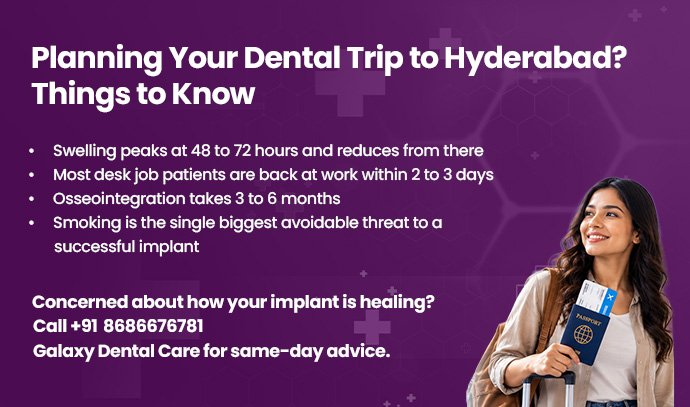
    dental trip to hyderabad

    What If Something Goes Wrong After You Leave?

    The complications after dental procedures are uncommon, but they happen. A crown that doesn’t fit quite right. Post-implant sensitivity. A veneer edge that needs adjusting. You’ll be thousands of miles away when you notice.

    Galaxy Dental Care addresses this in two ways. 

    • First, every patient leaves with a full written treatment summary, X-rays, and clear instructions for their local dentist. If you need a follow-up adjustment at a clinic in your home country, you’re not arriving there empty-handed. 
    • For routine concerns after flying home, the team is reachable by email. They advise whether something needs a local dentist or whether it’s a normal part of healing. The clinic doesn’t disappear the moment you board your flight home.

    Galaxy Dental Care: Patients Most-Trusted Choice for Dental Care in India 

    International patients come to Hyderabad for the savings, but they come back to Galaxy Dental Care for the care.

    The best dental hospital in Hyderabad for international patients is one where specialists handle complex work every day and are reachable after you fly home. Galaxy Dental Care has treated patients from across the world since 2008. The team includes the best dentist in Hyderabad across implantology, orthodontics, endodontics, periodontics, prosthodontics, and oral surgery.

    Branches are open Monday to Sunday, 9 AM to 9 PM.

    Call +91 8686676781 or email contact@galaxydentalcare.in to request a pre-travel assessment.

    Frequently Asked Questions

    Is dental treatment in Hyderabad safe for international patients?

    Yes. Hyderabad’s leading clinics use the same implant systems, aligner brands, and materials available in the US, UK, and Europe. Specialist dentists are qualified to MDS level and many have trained internationally.

    Which treatments are most popular with international patients at Galaxy Dental Care?

    Dental implants, full-mouth rehabilitation, Invisalign aligners, dental veneers, zirconia crowns, and smile makeovers are the treatments international patients most commonly seek.

    How do I book a consultation before travelling to Hyderabad?

    Email contact@galaxydentalcare.in with your dental records, recent X-rays if available, and a description of what you’re looking for.  Call +91 8686676781 for direct enquiries.

  • Jaw Pain on One Side: Causes, Tests and When to See a Dentist

    Jaw Pain on One Side: Causes, Tests and When to See a Dentist

    Jaw pain on one side can make every meal, conversation and even yawn a source of worry. You notice it when chewing, when waking, or when the pain suddenly shoots toward your ear. The most common causes are temporomandibular joint (TMJ) problems on that specific side, a cracked tooth, an abscess, or muscle strain from favoring one side while chewing. Less often, it points to conditions like temporal arteritis or, rarely, heart-related pain. At Galaxy Dental Care in Kondapur, we examine patients with one-sided jaw pain every week, using digital X-rays and bite analysis to find whether the source is the joint, the teeth, or the surrounding muscle. The right next step depends on which symptoms you have alongside the pain. Read on to match your pattern to likely causes and learn what relief options actually help.

    Key takeaways

    • One-sided jaw pain usually stems from the TMJ, teeth, or chewing muscles on that same side.
    • Teeth grinding, uneven bite, and abscesses are common triggers that a dentist can identify with X-rays.
    • Home relief includes warm compresses, soft diet, and jaw rest, but persistent pain needs professional evaluation.
    • Red flags like vision changes, chest pressure, or sudden severe pain require emergency medical care.

    What causes jaw pain on one side?

    The temporomandibular joint (TMJ) connects your jawbone to your skull with one joint on each side. Pain on just one side usually means something is wrong with that specific joint, the teeth on that side, or the muscles that move the jaw. TMJ disorders affect roughly 11 to 12 million adults in the United States, and many experience symptoms on one side only.

    Common causes include:

    • Disc displacement: The cushioning disc inside the TMJ slips out of position, causing clicking, locking, or aching on one side.
    • Arthritis: Wear-and-tear or inflammatory arthritis can damage one TMJ more than the other.
    • Muscle strain: Chewing predominantly on one side, clenching, or grinding wears down specific muscles unevenly.
    • Dental problems: A cracked tooth, deep cavity, or abscess on one side radiates pain into the jaw.
    • Injury: A blow to one side of the face can bruise or fracture the jawbone or joint.

    Less common but serious causes include temporal arteritis, where arteries near the temple become inflamed, causing headache and jaw pain, and angina or heart attack, where pain radiates to the jaw, usually with chest pressure or shortness of breath.

    Cause Typical location Key symptom Needs urgent care?
    TMJ disc displacement Front of ear, one side Clicking, locking, limited opening No, but book a dental exam
    Tooth abscess Lower or upper jaw, one side Throbbing pain, swelling, bad taste Yes, within 24 hours
    Muscle strain from clenching Cheek or temple, one side Morning soreness, stress correlation No, try home relief first
    Temporal arteritis Temple, often one side Headache, vision changes, scalp tenderness Yes, emergency
    Heart-related pain Lower jaw, often left side Chest pressure, sweating, nausea Yes, call emergency services

    How can I tell if my jaw pain is from my teeth or my TMJ?

    Teeth-related pain usually worsens when you bite down, drink something cold, or tap on a specific tooth. TMJ pain tends to flare with jaw movement, such as wide yawning or chewing tough food, and you may hear clicking or feel grinding near the ear.

    Ask yourself these questions:

    • Does pressing on one tooth reproduce the pain? This suggests a dental source.
    • Does opening your mouth wide trigger or worsen it? This points to the TMJ.
    • Do you wake with soreness in the jaw or temple? This often means nighttime clenching or grinding.
    • Is there visible swelling or a bad taste near one tooth? These signal infection.

    At Galaxy Dental Care, we use intraoral examination and digital X-rays to separate tooth problems from joint problems. If the teeth check out clean, we assess your bite alignment and jaw movement to locate the exact source. Patients considering orthodontic correction often ask about Different Teeth Clip Types: Which One Is Right for You? as part of longer-term bite balance planning.

    How do I relieve jaw pain on one side at home?

    For mild, recent pain without swelling or fever, home measures often help within a few days. The goal is to rest the joint and reduce muscle tension.

    Steps that work:

    1. Warm compress: Apply a warm, moist cloth to the sore side for 15 to 20 minutes, two to three times daily. Heat relaxes tight muscles.
    2. Soft diet: Choose foods that need minimal chewing, such as rice, yogurt, eggs, and cooked vegetables. Avoid nuts, hard bread, and chewing gum.
    3. Jaw rest: Keep your teeth slightly apart when not eating or speaking. Rest your tongue on the roof of your mouth to discourage clenching.
    4. Over-the-counter pain relief: Ibuprofen or paracetamol can reduce inflammation and pain if you have no medical reason to avoid them.
    5. Stress reduction: Clenching often follows tension. Brief breathing exercises or a short walk can reduce muscle guarding.

    If pain persists beyond one week, worsens, or limits how wide you can open your mouth, schedule a dental evaluation. Delayed care for a tooth abscess or TMJ disc problem can lead to more complex treatment.

    Home measure When it helps When to stop and see a dentist
    Warm compress Muscle soreness, morning stiffness No improvement after 5 days
    Soft diet Recent flare after hard chewing Pain returns with normal eating
    OTC pain relievers Short-term relief for mild pain Needed daily for more than 3 days
    Jaw rest Clenching-related ache Locking or limited opening develops

    When is jaw pain on one side an emergency?

    Most one-sided jaw pain is not dangerous, but certain patterns need immediate attention. Seek emergency care if your jaw pain accompanies chest pressure, sweating, nausea, or pain spreading to the arm or back. These can be signs of a heart attack, and jaw pain is a recognized symptom, especially in women.

    Other red flags:

    • Sudden vision changes or severe headache with temple pain: Possible temporal arteritis, which can threaten eyesight without prompt steroid treatment.
    • Rapid facial swelling with fever: A spreading dental infection can become serious.
    • Inability to open the mouth after trauma: Possible jaw fracture or dislocation.
    • Numbness in the chin or lip: May indicate nerve compression or infection.

    If none of these apply but your pain is steady, growing, or interfering with eating and sleep, book a dental appointment within 48 hours. Early diagnosis prevents complications and usually means simpler treatment.

    What happens at a dental exam for one-sided jaw pain?

    Your dentist will ask when the pain started, what triggers it, and whether you grind your teeth or have had recent stress or injury. The exam includes:

    • Palpation: Pressing on the TMJ and chewing muscles to find tender spots.
    • Range of motion test: Measuring how wide you can open and whether the jaw deviates to one side.
    • Tooth-by-tooth check: Tapping and temperature testing to rule out cracked teeth or abscesses.
    • X-rays: Panoramic or cone-beam images show the joint, teeth roots, and surrounding bone.

    Based on findings, treatment may include a night guard for grinding, bite adjustment, referral for physical therapy, or treatment of a dental infection. Outcomes depend on individual case and oral health status. We discuss cost and payment options, including EMI availability, before starting any procedure so you can plan without surprise.

    Why Your Jaw Hurts on One SideMatch your symptoms to the most likely source and know when toseek care.1TMJ disc problemClicking, locking, or pain near the ear usually meansthe joint cushion has slipped out of place.2Tooth abscessThrobbing pain that worsens with biting or temperaturechanges points to infection in a specific tooth.3Muscle strainMorning soreness or ache after stress often comes fromclenching or chewing on one side only.4Emergency signsChest pressure, vision changes, or rapid swelling withfever need immediate medical attention, not home care.The right treatment starts with identifying whether thejoint, tooth, or muscle is the source.Galaxy dental care+91 86866 76781

    One-sided jaw pain most often comes from the TMJ, teeth, or chewing muscles on that same side. Home relief helps mild cases, but persistent or worsening pain deserves a dental exam to prevent complications. Watch for emergency signs like chest symptoms or vision changes. At Galaxy Dental Care, we combine digital imaging with bite analysis to find the cause and recommend the right next step. Book your appointment this week to stop the guesswork.

    FAQs

    Why does my jaw hurt on one side?

    One-sided jaw pain usually means a problem localized to that side, such as TMJ disc displacement, arthritis, muscle strain from uneven chewing, a cracked tooth, or a dental abscess. The TMJ is a paired joint, so issues often affect one side more than the other.

    How to get rid of jaw pain on one side

    Try warm compresses, a soft diet, jaw rest, and over-the-counter pain relievers for a few days. Avoid hard foods and chewing gum. If pain persists beyond one week, limits mouth opening, or comes with swelling, see a dentist for X-rays and targeted treatment.

    How to relieve jaw and ear pain

    Jaw and ear pain often share a source because the TMJ sits just in front of the ear. Warm compresses to the joint, gentle jaw stretching, and anti-inflammatory medication can help. A night guard may be needed if grinding is the cause. Persistent pain needs dental evaluation.

    What does heart attack jaw pain feel like?

    Heart-related jaw pain typically feels like pressure, squeezing, or heaviness rather than sharp tooth pain. It often occurs with chest discomfort, shortness of breath, sweating, or nausea, and may radiate to the arm, back, or neck. This requires emergency medical care.

    Is heart attack jaw pain constant?

    Heart attack jaw pain can be constant or come and go, but it usually worsens with exertion and does not change with jaw movement or chewing. Unlike TMJ pain, it is not triggered by opening the mouth wide. Any suspected heart symptoms need immediate emergency attention.

    How to stop jaw pain immediately

    For quick relief, apply a warm compress to the sore side, take an over-the-counter anti-inflammatory if safe for you, and rest the jaw by eating soft foods and avoiding wide yawns. These measures help muscle and mild TMJ pain, but they do not replace professional care for infection or serious conditions.

  • Treatment for Dry Mouth: What Actually Works in 2026

    Treatment for Dry Mouth: What Actually Works in 2026

    Treatment for dry mouth leaves many people frustrated because sipping water only helps for minutes, and the sticky, burning feeling returns fast. You may notice cracked lips, trouble swallowing, or waking at night desperate for moisture. The direct answer is that effective treatment targets the cause, whether that means switching a medication, using saliva substitutes, or taking prescription drugs like pilocarpine that stimulate your own saliva glands. At Galaxy Dental Care in Kondapur, we see dry mouth daily in patients on long-term medications, those who have completed radiation therapy, and people with autoimmune conditions. Our dentists check salivary flow, review your medication list, and build a plan that protects your teeth while relieving discomfort. Read on for the specific steps that move you from temporary relief to lasting improvement, and know exactly when professional care becomes essential.

    Key takeaways

    • Dry mouth treatment must match the cause, not just mask symptoms with water.
    • Saliva substitutes and prescription stimulants like pilocarpine are proven options for moderate to severe cases.
    • Untreated dry mouth raises cavity and gum disease risk significantly, so dental monitoring matters.
    • Simple habit changes, from humidifiers to alcohol-free rinses, support medical treatment daily.

    What causes dry mouth and why does it keep coming back?

    Dry mouth, also called xerostomia, happens when your salivary glands produce too little saliva or the saliva becomes too thick to work properly. Hyposalivation means your glands make less than 0.1 mL per minute at rest or under 0.7 mL per minute when stimulated. The sensation can persist even when some saliva remains, because the quality, not just the quantity, has changed.

    Common triggers include medications for blood pressure, allergies, anxiety, and depression. Radiation treatment to the head or neck can damage salivary glands directly. Autoimmune diseases like Sjogren syndrome attack moisture-producing tissue. Diabetes, dehydration, and mouth breathing during sleep also play roles. Many patients at Galaxy Dental Care first notice the problem after starting a new prescription or completing cancer therapy.

    Because the cause varies, Treatment that helps one person may do little for another. Identifying your specific trigger is the first step toward lasting relief.

    How can I increase saliva in my mouth naturally?

    Natural methods work best for mild cases or as support alongside medical treatment. These steps stimulate remaining gland function and protect oral tissues without side effects.

    • Sip water frequently in small amounts rather than gulping large volumes, which can wash away the little saliva you have.
    • Chew sugar-free gum or suck sugar-free hard candies containing xylitol to trigger saliva flow through chewing motion.
    • Use a cool-mist humidifier in your bedroom at night, especially if you mouth-breathe while sleeping.
    • Avoid alcohol, caffeine, and tobacco, all of which dry oral tissues further.
    • Choose alcohol-free mouth rinses; alcohol-based products worsen dryness within minutes of use.
    • Try ginger tea or diluted ginger juice, as ginger has mild sialagogue properties that promote saliva secretion.

    These habits help many patients reduce their symptom severity, but they rarely replace medical treatment when gland damage or medication side effects are the root cause.

    What medical treatments do dentists prescribe for dry mouth?

    When natural measures fall short, several evidence-based medical options exist. Your dentist or physician will select based on your health history, current medications, and whether your glands retain any functional tissue.

    Treatment Type How It Works Typical Use Case
    Saliva substitutes Mimics natural saliva with lubricating agents Mild to moderate dryness, frequent daily use
    Pilocarpine (Salagen) Stimulates remaining salivary gland cells to produce saliva Sjogren syndrome, post-radiation gland damage
    Cevimeline Targets specific receptors to increase salivary and tear secretion Autoimmune-related dryness with eye symptoms
    Acupuncture-like nerve stimulation Investigational technique to restore salivary nerve signaling Radiation-induced xerostomia in research settings

    Prescription stimulants require monitoring for side effects like sweating, flushing, or increased urination. They work only if some gland tissue remains functional. Patients who have had glands surgically removed or severely damaged by radiation may respond poorly and need stronger reliance on substitutes and protective protocols.

    At Galaxy Dental Care, we coordinate with your physician when medication changes could resolve the problem without adding new prescriptions. Sometimes a simple switch from one blood pressure drug to another restores normal saliva flow within weeks.

    Is dry mouth dangerous if I just live with it?

    Yes, untreated dry mouth creates real dental and health risks that worsen over time. Saliva neutralizes acids, washes away food debris, and carries minerals that rebuild enamel. Without it, your mouth becomes vulnerable.

    The main risks include:

    • Rampant tooth decay, especially at the gumline and on root surfaces exposed by recession
    • Gum disease progressing faster because plaque becomes stickier and harder to remove
    • Oral infections like thrush, which thrive in low-moisture environments
    • Difficulty eating, speaking, and wearing dentures comfortably
    • Altered taste and chronic bad breath

    Regular dental check-ups become essential when you have persistent dry mouth. Professional cleanings, fluoride applications, and early cavity detection prevent the extensive damage that can develop within months. If you are also considering complex procedures, addressing dryness first improves outcomes. For example, a stable oral environment supports any dental implant treatment plan by reducing infection risk and supporting healing.

    What should I do tonight for dry mouth relief?

    Start with immediate steps that cost nothing and carry no risk, then schedule a dental evaluation within the next two weeks if symptoms persist.

    Action Do This Tonight Avoid This
    Hydration Keep water by your bed; sip when you wake Drinking large amounts right before sleep
    Bedroom air Run a humidifier set to 40-50% humidity Sleeping with fans blowing directly at your face
    Oral care Brush with fluoride toothpaste; use alcohol-free rinse Alcohol-based mouthwash or whitening products before bed
    Medication timing Note when you took drying meds; discuss timing with your doctor Stopping prescriptions without medical guidance

    If you also deal with recurring mouth sores, dryness may be making them worse. Our Mouth Ulcer Treatment in Kondapur addresses both the ulcers and their underlying triggers, including reduced saliva protection.

    When should I see a dentist for dry mouth treatment?

    Book an appointment if your dry mouth lasts more than two weeks, interferes with eating or speaking, or coincides with new medications or medical treatments. Also seek care if you notice increased cavities, gum bleeding, or mouth sores developing.

    During your visit at Galaxy Dental Care, we will:

    1. Review your full medication and health history
    2. Assess salivary flow rate and gland function
    3. Check for early decay, gum changes, or infection
    4. Discuss whether prescription treatment or simple habit changes suit your situation
    5. Schedule follow-up to monitor improvement and adjust your plan

    We also serve patients from surrounding areas with dedicated care for related conditions. If you are closer to other neighborhoods, you can access our Mouth Ulcer Treatment in Kukatpally KPHB Colony, Mouth Ulcer Treatment in Banjara Hills, Mouth Ulcer Treatment in Chandanagar, Mouth Ulcer Treatment in Nallagandla, Mouth Ulcer Treatment in AS Rao Nagar, Mouth Ulcer Treatment in Kompally, Mouth Ulcer Treatment in Manikonda, and Mouth Ulcer Treatment in Vanasthalipuram. For patients considering orthodontic improvements alongside oral health management, we also provide options like aligners for multiple gaps once your mouth environment is stable.

    Outcomes depend on individual case and oral health status. A qualified dentist can determine whether your glands retain enough function for stimulant medications or whether protective protocols should be your primary focus.

    Steps to Treat Dry MouthFollow this path from symptom relief to long-term oral healthprotection.1Find Your CauseReview medications, health history, and gland functionwith your dentist to identify what is reducing yoursaliva.2Start Natural ReliefUse humidifiers, sugar-free gum, and frequent smallsips of water to support comfort while addressing theroot problem.3Add Medical TreatmentSaliva substitutes or prescriptions like pilocarpinecan stimulate remaining gland tissue when naturalsteps are not enough.4Protect Your TeethRegular cleanings, fluoride, and early cavitydetection prevent the decay that dryness accelerates.Match your treatment to your cause for lasting relief.

    Effective treatment for dry mouth starts with finding your cause, not just adding water. Natural methods help mild cases; prescription options like pilocarpine serve those with gland damage or autoimmune disease. Left untreated, dryness accelerates decay and gum disease. The right next step is a dental evaluation that checks your salivary function and builds a plan matched to your situation. Call Galaxy Dental Care to schedule yours.

    FAQs

    What is a dry mouth a sign of?

    Dry mouth often signals medication side effects, dehydration, or autoimmune conditions like Sjogren syndrome. It can also indicate diabetes, sleep apnea with mouth breathing, or nerve damage to salivary glands from head and neck radiation.

    What is the fastest way to cure dry mouth?

    There is no instant cure, but the fastest relief comes from combining immediate moisture, like a saliva substitute spray, with addressing the root cause. If a medication triggers your symptoms, asking your doctor about alternatives may resolve dryness within days or weeks.

    How to increase saliva in mouth naturally?

    Chew sugar-free xylitol gum, sip water frequently, use a bedroom humidifier, and avoid alcohol, caffeine, and tobacco. Ginger in tea or diluted form may also stimulate minor saliva flow. These measures support but rarely replace medical treatment for moderate to severe cases.

    What causes extremely dry mouth while sleeping?

    Nighttime dryness usually stems from mouth breathing due to nasal congestion, sleep apnea, or sleeping position. It also worsens if you take drying medications in the evening. A humidifier and addressing nasal airflow often reduce symptoms significantly.

    Is dry mouth dangerous?

    Yes, chronic dry mouth raises your risk for tooth decay, gum disease, oral infections like thrush, and difficulty eating or speaking. Saliva protects teeth and tissues; without it, damage can progress quickly without professional monitoring.

    How to use ginger for dry mouth?

    Steep fresh ginger slices in hot water for 10 minutes, then drink the cooled tea. Some people chew a small piece of peeled ginger briefly to trigger saliva. Avoid excessive amounts if you take blood thinners or have gallstone issues, and consult your dentist if symptoms persist.

  • What Causes Mouth Ulcers? 7 Triggers You Can Actually Fix

    What Causes Mouth Ulcers? 7 Triggers You Can Actually Fix

    What causes mouth ulcers is the question that keeps you up at night when a new sore appears on your inner cheek or tongue, making every sip of water sting and every meal a calculation. The direct answer: most mouth ulcers come from minor trauma like biting your cheek, stress, hormonal shifts, or low levels of vitamin B12, iron, and folate. They usually heal on their own in 1 to 2 weeks. At Galaxy dental care in Kondapur, we see patients daily who worry these sores signal something serious, and we help them sort harmless ulcers from conditions that need treatment. Read on to learn the seven specific triggers you can address, plus the warning signs that mean you should pick up the phone rather than wait.

    Key takeaways

    • Minor trauma from toothbrushes, sharp foods, or accidental biting causes most single mouth ulcers.
    • Stress and hormonal changes make recurrent ulcers more likely by affecting immune response.
    • Low B12, iron, or folate levels are linked to ulcers that keep coming back.
    • Ulcers lasting over three weeks require professional evaluation to rule out serious conditions.
    • Most ulcers heal in 1 to 2 weeks with simple home care and avoiding known triggers.

    What causes mouth ulcers to appear suddenly?

    A single mouth ulcer that shows up overnight is usually the result of minor physical damage. You may have bitten your cheek while eating, brushed too hard, burned your tongue on hot tea, or had a sharp tooth edge or filling rub the same spot repeatedly. Ill-fitting dentures and braces are also frequent culprits. These traumatic ulcers form because the thin lining of your mouth breaks, exposing sensitive tissue underneath. The good news: they typically heal within 7 to 14 days without any special treatment. If you get these often, check your brushing technique and ask your dentist to smooth any rough tooth surfaces.

    Why do some people get mouth ulcers again and again?

    Recurrent mouth ulcers, also called recurrent aphthous stomatitis, often point to ongoing triggers rather than one-off accidents. Stress is a major factor; it raises cortisol and can dampen your immune response, letting small sores develop more easily. Hormonal fluctuations during menstruation, pregnancy, or menopause play a role too. Some people inherit a tendency toward frequent ulcers, so family history matters. At Galaxy dental care, we ask patients with recurring sores about their stress levels, menstrual patterns, and family history to identify patterns they can manage. If you are dealing with repeated ulcers, our Mouth Ulcer Treatment in Kondapur includes a full assessment to find your specific triggers.

    Can vitamin deficiencies cause mouth ulcers?

    Yes, low levels of vitamin B12, iron, and folate are strongly linked to mouth ulcers that keep returning. These nutrients help maintain the rapid cell turnover your mouth lining needs; when they run short, the tissue becomes more fragile and prone to breaking down. Vegetarians and vegans are at higher risk for B12 deficiency, while heavy menstrual bleeding or poor iron absorption can deplete iron stores. A simple blood test can confirm whether this applies to you. If deficiencies are found, dietary changes or supplements often reduce ulcer frequency within weeks. Do not start high-dose supplements without testing, as excess iron or folate carries its own risks.

    Nutrient Common Food Sources Who Is Most at Risk
    Vitamin B12 Meat, fish, eggs, dairy; fortified plant milks Vegans, older adults, people with digestive conditions
    Iron Red meat, lentils, spinach, fortified cereals Women with heavy periods, frequent blood donors
    Folate Leafy greens, beans, citrus, fortified grains Pregnant women, people with malabsorption issues

    How do stress and hormones trigger mouth ulcers?

    Stress triggers mouth ulcers through several pathways. It increases inflammatory chemicals in your body, disrupts sleep, and often leads to poorer eating habits, all of which strain the immune system. Hormonal shifts do similar damage; many women notice ulcers flare before their period, when progesterone drops. Pregnancy can either improve or worsen ulcers depending on individual hormone patterns. Managing stress through adequate sleep, regular meals, and brief daily relaxation practices does not eliminate ulcers entirely but can reduce how often they appear. Tracking when your ulcers occur alongside your menstrual cycle or stressful events helps you spot your personal pattern and prepare.

    What causes mouth ulcers on the tongue specifically?

    Tongue ulcers share the same causes as ulcers elsewhere in the mouth, but the tongue’s constant movement and exposure to food make them feel more painful and noticeable. Biting your tongue while eating or talking, sharp tooth edges rubbing the side, or burning it on hot food are common starters. Some people develop tongue ulcers after starting certain medications or using toothpaste containing sodium lauryl sulfate, a foaming agent that irritates sensitive mouths. Geographic tongue, a harmless condition causing map-like patches, can sometimes include sore areas that look like ulcers. If your tongue ulcers cluster with cracked corners of the mouth, read our guide on Angular Cheilitis: What It Is, Symptoms, Causes and Treatments? to check for overlapping nutritional causes.

    Tongue Ulcer Trigger How to Identify It What Helps
    Physical trauma Follows biting, hot food, or sharp tooth contact Time, salt-water rinses, smooth any sharp dental work
    Sodium lauryl sulfate Starts after switching toothpaste; multiple small sores Switch to SLS-free toothpaste
    Medication-related Begins within weeks of starting a new drug Discuss alternatives with your prescribing doctor
    Geographic tongue Map-like patches that shift location; mild burning Avoid spicy triggers; usually needs no treatment

    When is a mouth ulcer a sign of something serious?

    Most mouth ulcers are harmless, but certain features warrant prompt dental or medical evaluation. An ulcer that persists beyond three weeks, grows larger, feels hard at the base, or bleeds easily needs checking to rule out oral cancer or other significant conditions. Ulcers accompanied by unexplained weight loss, persistent lumps in the neck, or numbness in the mouth also require attention. People who smoke or drink heavily carry higher risk and should be especially cautious about slow-healing sores. At Galaxy dental care, we examine persistent ulcers under good lighting, palpate nearby lymph nodes, and refer for biopsy when any feature looks suspicious. Early evaluation protects your health and provides peace of mind. For convenient access, we offer Mouth Ulcer Treatment in Hyderabad with same-week appointments for urgent concerns.

    Warning Sign What It May Indicate Recommended Action
    Lasts over 3 weeks Possible malignancy or chronic condition Book dental or medical evaluation within days
    Hard, raised edges Needs exclusion of oral cancer Urgent referral for specialist assessment
    Associated with fever or rash Viral infection or systemic illness See a doctor for full examination
    Multiple ulcers with eye or genital sores Behçet’s disease or similar condition Rheumatology referral needed

    How can you prevent mouth ulcers from coming back?

    Prevention focuses on reducing your personal triggers. Use a soft-bristled brush and gentle technique to avoid tissue damage. Choose SLS-free toothpaste if you suspect sensitivity. Eat regular, balanced meals with adequate B12, iron, and folate sources, or get tested and supplement if deficient. Manage stress through sleep, exercise, and brief relaxation practices. For women, tracking ulcer timing against your menstrual cycle helps predict flares and adjust self-care. If ulcers remain frequent despite these steps, a dentist can check for underlying conditions like celiac disease or inflammatory bowel disease that sometimes present with mouth sores first. Patients in nearby areas can access our Mouth Ulcer Treatment in Banjara Hills or Mouth Ulcer Treatment in Kukatpally KPHB Colony for thorough assessment and personalized prevention plans.

    Common Mouth Ulcer TriggersIdentify your trigger to choose the right response.1Physical traumaBiting, hard brushing, sharp tooth edges, or hot foodburns break the mouth lining and start an ulcer.2Stress overloadHigh cortisol and poor sleep weaken immune defenses,making sores more likely to form and slower to heal.3Vitamin gapsLow B12, iron, or folate deprives mouth tissue ofnutrients needed for rapid repair and renewal.4Hormone shiftsMenstrual cycle changes and pregnancy alter immunebalance, often triggering ulcers in susceptiblepeople.5Toothpaste irritantsSodium lauryl sulfate, a common foaming agent, stripsprotective mucus and provokes sores in sensitivemouths.Match your trigger to your fix and ulcers become manageable.

    Mouth ulcers usually stem from minor injuries, stress, hormonal shifts, or low B12, iron, and folate. Most heal within two weeks with basic care. Track your triggers, adjust your diet and oral hygiene, and seek dental evaluation for any ulcer lasting beyond three weeks. Taking these steps protects both your comfort and your long-term oral health.

    FAQs

    How long do mouth ulcers take to heal?

    Most mouth ulcers heal without treatment within 1 to 2 weeks. Traumatic ulcers from biting or brushing usually resolve fastest. If an ulcer lasts beyond three weeks, book a dental examination to rule out underlying conditions.

    What causes mouth ulcers on the tongue?

    Tongue ulcers are typically caused by biting, hot food burns, sharp tooth edges, or sensitivity to sodium lauryl sulfate in toothpaste. The tongue’s constant movement makes these sores feel more painful than ulcers on less active areas.

    Can stress really cause mouth ulcers?

    Yes, stress contributes to mouth ulcers by raising inflammatory chemicals and weakening immune response. Many people notice ulcers flare during exam periods, work deadlines, or emotional strain. Stress management helps reduce recurrence.

    Should I take vitamin supplements for recurring mouth ulcers?

    Get a blood test for B12, iron, and folate before taking supplements. If levels are low, targeted supplementation often reduces ulcer frequency. Taking vitamins without confirmed deficiency wastes money and can cause harm, especially with iron.

    When should I see a dentist for a mouth ulcer?

    See a dentist if your ulcer lasts more than three weeks, grows larger, feels hard, bleeds easily, or comes with weight loss or neck lumps. These features need professional assessment to exclude serious conditions.

    Are mouth ulcers contagious?

    Common mouth ulcers, called aphthous ulcers, are not contagious. Cold sores from the herpes virus are contagious and appear on the lip border, not inside the mouth. Location and appearance help distinguish the two.

  • Angular Stomatitis: Corner Mouth Sores, Causes & Treatment

    Angular Stomatitis: Corner Mouth Sores, Causes & Treatment

    Angular stomatitis starts as a small crack in the corner of your mouth that stings when you eat, talk, or smile. Within days it can split wider, turn red, and make every meal uncomfortable. The condition, also called angular cheilitis, is an inflammation at the lip corners caused by fungal or bacterial infection, often worsened by moisture trapped in skin folds. About 0.7% of people develop it, but rates climb much higher in older adults and denture wearers. At Galaxy Dental Care in Kondapur, we examine these sores daily and distinguish them from cold sores or simple chapping so patients get the right treatment rather than weeks of wrong creams. This guide explains what triggers angular stomatitis, how dentists treat it, and when corner mouth cracks signal something that needs professional attention.

    Key takeaways

    • Angular stomatitis is inflamed, cracked skin at the mouth corners caused by infection, not dryness alone.
    • Denture fit problems and vitamin deficiencies are common triggers that creams alone cannot fix.
    • Treatment matches the cause: antifungal cream for yeast, antibacterial for bacteria, or denture adjustment for mechanical irritation.
    • Corner mouth sores lasting more than two weeks need dental examination to rule out underlying conditions.

    What is angular stomatitis and how does it look?

    Angular stomatitis is an inflammatory condition affecting the skin and moist lining at the corners of the mouth, where the upper and lower lips meet. According to the National Institutes of Health overview of angular cheilitis, it appears as roughly triangular patches of redness, swelling, and cracking at one or both commissures. The skin may feel sore, burn, or itch, and deep fissures can bleed when the mouth opens wide. Unlike chapped lips that affect the entire lip surface, angular stomatitis stays localized to the angles. Some patients develop a yellow crust, while others notice white softening of the skin from constant moisture. The condition is also termed perleche or angular cheilitis in medical literature.

    At Galaxy Dental Care, we evaluate these sores during routine oral examinations because the appearance alone does not reveal the cause. A crack that looks fungal may actually stem from a poorly fitting denture rubbing the tissue, or from a patient habitually licking the corners. Proper identification directs the treatment and prevents recurrence.

    Is angular stomatitis caused by fungus, bacteria, or something else?

    The cause is usually a combination of factors rather than a single infection. Yeast, most commonly Candida, thrives in the warm, moist environment created by saliva pooling in deep skin folds at the mouth corners. Bacteria such as Staphylococcus aureus can then invade the already damaged skin, creating a mixed infection. However, infection is often the final step, not the root cause.

    Common underlying triggers include:

    • Poorly fitting dentures that overclose the jaw, deepening the folds at the lip corners and trapping saliva
    • Lip licking or drooling habits that keep the area constantly wet
    • Vitamin deficiencies, particularly B vitamins, iron, or zinc, which weaken skin repair
    • Age-related skin changes that create deeper folds and less elastic tissue
    • Immune suppression from conditions like diabetes or medications that allow infections to establish

    The National Institutes of Health classification of cheilitis types notes that patients with deep wrinkles at the lip angles and those prone to licking corners face the highest risk. Addressing only the infection without fixing the trigger explains why angular stomatitis so often returns after treatment stops.

    How do dentists treat angular stomatitis?

    Treatment follows a step-by-step process after identifying whether fungus, bacteria, or mechanical irritation dominates. At Galaxy Dental Care, the typical pathway runs from examination through to prevention of recurrence.

    1. Clinical examination of the sores, denture fit, and surrounding oral tissues
    2. Swab or culture when the infection pattern is unclear or standard creams have failed
    3. Targeted medication: antifungal cream for Candida, antibacterial cream for Staphylococcus, or combination therapy when both are present
    4. Denture adjustment or relining if poor fit is the mechanical trigger
    5. Nutritional assessment and referral for blood testing when vitamin deficiency is suspected
    6. Aftercare instructions to keep corners dry and prevent re-infection

    Research published through the National Institutes of Health shows that nystatin or amphotericin B antifungal lozenges produced statistically significant cure rates at one month compared to placebo for related oral fungal conditions. For angular stomatitis specifically, topical creams applied directly to the affected skin corners remain the standard approach, with treatment duration typically lasting one to two weeks depending on severity and response.

    Patients seeking more detail on symptom patterns can read our guide on Angular Cheilitis: What It Is, Symptoms, Causes and Treatments?

    Angular stomatitis vs cold sores: what is the difference?

    These two conditions affect similar areas but require different management. Confusing them leads to ineffective treatment and prolonged discomfort.

    Feature Angular Stomatitis Cold Sore (Herpes Simplex)
    Location Exactly at both mouth corners Can appear anywhere on lip border or face
    Appearance Redness, deep cracks, soft white skin from moisture Cluster of fluid-filled blisters that crust
    Cause Fungal or bacterial infection, mechanical irritation Herpes simplex virus reactivation
    Contagious Not directly contagious between people Contagious during blister phase
    Treatment Antifungal or antibacterial cream, fix trigger Antiviral cream or tablets

    The Cleveland Clinic guide to angular cheilitis symptoms and causes emphasizes this distinction because patients often self-treat with cold sore creams, which do not address fungal or bacterial infection at the commissures. If your sore sits precisely at the corner, cracks deeply, and lacks blisters, angular stomatitis is the more likely diagnosis.

    When should you see a dentist for corner mouth cracks?

    Home care with lip balm fails for angular stomatitis because the problem is infection and underlying triggers, not simple dryness. Book a dental appointment if you notice any of the following:

    • Cracks at the mouth corners lasting more than two weeks
    • Recurrent episodes that clear with cream then return within weeks
    • Pain that interferes with eating, speaking, or denture wear
    • Spreading redness, pus, or fever suggesting deeper infection
    • Associated denture looseness, rubbing, or changed bite

    At Galaxy Dental Care, we assess whether your denture needs adjustment, whether nutritional testing is warranted, and whether prescription-strength topical medication will resolve the infection faster than over-the-counter options. Early intervention prevents the skin from thickening and scarring with repeated cycles. For guidance on recognizing warning signs, see Angular Cheilitis: Causes, Treatment & When to See a Dentist.

    How can you prevent angular stomatitis from returning?

    Prevention targets the specific trigger identified during treatment. Patients with dentures should have the fit checked annually, as bone resorption beneath the denture gradually changes jaw position and deepens commissural folds. Those with lip-licking habits benefit from awareness strategies and barrier creams that protect the skin without adding moisture.

    Key preventive measures include:

    • Keeping denture fit current through regular dental checks
    • Drying the mouth corners gently after meals and before sleep
    • Using a thin layer of petroleum jelly as moisture barrier, not as treatment
    • Addressing confirmed vitamin or mineral deficiencies through diet or supplements
    • Managing drooling or mouth breathing with appropriate medical or dental interventions

    Outcomes depend on individual case and oral health status. Some patients eliminate angular stomatitis permanently after one treatment cycle; others with persistent deep folds or ongoing medical conditions need periodic maintenance.

    Trigger Prevention Strategy Who Needs This
    Poor denture fit Denture adjustment, reline, or replacement Full or partial denture wearers
    Saliva pooling Corner drying, barrier application, habit modification Lip lickers, droolers, mouth breathers
    Vitamin deficiency Dietary change or supplementation after blood test Patients with confirmed low B, iron, or zinc
    Immune compromise Coordinated medical and dental management Diabetes, medication-related suppression

    Angular Stomatitis or Cold Sore?This diagram helps you tell corner mouth cracks apart so youchoose the right treatment.1LocationAngular stomatitis sits exactly at both mouth corners,while cold sores can appear anywhere on the lip edgeor nearby skin.2AppearanceStomatitis shows red cracks and soft white skin frommoisture, unlike the fluid-filled blisters that definea cold sore outbreak.3CauseYeast or bacterial infection drives stomatitis,whereas the herpes simplex virus reactivates toproduce cold sores.4TreatmentAntifungal or antibacterial cream heals stomatitis,but antiviral medication is required for cold sores toshorten the outbreak.Match the treatment to the true cause for faster healing.

    Angular stomatitis is a treatable condition, but creams alone often fail because they do not address denture fit, nutrition, or habits that keep the infection returning. Accurate diagnosis of whether yeast, bacteria, or mechanical irritation drives your symptoms leads to faster healing and fewer recurrences. If corner mouth cracks have persisted beyond two weeks or keep coming back, a dental examination provides the specific answer and treatment plan you need.

    FAQs

    Is angular stomatitis contagious?

    Angular stomatitis is not contagious between people. The fungal and bacterial organisms involved are commonly present on normal skin and only cause problems when local conditions allow overgrowth. You cannot spread it through kissing, sharing utensils, or close contact.

    Is angular stomatitis dangerous?

    Angular stomatitis is not life-threatening, but it causes significant discomfort and can lead to deeper skin infection if untreated. Persistent cases sometimes signal underlying conditions like diabetes, immune suppression, or nutritional deficiency that need medical attention beyond the mouth sores themselves.

    What antifungal cream is best for angular stomatitis?

    Nystatin or clotrimazole antifungal creams are commonly prescribed when Candida yeast is the identified cause. However, using the wrong cream for a bacterial infection or mechanical irritation wastes time and may worsen the condition. A dentist or physician can determine which organism is present and prescribe accordingly.

    Is angular stomatitis herpes?

    No, angular stomatitis is not caused by the herpes simplex virus. Cold sores from herpes appear as clusters of fluid-filled blisters, often with tingling beforehand, and are contagious. Angular stomatitis presents as cracks, redness, and softening at the exact mouth corners without blisters, and it stems from different causes entirely.

    Why does my angular stomatitis keep coming back?

    Recurrence usually means the underlying trigger remains unaddressed. Common persistent triggers include dentures that no longer fit properly, habitual lip licking, untreated vitamin deficiency, or ongoing moisture at the mouth corners. Treating the infection without fixing the trigger explains most repeat episodes.

    Can I treat angular stomatitis at home?

    Mild cases may improve with keeping corners dry and using a barrier cream, but most angular stomatitis requires prescription antifungal or antibacterial medication to clear the infection. If home measures do not show improvement within one week, or if cracks deepen or spread, see a dentist for proper diagnosis and treatment.

  • Monsoon Dental Tips from an Experienced Dentist

    Monsoon Dental Tips from an Experienced Dentist

    Monsoon arrives in Hyderabad and something shifts. Chai gets constant. Mirchi bajji appears at every corner. The weather cools just enough to make drinking water feel unnecessary. And nobody’s thinking about their teeth.

    But in Galaxy Dental Care clinics across our 9 branches, we see it every year. Gum bleeding that patients blame on the weather. Sensitivity that appeared after two weeks of hot tea and cold rain. Mouth ulcers that showed up alongside a seasonal cold. 

    Dr. Sudhakar Rao Malapati, MDS, Oral and Maxillofacial Surgeon, has been treating Hyderabad patients through 23+ monsoon seasons since Galaxy Dental Care started in 2004. With 100,000+ patients seen across 9 branches, the seasonal pattern is consistent and preventable.

    This blog covers 6 monsoon dental tips , why the rains trigger these problems, and when something needs a dentist.

    Why Monsoon Is Hard on Your Teeth and Gums?

    It’s not just the humidity. Three things happen simultaneously during monsoon that most people don’t connect to their oral health.

    • Water Intake Drops Without Anyone Noticing

    When it’s cool and overcast, thirst doesn’t announce itself the way it does in summer. Most people drink significantly less water during the monsoon than they realise. Saliva is the mouth’s natural defence. It washes away food particles, neutralises acids, and keeps bacterial growth in check. Less water means less saliva. Less saliva means bacteria multiply faster, bad breath worsens, and the enamel gets less of the natural rinse it needs between meals.

    • Seasonal Immunity Dips Affect The Gums First

    Monsoon brings viral infections, throat problems, and sinus issues. The immune system is working harder than usual. Gum tissue is particularly sensitive to this. When the body’s defences are stretched, the gums become more prone to inflammation and infection. Patients who have mild gum disease that’s been quiet for months often find it flares visibly during monsoon. Bleeding that appears while brushing and disappears is  a signal that the gum tissue is inflamed and needs attention.

    • Comfort Food Habits Shift The Sugar Load Significantly

    Fried snacks. Biscuits with every cup of tea. Sweets shared at social gatherings. The problem isn’t the food itself. It’s the frequency and the lack of rinsing between snacks. Every time sugar enters the mouth, bacteria produce acid for up to 20 minutes afterward. Constant snacking means constant acid exposure. By the end of a monsoon month, enamel has taken more damage than most patients expect.

    your monsoon dental checklist

    Monsoon Dental Tips from the Clinic

    Most dental care tips for the monsoon season sound familiar: brush twice, floss, drink water. These three go further, built from what the clinic actually sees go wrong in Hyderabad every rainy season. 

    1. Drink Water Like It’s Still Summer

    Set a reminder if you need to. The cooler weather makes it easy to go hours without water. Aim for the same intake you’d have in peak summer. At least 8 glasses a day. Your saliva production and your teeth will notice the difference within days.

    Your toothbrush needs to dry properly between uses. Hyderabad’s monsoon humidity means a toothbrush stored in a closed bathroom cabinet stays damp between uses. Damp bristles breed bacteria. Keep your brush upright in an open holder away from the toilet, and let it air dry between uses.

    2. Rinse After Every Chai, Not Just After Meals

    A plain water rinse after each cup of tea takes 10 seconds. It removes the sugar and acid before it has time to damage the enamel. You don’t need mouthwash every time. Plain water, swished around and spat out, does the job.

    Bleeding gums during the monsoon need attention. Gums that bleed while brushing are not bleeding because of the season. They’re bleeding because gum inflammation, triggered or worsened by the season, has reached a point where the tissue is fragile. This is treatable. A professional cleaning at the best dental hospital in Hyderabad, takes one appointment and costs very little.

     Left for two or three more months, the same gum problem requires deeper treatment. 

    3. Check Fillings And Crowns Before The Season Ends

    Monsoon sensitivity is frequently caused by an old filling that has slightly loosened or a crown with a gap at the edge. Cold rain, hot chai, and temperature swings expose these weak points. If a specific tooth is suddenly sensitive to temperature when it wasn’t before, that tooth needs to be looked at. 

    Monsoon is actually the right time to book a professional cleaning with the best dentist in Hyderabad. Most patients avoid the dentist during rains, which means waiting times are shorter. A scaling session removes tartar that home brushing can’t reach and reduces the bacterial load at the gumline. The dentist spots anything that needs attention before it becomes a bigger problem. It takes about 45 minutes and is one of the most cost-effective dental treatments available.

    When to Visit a Dentist During Monsoon?

    Most dental discomfort during monsoon is manageable with better home habits. Some of it isn’t. Here’s the difference. 

    Things that can be managed at home first:

    • Mild sensitivity to temperature that comes and goes, with no swelling
    • Bad breath that improves after brushing and rinsing
    • Minor gum irritation without visible swelling or bleeding

    Visit the best dental clinic in Hyderabad if you notice:

    • Gums that bleed every time you brush, even gently
    • A tooth that has become sensitive to temperature in the last two to three weeks
    • Swelling in the gum near a specific tooth
    • A mouth ulcer that hasn’t healed in ten days
    • Jaw pain or facial swelling alongside any of the above

    Your Teeth Don’t Take a Monsoon Break. Neither Do We. Visit Galaxy Dental Care Today!

    If you’ve been putting off a dental check-up because of the rains, this season is actually the right time to come in. Waiting times are shorter. The weather outside is cooler. Catching a problem now costs far less than treating it in three months.

    Galaxy Dental Care is the best dental hospital in Hyderabad for routine check-ups, professional cleaning, and treatment of monsoon-triggered dental problems. 

    Dr. Sudhakar Rao Malapati and the clinical team across all 9 branches have been treating Hyderabad patients through every monsoon since 2004. With 100,000+ patients and 2 FAMDENT awards for clinical standards, the best dentist in Hyderabad is closer than you think.

    Call +91 8686676781 to book your appointment.

    Frequently Asked Questions

    Does monsoon actually affect dental health?

    Yes, and through three specific pathways. Reduced water intake lowers saliva flow. Seasonal immunity dips make gum tissue more vulnerable. Comfort food habits increase sugar exposure.

    Why do my gums bleed more during the rainy season?

    Monsoon puts the immune system under extra strain from seasonal infections. Gum tissue becomes more prone to inflammation during this period. A professional cleaning addresses it quickly.

    Is it safe to eat street food during monsoon without affecting my teeth?

    The food itself isn’t the main issue. The frequency of snacking without rinsing in between is. A quick plain water rinse after eating removes most of the sugar and acid before it causes damage. 

    Which is the best dental clinic in Hyderabad for a monsoon check-up?

    Galaxy Dental Care is the best dental clinic in Hyderabad for monsoon check-ups, with 9 branches open Monday to Sunday, 9 AM to 9 PM. Call +91 8686676781 to book at the nearest branch.

  • Gum Disease Treatment Cost in Hyderabad

    Gum Disease Treatment Cost in Hyderabad

    You’ve searched the cost of gum disease treatment in Hyderabad online. One site says ₹800. Another says ₹40,000. Both are right and that’s exactly what makes gum disease treatment so confusing to price before you’ve seen a dentist.

    The range exists because gum disease moves in stages. Early-stage treatment is a simple cleaning. Advanced cases need deeper procedures, sometimes laser, sometimes surgery. What you pay depends on where you are in that progression, not on which clinic you walk into.

    At Galaxy Dental Care, gum disease cases are evaluated and treated by Dr. V N V Satya Valli and Dr. Praneetha P, both MDS Periodontists, across 9 Hyderabad branches. With 100,000+ patients treated since 2008, no cost is discussed before the periodontist has examined your gum pockets and reviewed your X-ray.

    This blog breaks down the cost by stage, covers laser gum treatment in Hyderabad, and explains what’s included in a typical quote.

    What Affects the Cost of Gum Disease Treatment in Hyderabad?

    The stage of gum disease you’re in is the single biggest factor in what you’ll pay. Everything else follows from that: laser vs traditional, one quadrant vs full mouth. The dentist near me in hyderabad looks at a few specific things when working out the gum disease treatment cost in Hyderabad:

    • How advanced is the disease?

    Gum disease moves in stages. Early-stage gum disease, called gingivitis, means the gums are swollen and bleed easily but the bone holding the teeth is still intact. This responds to professional cleaning. Advanced gum disease, called periodontitis, means infection has reached the bone. That needs deeper, more involved treatment. The earlier you come in, the less it costs.

    • How many quadrants are involved?

    Dentists divide the mouth into 4 sections called quadrants: upper left, upper right, lower left, lower right. Most gum treatments are priced per quadrant because the disease is often worse in some areas than others. A patient with early disease in one quadrant pays far less than a patient who needs full-mouth treatment.

    • Whether laser or traditional treatment is used?

    Laser gum treatment in Hyderabad costs more than traditional scaling or surgery. But it’s not always the right option, and not every patient qualifies. The dentist assesses your pocket depth and bone condition before recommending a laser. 

    • Which clinic you visit and who treats you?

    A periodontist (gum specialist) charges more than a general dentist for gum treatment. That difference exists because gum disease, especially at a moderate stage, needs advanced gum treatment in Hyderabad performed by specialist hands. Cutting corners here is where complications come from.

    Gum Disease Treatment Cost in Hyderabad by Stage

    The cost of gum disease treatment in Hyderabad ranges from ₹1,500 to ₹35,000 depending on severity.  The table below breaks this down by stage so you can get a clearer sense of where your case may sit.

    Stage Condition Treatment Approximate Cost in Hyderabad
    Early Gingivitis: bleeding gums, swollen tissue, no bone loss Professional teeth cleaning / scaling ₹800 to ₹5,000
    Mild Pockets of 4 to 6 mm, tartar below the gumline Scaling and root planing (deep cleaning) ₹1,500 to ₹16,000 per quadrant
    Moderate Deeper pockets, early bone changes visible on X-ray Laser gum treatment ₹5,000 to ₹15,000 per quadrant
    Advanced Pockets past 6 mm, significant bone loss Flap surgery. The gum is gently folded back to clean roots and bone directly ₹10,000 to ₹40,000 per quadrant
    Severe Major bone loss around multiple teeth Bone grafting to rebuild lost bone support ₹15,000 to ₹50,000 depending on extent

    A few things worth noting : These are Hyderabad market ranges from multiple clinical sources. Your exact cost depends on quadrants involved and what the clinical examination and X-ray reveal. 

    Is Laser Gum Treatment Worth the Cost in Hyderabad?

    Laser gum treatment works well for the right patient. It doesn’t work for every patient. It directs focused light energy onto infected gum tissue, and removes diseased tissue, kills bacteria in the pocket, to help the healthy tissue regenerate. 

    There’s no cutting in the traditional sense, and no stitches in most cases. Recovery tends to be faster than flap surgery. Laser gum treatment near me is effective for:

    • Moderate gum disease with pockets of 4 to 6 mm and early to moderate bone changes.
    • For patients at this stage, laser offers comparable results to traditional deep cleaning with less discomfort and faster healing.

    When gum pockets are deeper than 6 mm and bone loss is already significant, laser alone can’t do what flap surgery does. Flap surgery lets the periodontist see the root surface and damaged bone directly and clean it properly.

    At Galaxy Dental Care, scaling and root planing, laser gum therapy, and surgical procedures are all available. None are recommended before a clinical examination confirms what’s needed.

    gum disease

    What’s Included in the Gum Treatment Cost and What May Be Extra?

    Usually included:

    • The gum treatment itself: cleaning, laser, or surgery as planned
    • Local anaesthesia for the procedure
    • Basic follow-up visit after treatment

    May be charged separately:

    • X-rays or OPG scan before treatment planning
    • Medications: antibiotics or antimicrobial rinses prescribed after treatment
    • Multiple sittings: deep cleaning is often done one or two quadrants per visit
    • Maintenance cleaning visits after treatment. These are needed every 3 to 6 months.
    • Bone grafting, if needed alongside flap surgery

    Ask the clinic to confirm whether the quoted price is per quadrant or for the full mouth. Ask whether follow-up visits are included. A transparent clinic answers these questions before treatment starts.

    Visit Galaxy Dental Care for Gum Disease Treatment in Hyderabad.

    If your gums bleed regularly, you’ve noticed bad breath that doesn’t clear up, or a dentist near me has already told you that you have gum disease, the right next step is a proper periodontal assessment.

    We at Galaxy Dental Care handle gum disease from early-stage cleaning through to advanced gum treatment and laser gum therapy. The team works across 9 branches and uses clinical examination and X-ray assessment before recommending any treatment.

    Galaxy Dental Care has treated 100,000+ patients across Hyderabad since 2008 and has received 2 FAMDENT awards for clinical standards. Branches are open Monday to Sunday, 9 AM to 9 PM.

    Call +91 8686676781 to book your consultation.

    Frequently Asked Questions

    Is laser gum treatment better than traditional gum surgery?

    Laser gum treatment works well for moderate gum disease and offers faster recovery than flap surgery. But for advanced cases with deep pockets and bone loss, flap surgery gives the periodontist direct access to clean the roots and bone. 

    Can gum disease be cured completely?

    Early-stage gum disease, meaning gingivitis, can be fully reversed with professional cleaning and good home care. Advanced gum disease, meaning periodontitis, can be controlled and stabilised but the bone that’s already been lost doesn’t fully regenerate without grafting. 

    Where can I find laser gum treatment near me in Hyderabad?

    Galaxy Dental Care offers laser gum treatment and advanced gum treatment in Hyderabad across 9 branches: Kondapur, Kukatpally, Banjara Hills, Chandanagar, Nallagandla, AS Rao Nagar, Kompally, Manikonda, and Vanasthalipuram. Call +91 8686676781 to find the nearest branch.